




Points of Contact
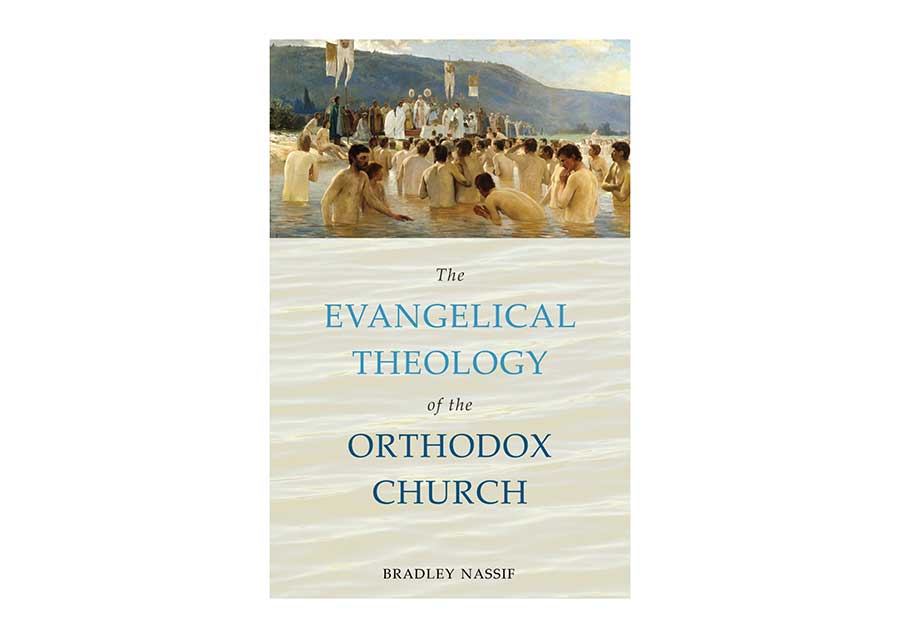
The Evangelical Theology of the Orthodox Church by Bradley Nassif
Nearly all Evangelicals, whatever their denominational affiliation, look to C. S. Lewis as an apologist for and an expounder of the essential doctrines of the faith: what Lewis called “mere” Christianity. Still, many have expressed concern over the explanation Lewis offers of the atonement in Book II, Chapter 4 of Mere Christianity. Rather than advocate penal substitution, Lewis refuses to promote one theory of the atonement over another. Indeed, he makes it clear that historic (Nicene) orthodoxy does not demand that its adherents subscribe to a particular understanding of the atonement:
The central Christian belief is that Christ’s death has somehow put us right with God and given us a fresh start. Theories as to how it did this are another matter. A good many different theories have been held as to how it works; what all Christians are agreed on is that it does work. . . . Theories about Christ’s death are not Christianity; they are explanations about how it works. . . . We are told that Christ was killed for us, that His death has washed out our sins, and that by dying He disabled death itself. That is the formula. That is Christianity. That is what has to be believed. Any theories we build up as to how Christ’s death did all this are, in my view, quite secondary.
So Lewis writes, and so he believes; nevertheless, he offers his own tentative theory. His seemingly idiosyncratic theory begins by asking how God could bring us back to himself after we had rebelled against him and set ourselves up pridefully on our own. We need to repent, but we can’t do so because we are bad people. Only if we were good people could we repent, but if we were good people, then we wouldn’t need to repent. We need to surrender and submit and die, but we cannot do so. Only God can do that for us, but surrendering and submitting and dying are things God can’t do.
But supposing God became a man—suppose our human nature which can suffer and die was amalgamated with God’s nature in one person—then that person could help us. He could surrender His will, and suffer and die, because He was man; and He could do it perfectly because He was God. You and I could go through this process only if God does it in us; but God can do it only if He becomes man. . . . we cannot share God’s dying unless God dies; and He cannot die except by being a man.
I call this theory of the atonement idiosyncratic because I write as an Evangelical. It would appear less so for an Orthodox Christian who believed in something Lewis himself defends in Book IV, Chapter 5: theosis. In the words of Athanasius’s fourth-century On the Incarnation—for a new translation of which Lewis wrote a preface—the Orthodox doctrine of theosis (or deification) teaches that God became like us so that we could become like him. That is to say, the atonement that was perfected on the Cross began with the incarnation, when God became man and so shared fully in our humanity.
Although Bradley Nassif only mentions Lewis in passing in The Evangelical Theology of the Orthodox Church, he would certainly applaud Lewis’s attempt to expand the atoning work of the Cross to include the full implications of the incarnation: what Lewis, in Miracles, calls the grand miracle. Whereas “the classical Evangelical tradition developed what we may call a ‘transactional’ model of redemption in which emphasis is placed upon ‘what’ Christ did ‘for me,’” Nassif explains, “the East adopted a ‘transformational’ model that placed emphasis upon ‘who’ Christ is” (172).
Christological Maximalism
A former professor of Biblical and Theological Studies at North Park University who holds degrees from Denver Seminary (Protestant), Fordham University (Catholic), and St. Vladimir’s Orthodox Seminary, Nassif gathers together in his book nine previously published essays that attempt to bridge the divide between Evangelicals and the Orthodox Church. While affirming that Evangelicals and Orthodox alike accept that salvation is by grace through Christ’s sacrificial death, Nassif argues, convincingly, that the latter view is more expansive: “the ‘christological maximalism’ of the Orthodox Church in its Trinitarian framework takes the implications of the incarnation light years beyond the ‘christological minimalism’ of the Evangelical movement!” (189).
God became man so that man can become God. Christ assumed the fullness of our humanity, not just so that he could die for our sins, but so that he could live the glorified life that Adam should have lived but did not because of his disobedience. “The task of the incarnation in Christ, therefore, was to re-integrate and restore the old Adam to what he was before the fall” (185). The Orthodox gospel celebrates Christ’s sacrifice on the Cross within the context of his miraculous birth and his miraculous resurrection from the dead. That is why it continually looks back to Christmas and forward to Easter.
It is for that reason, Nassif explains, that the
Louis Markos , Professor in English and Scholar in Residence at Houston Baptist University, holds the Robert H. Ray Chair in Humanities. His 19 books include Lewis Agonistes; Restoring Beauty: The Good, the True, and the Beautiful in the Writings of C. S. Lewis; On the Shoulders of Hobbits: The Road to Virtue with Tolkien and Lewis; and From A to Z to Narnia with C. S. Lewis.
A Journal of Mere Christianity—Delivered to Your Door
- Essays on theology, culture, and the Church
- Contributors from across the Christian traditions
Subscribe (Print + Online) 
Six print issues (one year) of Touchstone, plus full online access and PDF downloads for only $39.95.
Subscribe (Online Only) 
Get a one-year full-access subscription to the Touchstone online archives for only $19.95.
bulk subscriptions
Order Touchstone subscriptions in bulk and save $10 per sub! Each subscription includes 6 issues of Touchstone plus full online access to touchstonemag.com—including archives, videos, and pdf downloads of recent issues for only $29.95 each! Great for churches or study groups.
Transactions will be processed on a secure server.
more on Christianity from the online archives

30.2—March/April 2017
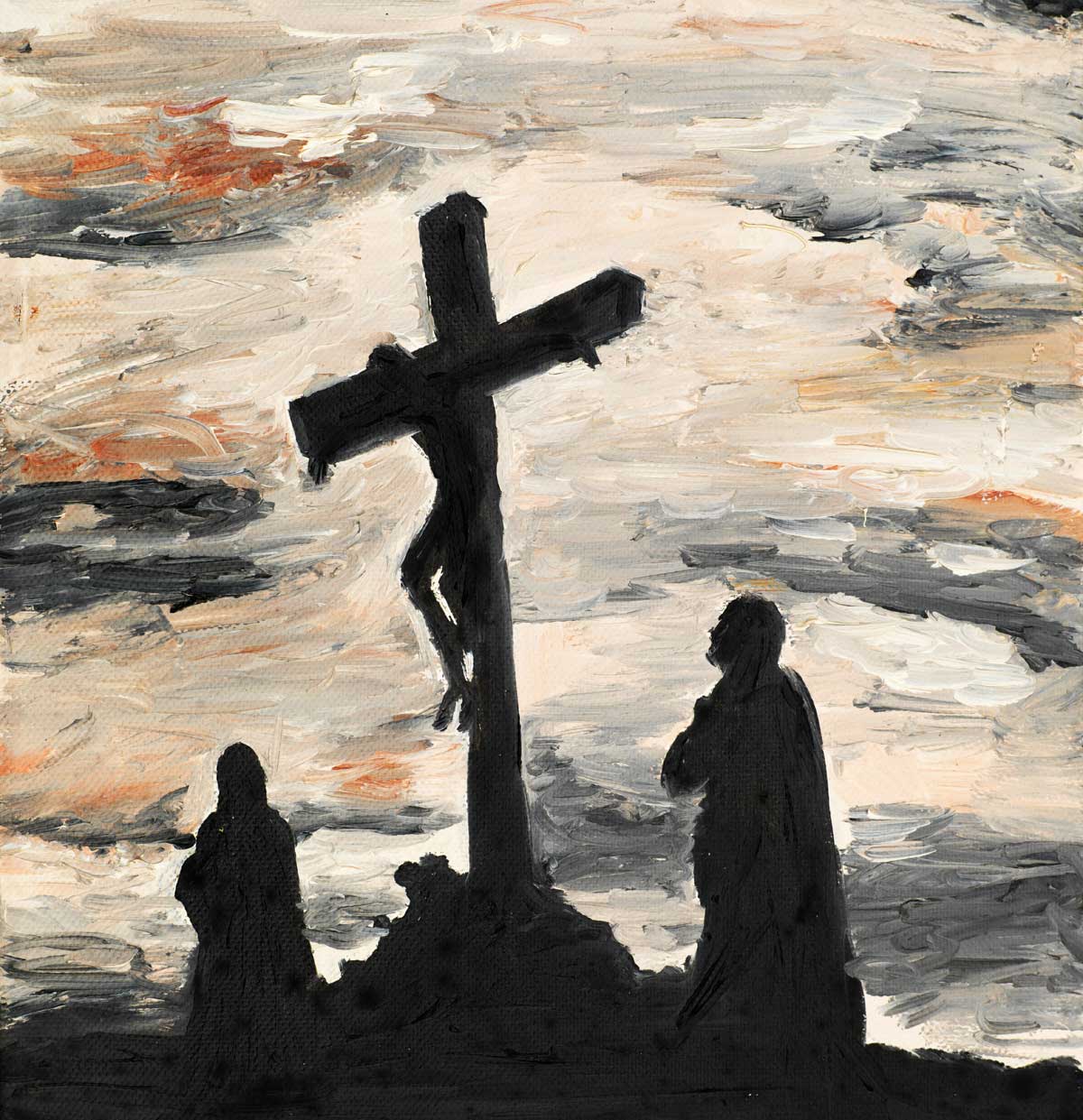
Our Path to Holiness Runs Straight Through Calvary by Robin Phillips

more from the online archives

32.2—March/April 2019
Finding Him Again Through the Patriarchal Group by Anthony Esolen

33.3—May/June 2020
On Flight & Fight in the Present Tribulation by Douglas Farrow

calling all readers
Please Donate
"There are magazines worth reading but few worth saving . . . Touchstone is just such a magazine."
—Alice von Hildebrand"Here we do not concede one square millimeter of territory to falsehood, folly, contemporary sentimentality, or fashion. We speak the truth, and let God be our judge. . . . Touchstone is the one committedly Christian conservative journal."
Support Touchstone
—Anthony Esolen, Touchstone senior editor
