




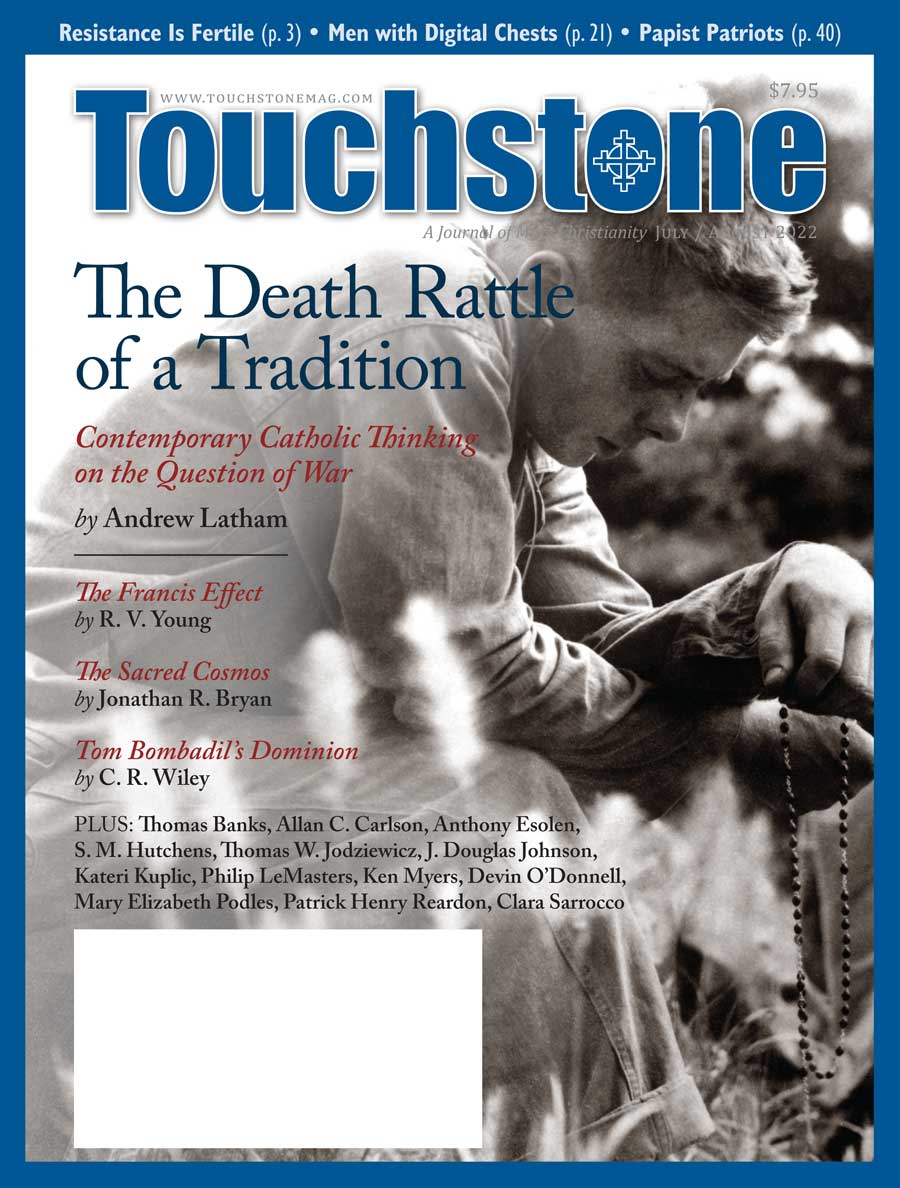
Into His Marvelous Light
If someone says he enjoys "classical music," he probably doesn't mean to designate precisely the period that excludes the Baroque, Romantic, and Modern eras. Bach and Handel would make the cut, as would Brahms and Rachmaninoff, Wagner and Liszt, and many others. The creative careers of the most popular "classical music" composers stretch from the mid-seventeenth to the late nineteenth centuries.
There aren't many (if any) American-born composers who would show up on this list. Neither are there many (if any) great English composers that one could include. In fact, it has often been remarked that after the death of Henry Purcell in 1695 (when J. S. Bach was only ten years old), no widely acclaimed composers were born in England until 1857.
That was the year that Ann Greening Elgar (daughter of a farm worker) and her husband William (a piano tuner and music-shop owner) welcomed their fourth child into their cottage in the village of Lower Broadheath in the West Midlands. They christened him Edward and had him baptized at St. George's Roman Catholic Church in Worcester. The Elgars were a very musical household, and Edward's father performed in the Worcester Glee Club and was organist at St. George's. From the age of fifteen, Edward served as his father's substitute when needed, later inheriting the post. And since Worcester was one of the sites hosting the prestigious Three Choirs Festival (an active institution since the early eighteenth century), the young Edward Elgar was exposed to choral works intended for large public—and non-liturgical—performance.
THIS ARTICLE ONLY AVAILABLE TO SUBSCRIBERS.
FOR QUICK ACCESS:
Ken Myers is the host and producer of the Mars Hill Audio Journal. Formerly an arts editor with National Public Radio, he also serves as music director at All Saints Anglican Church in Ivy, Virginia. He is a contributing editor for Touchstone.
A Journal of Mere Christianity—Delivered to Your Door
- Essays on theology, culture, and the Church
- Contributors from across the Christian traditions

Six print issues (one year) of Touchstone, plus full online access and PDF downloads for only $39.95.

Get a one-year full-access subscription to the Touchstone online archives for only $19.95.
bulk subscriptions
Order Touchstone subscriptions in bulk and save $10 per sub! Each subscription includes 6 issues of Touchstone plus full online access to touchstonemag.com—including archives, videos, and pdf downloads of recent issues for only $29.95 each! Great for churches or study groups.
Transactions will be processed on a secure server.
more on music from the online archives
33.3—May/June 2020
Bach's Cantata BWV 106, Gottes Zeit ist die allerbesteZeit (God's time is the very best time) by Ken Myers
more from the online archives
27.5—Sept/Oct 2014
The Culture of Death's Campaign Against the Catholic Church by Brantly Millegan

24.5—Sept/Oct 2011
on Wondering or Wandering Through College Education by Anthony Esolen

32.2—March/April 2019
Finding Him Again Through the Patriarchal Group by Anthony Esolen
calling all readers
Please Donate
"There are magazines worth reading but few worth saving . . . Touchstone is just such a magazine."
—Alice von Hildebrand
"Here we do not concede one square millimeter of territory to falsehood, folly, contemporary sentimentality, or fashion. We speak the truth, and let God be our judge. . . . Touchstone is the one committedly Christian conservative journal."
—Anthony Esolen, Touchstone senior editor
