




Ko-Ko, the Chief Dufflepud & Their Kin
There is a phenomenon I have come upon often in theological writing that needs a precise name, if someone hasn't given it one already. I encountered it most recently in a review whose writer criticized an author—a very learned and sophisticated theologian with pretensions to orthodoxy—of advocating a heresy. What the reviewer did is vicious but not uncommon, and might be called "teleological weighting," that is, identifying thought by where the critic thinks it must lead, rather than by what is actually expressed.
In my judgment, the reviewed author had not in fact committed the heresy of which he was accused, but the reviewer took certain of his statements as evidence of it because if the author continued to think along those lines, he would most certainly follow the logic (imposed on it by the reviewer) into heresy. So not committing heresy became, in the end (teleologically), tantamount to committing it. What had actually been written was weighted by the reviewer in accordance with where he thought it would take the author if he pursued it. Thus, the review was in fact an exercise in false
witness.
The Elemental Dishonesty of Kokoism
Now, the reviewer might have been right in his conclusions about where the author's trajectory would eventually take his reader. But if so, that is all the critic could say (which would seem rather pointless), since the line between orthodoxy and heterodoxy—which customarily involves an at least de facto denial of something that orthodoxy affirms, such as Arianism affirming the humanity of Christ while denying his deity—had not in fact been crossed. It is good that readers be warned against sly theologians (and they are legion) who write tendentiously with the deliberate intent to provoke the orthodox and encourage heterodoxy. I have read some very long books that were in sum a reason to disbelieve something to which Christians ought to hold, their error subtly obscured by their length and complexity.
But it is elementally dishonest to identify someone as an errorist before what is expressed makes it reasonable by a logic independent of assumptions the critic imposes as inevitable. How often I have read polemical material in which the author indulges in Kokoism, which I name after the Lord High Executioner in Gilbert and Sullivan's The Mikado. Ko-Ko, who was caught disobeying the imperial command to behead a certain second trombonist, told the angry emperor:
It's like this: When your Majesty says, "Let a thing be done," it's as good as done—practically, it is done—because your Majesty's will is law. Your Majesty says, "Kill a gentleman," and a gentleman is told off to be killed. Consequently, that gentleman is as good as dead—practically, he is dead—and if he is dead, why not say so?
The Mikado was taken in and replied:
I see. Nothing could possibly be more satisfactory!
So, when someone I am reviewing makes noises in places like an errorist, and I very much want him to be an errorist, consequently that gentleman is as good as an errorist—practically he is an errorist—and if he is an errorist, why not say so? Nothing, to members of my party, could possibly be more satisfactory!
Thus, by the processes of teleological weighting, what is so becomes evidence of what is not. I daresay that much in the history of Christian polemic has been an exercise in Kokoism by people who are at pains not to understand each other, and to interpret what the other affirms in the worst possible way.
The Need for Purity of Heart
Of course, we cannot leave it at that. To return to the Arian example, if the reviewer finds that the material is an argument for the humanity of Christ, he must make a judgment as to whether what he has found tends in any way toward a suppression of the Lord's deity, and if so, supply his reader with the other arm of the paradox, since in orthodox teaching about Christ one cannot appear without the other, and warnings should be given about one-armed Christological writing. The reader may need reminding that humanity exalted even to an infinite degree is not deity—an idea of which many pseudo-Christian cults are fond. But it is wickedness to impose adverse teleological weight to an affirmation of something true, weight that carries it past the affirmation itself into a denial of other truth.
To avoid this, purity of heart is required, a rarity among critics, for only in this can the work of another be considered in meliorem partem, and only in this attitude can our Lord's mandate for unity among believers be served (and I daresay, by no other rule do any of us wish ourselves to be judged). The task of those who would be Christian teachers (and who will be held to a higher standard than others) is to be very careful not to make enemies of those who in the end may be their friends, while remaining on constant guard against those who would employ a multitude of clever devices to deceive, if it were possible, even the elect.
S. M. Hutchens is a senior editor and longtime writer for Touchstone.
A Journal of Mere Christianity—Delivered to Your Door
- Essays on theology, culture, and the Church
- Contributors from across the Christian traditions

Six print issues (one year) of Touchstone, plus full online access and PDF downloads for only $39.95.

Get a one-year full-access subscription to the Touchstone online archives for only $19.95.
bulk subscriptions
Order Touchstone subscriptions in bulk and save $10 per sub! Each subscription includes 6 issues of Touchstone plus full online access to touchstonemag.com—including archives, videos, and pdf downloads of recent issues for only $29.95 each! Great for churches or study groups.
Transactions will be processed on a secure server.
more on culture from the online archives

31.2—March/April 2018
The Transmission of Christianity Is Not a New Task by Nathanael Devlin

32.4—July/August 2019
Will Islamicization Become Its New Future by Peter Riddell
more from the online archives
32.4—July/August 2019
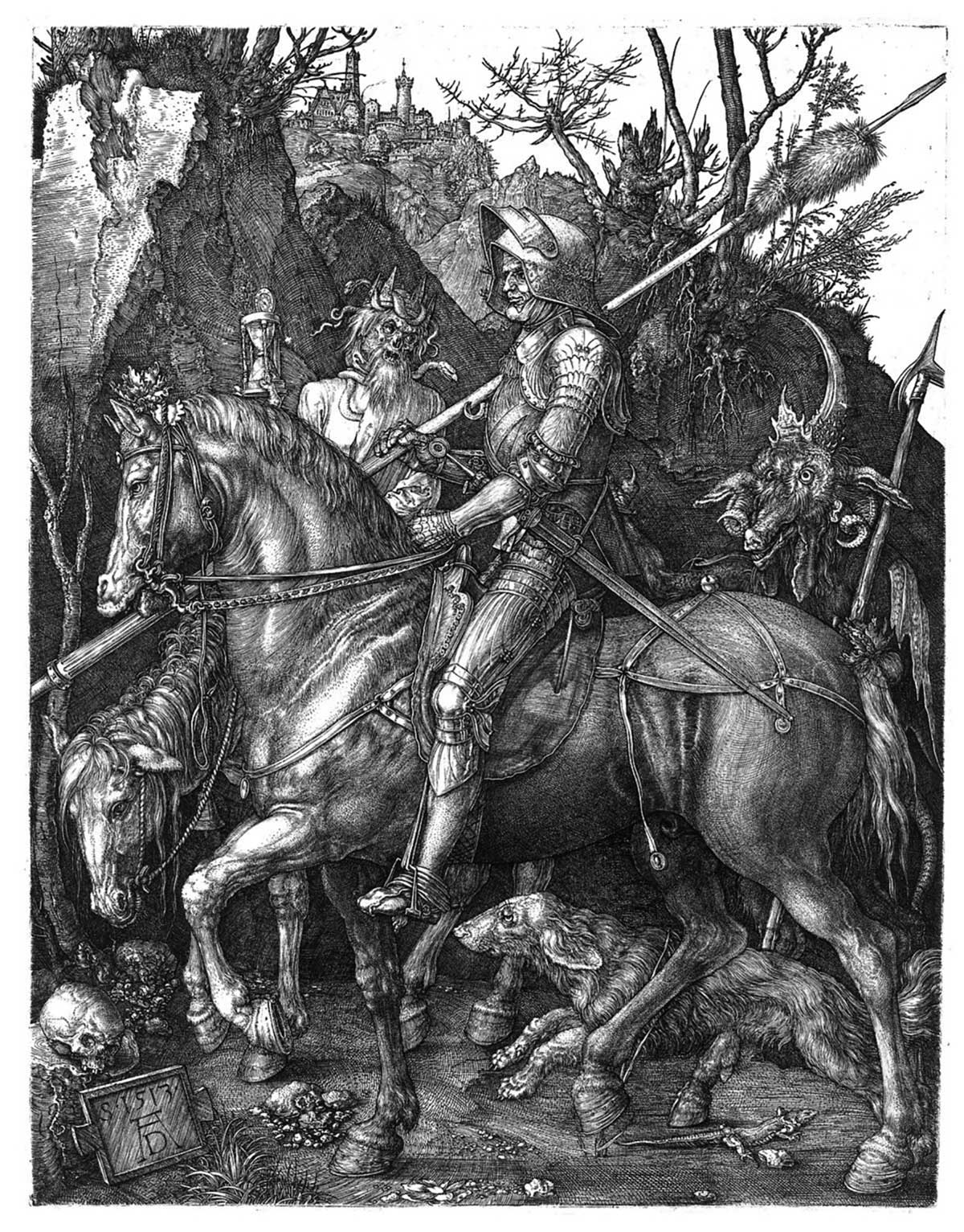
on Single-Mindedness in Durer's Ritter, Tod, und Teufel by Anthony Costello
27.2—March/April 2014
on C. S. Lewis & the New State Paganism by W. E. Knickerbocker

30.2—March/April 2017
on Reading Don Quixote in Its Original Christian Context by Luis Cortest
calling all readers
Please Donate
"There are magazines worth reading but few worth saving . . . Touchstone is just such a magazine."
—Alice von Hildebrand
"Here we do not concede one square millimeter of territory to falsehood, folly, contemporary sentimentality, or fashion. We speak the truth, and let God be our judge. . . . Touchstone is the one committedly Christian conservative journal."
—Anthony Esolen, Touchstone senior editor
