






Of Myths & Men
James Lindsay's Search for Love & Meaning Without God
An important book in my life journey in the Catholic faith has been Thomas Howard's Chance or the Dance? A Critique of Modern Secularism. What follows, however, is not a review of that title but a partial explication of James Lindsay's Life in Light of Death (Pitchstone Publishing, 2016) in light of Howard's book, as I believe that Lindsay proves Howard's thesis. In Chance or the Dance, Howard states:
When, under the fluorescent glare of the laboratory lights, the old myth [that everything means everything] died and the new myth (that nothing means anything) took over, men, without realizing what they were doing, kept on behaving and speaking of their experience as though everything meant everything. That is, their new myth told them that things are impersonal and abstract. They don't mean anything; they are. The method that led to the new myth was called the scientific method. . . . [W]e modern men have accepted the sovereignty of the new myth. We bow to the edict (Science Is All) and then believe it. But, all the while, all unaware, we keep the old myth alive. (emphases in original)
THIS ARTICLE ONLY AVAILABLE TO SUBSCRIBERS.
FOR QUICK ACCESS:
Brian Dunne is a former elementary/middle school teacher of 22 years, the first 15 in public schools, the last 7 in Catholic schools. He holds an MA in Catholic Thought and Life from St. Meinrad School of Theology, and an MA in counseling psychology from Boston College. For the past four years he has worked for a major online retailer, and he is currently working on a script for a satirical movie about science, technology, and medicine.
A Journal of Mere Christianity—Delivered to Your Door
- Essays on theology, culture, and the Church
- Contributors from across the Christian traditions
Subscribe (Print + Online) 
Six print issues (one year) of Touchstone, plus full online access and PDF downloads for only $39.95.
Subscribe (Online Only) 
Get a one-year full-access subscription to the Touchstone online archives for only $19.95.
bulk subscriptions
Order Touchstone subscriptions in bulk and save $10 per sub! Each subscription includes 6 issues of Touchstone plus full online access to touchstonemag.com—including archives, videos, and pdf downloads of recent issues for only $29.95 each! Great for churches or study groups.
Transactions will be processed on a secure server.
more on literature from the online archives

30.5—Sept/Oct 2017
on Costly Grace in Breece D'J Pancake's Flyover Country by Casey Chalk

24.1—January/February 2011
Ruminations on the Monstrous Envy of the Soul-Devouring State by Anthony Esolen

more from the online archives

31.5—September/October 2018
on the Congregation as a Wilderness by Paul Gregory Alms

37.5—Sept/Oct 2024
An Abandoned Ruling Principle & How to Get It Back by Adam MacLeod
23.6—November/December 2010
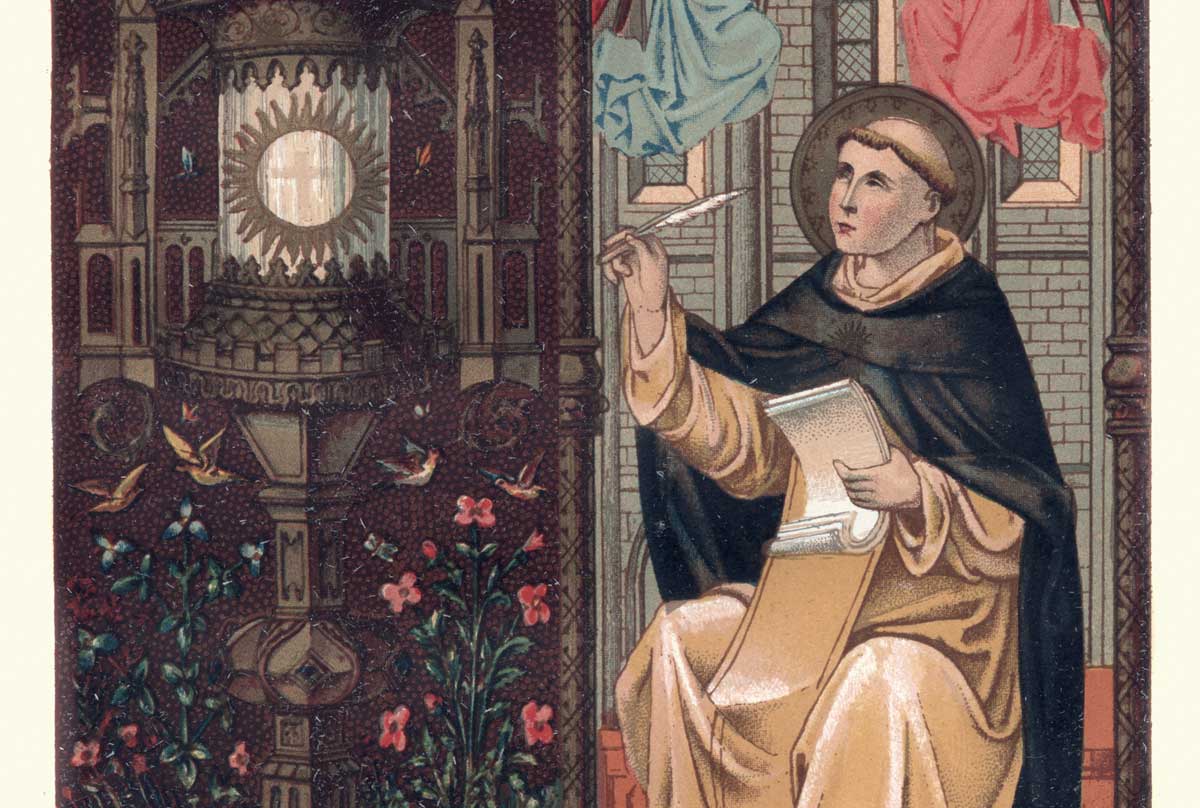
Darwin, Design & Thomas Aquinas
The Mythical Conflict Between Thomism & Intelligent Design by Logan Paul Gage
calling all readers
Please Donate
"There are magazines worth reading but few worth saving . . . Touchstone is just such a magazine."
—Alice von Hildebrand"Here we do not concede one square millimeter of territory to falsehood, folly, contemporary sentimentality, or fashion. We speak the truth, and let God be our judge. . . . Touchstone is the one committedly Christian conservative journal."
Support Touchstone
—Anthony Esolen, Touchstone senior editor
