





Immorality Plays
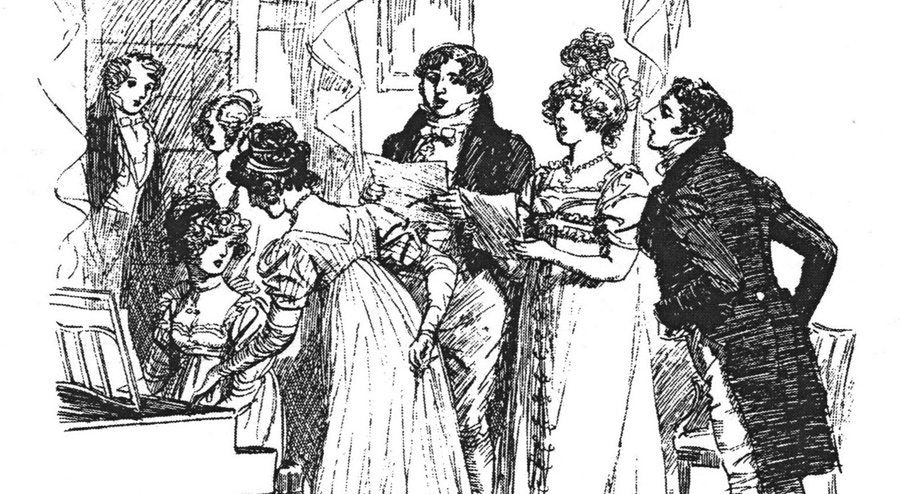
Sinful Atmospherics in Jane Austen's Mansfield Park
It might seem that the novels of Jane Austen have nothing to teach a society that scorns all she values, but her most complex novel, Mansfield Park, has salutary shocks for modern readers. Reading it joltsus first when we recognize that its core concern is moral conflict. We get a secondary shock when we realize that modern literature is seldom really about right and wrong. In modern novels, when there is a conflict over what characters ought to do, the choices often are crudely drawn, even cartoonish. In much literature, such choices are raised only so they can be ridiculed.
The real question in such books isn't about what is right and wrong; the real question is whether the protagonists will be happy, or liberated, or self-actualized, or whatever. In plenty of modern fiction, the characters wander from experience to experience, without any sign in them or from the author that some choices might be better than others. Mansfield Park, however, takes moral choices to be of supreme importance. The storyis not really about whether the characters achieve their goals, though it does have a "happy ending" whose very unlikelihood undercuts how seriously we should take it. The book instead is about how the people in it cope with moral challenges.
THIS ARTICLE ONLY AVAILABLE TO SUBSCRIBERS.
FOR QUICK ACCESS:
James Tynen is a former journalist. He lives in Cary, North Carolina, with his wife, Marnie. They are parishioners at St. Andrew the Apostle Catholic Church in nearby Apex.
A Journal of Mere Christianity—Delivered to Your Door
- Essays on theology, culture, and the Church
- Contributors from across the Christian traditions

Six print issues (one year) of Touchstone, plus full online access and PDF downloads for only $39.95.

Get a one-year full-access subscription to the Touchstone online archives for only $19.95.
bulk subscriptions
Order Touchstone subscriptions in bulk and save $10 per sub! Each subscription includes 6 issues of Touchstone plus full online access to touchstonemag.com—including archives, videos, and pdf downloads of recent issues for only $29.95 each! Great for churches or study groups.
Transactions will be processed on a secure server.
more on literature from the online archives

24.1—January/February 2011
Ruminations on the Monstrous Envy of the Soul-Devouring State by Anthony Esolen

30.2—March/April 2017
on Reading Don Quixote in Its Original Christian Context by Luis Cortest
more from the online archives

30.3—May/June 2017
Insider Attempts to Disorient the Orthodox by Alexander F. C. Webster
18.10—December 2005
on an Apostle’s Encounter with the Son’s Children by Anthony Esolen

14.1—January/February 2001
A Sociologist Looks at Fatherlessness & Its Causes by David Blankenhorn
calling all readers
Please Donate
"There are magazines worth reading but few worth saving . . . Touchstone is just such a magazine."
—Alice von Hildebrand
"Here we do not concede one square millimeter of territory to falsehood, folly, contemporary sentimentality, or fashion. We speak the truth, and let God be our judge. . . . Touchstone is the one committedly Christian conservative journal."
—Anthony Esolen, Touchstone senior editor
