




The Spirit of Change
In my early days, the worship service of the Baptist church I grew up in could barely be distinguished from that of Presbyterians of the same class. Their ministers in our section of the country wore business suits in the pulpit; the preaching had some different emphases, although the doctrine was the same in essentials. The Lord's Prayer was recited, but the humiliating "altar call" was passing away among Evangelicals in the North. Probably eighty percent of the hymns were the same, all sung from hymnals using four-part harmony (which parts the congregation sang). Communion was celebrated monthly with grape juice and broken crackers.
A consistent difference in regular Sunday worship was that the Presbyterians repeated the Apostles' Creed and the Baptists didn't. Not that my kind of Baptist didn't believe every word of the Creed, but they were suspicious of creeds in general, their faith having found a better Resting Place, "not in device or creed." I won't argue about that here.
A few years ago my wife and I decided to visit the church of my youth on a Sunday morning when we happened to be in the area. (She was raised an Episcopalian, and there was no use in revisiting her old church.) Mine was no longer "First Baptist," but had moved from the city to a suburb to become a satellite congregation of a volvoxian megachurch with a name like "Living Waters Friendly Seekers Church That Helps You Apply the Bible to Your Life." Or something.
We opted for its "Traditional Service." Just which "tradition" it hearkened to was hard to say, but it wasn't a Baptist service of, say, before 1970 or so. No telling what C. H. Spurgeon, E. Y. Mullins, or even Harry Emerson Fosdick would have made of it. It began with a minister of music introducing the opening song by bellowing "A-one-two-three-four" at a praise band, with the congregation bawling "Celebrate!" in response, the song being projected, without harmony, on the wall behind him. The organ (a very good one) was long gone. The sermon contained less dogma than it once did, but more pragma to be applied to "our lives today"—well, at least the lives of people with certain religious sensibilities—than the gospel of old. We had clearly experienced Change in all this, the noisy, juvenile, acculturated wraith of my childhood church, and confirmed that You Can't Go Home Again.
A Change-Animating Spirit
The whole point of lex orandi lex credendi [which means that a church's faith is determined in its worship—SMH] is not to say whether prayer/worship or creed is the primary influence but to say that we cannot pray and worship one way and believe another just as we cannot believe one way and pray and worship another way. . . . We have replaced the verb "keep" with the verb "change" and come to believe that only by changing who we are in faith and on Sunday morning will keep us relevant and alive. The reality is that as soon as "change" replaces "keep," it is not merely the liturgy that suffers, but the Gospel itself, and we have put in place the seeds of our own self-destruction.
This is an observation of Larry Peters, a Lutheran (LCMS) pastor, about practices that disturb him particularly among Lutherans, but it has wide application, particularly with the identification he describes here of a change-animating spirit that has striven to dominate every church I know of in the name of progress or (among doctrinal conservatives) effective evangelism or communication with the culture. His way of saying this may be unfamiliar to those outside the nexus formed by Catholicism, Anglicanism, Lutheranism, and to a lesser degree, Reformed Protestantism (I have never heard an Evangelical refer to his church's lex orandi, although all churches certainly have them), but his analysis of the problem in his own church leads straight to a general principle of universal application: "As soon as change replaces keep, it is not merely the manner of worship that suffers, but the Gospel itself." A change in the manner of worship is a change in the face of Christ presented to and by the worshipers. Worship cannot be freely determined because it must be right. This idea is contained in the very definition of "orthodoxy," which means giving God the "right glory."
Pastor Peters is not speaking here of what one might call "mere change," but Change inspired by the undiscriminating, corrosive spirit that makes a target for destruction not of ephemera, but, in accordance with the essential character of this Spirit, the eternal gospel, the question of which must be seriously and in good faith considered by the leaders of churches to which changes—any changes—in worship have been proposed. This is part of the task of discerning the spirits of which apostolic authority speaks. Change, indeed—of the kind that corrects established errors and improves the inferior—is both desirable and necessary. Doing that, however, is to return, not to advance.
At Once Elusive & Real
The kinds of spirits I am referring to here, like the Spirit of Capitalism or the Spirit of the Council, or the Spirit of the Age, are difficult to define, but to the adept who has a feel for them the references bespeak something that is at once elusive and real—the deeper and more intensely one engages them, the heavier the impression of the reality of the Spirit's character and power.
St. Paul launches directly into spiritual territory when he observes that believers "struggle not against flesh and blood, but against principalities and powers, against the rulers of the darkness of this world, against spiritual wickedness in high places" (Eph. 6:12). One could summarize this, not inaccurately, by saying "against powerful demons," but the apostle significantly chooses not to speak of things this way, speaking rather of spiritual forces in terms of offices, powers, and functions, leaving the matter of demonic personality to the side for the expository moment.
The Spirit of Change as Pastor Peters describes him is not benign but evil, his mission being precisely "to make 'change' replace 'keep'"—to make an actual alteration in the paradosis—in the faith once delivered to the saints and to be passed from generation to generation of believers—which is not only doctrine (lex credendi) but also the worship in which it is articulated (lex orandi), which the saints are commended not for embroidering upon or recognizing development in, but for sustaining as something fixed, for "continuing steadfastly in the apostles' doctrine and fellowship, and in breaking of bread, and in the prayers"—essential aspects of the worship of the Church as defined in Acts 2.
S. M. Hutchens is a senior editor and longtime writer for Touchstone.
A Journal of Mere Christianity—Delivered to Your Door
- Essays on theology, culture, and the Church
- Contributors from across the Christian traditions

Six print issues (one year) of Touchstone, plus full online access and PDF downloads for only $39.95.

Get a one-year full-access subscription to the Touchstone online archives for only $19.95.
bulk subscriptions
Order Touchstone subscriptions in bulk and save $10 per sub! Each subscription includes 6 issues of Touchstone plus full online access to touchstonemag.com—including archives, videos, and pdf downloads of recent issues for only $29.95 each! Great for churches or study groups.
Transactions will be processed on a secure server.
more from the online archives

33.3—May/June 2020
on the Wisdom of the Good Doctor Edmund Pellegrino by Allen H. Roberts II
33.2—March/April 2020
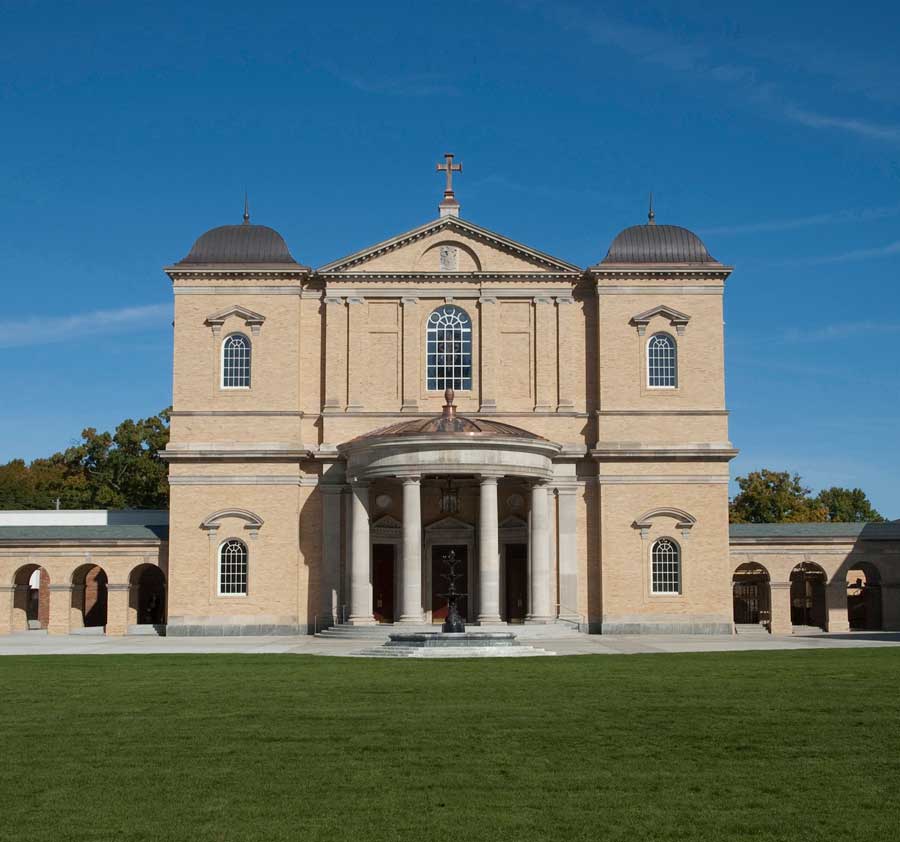
An Architectural Sign of Mere Christianity by Michael Ward
calling all readers
Please Donate
"There are magazines worth reading but few worth saving . . . Touchstone is just such a magazine."
—Alice von Hildebrand
"Here we do not concede one square millimeter of territory to falsehood, folly, contemporary sentimentality, or fashion. We speak the truth, and let God be our judge. . . . Touchstone is the one committedly Christian conservative journal."
—Anthony Esolen, Touchstone senior editor
