





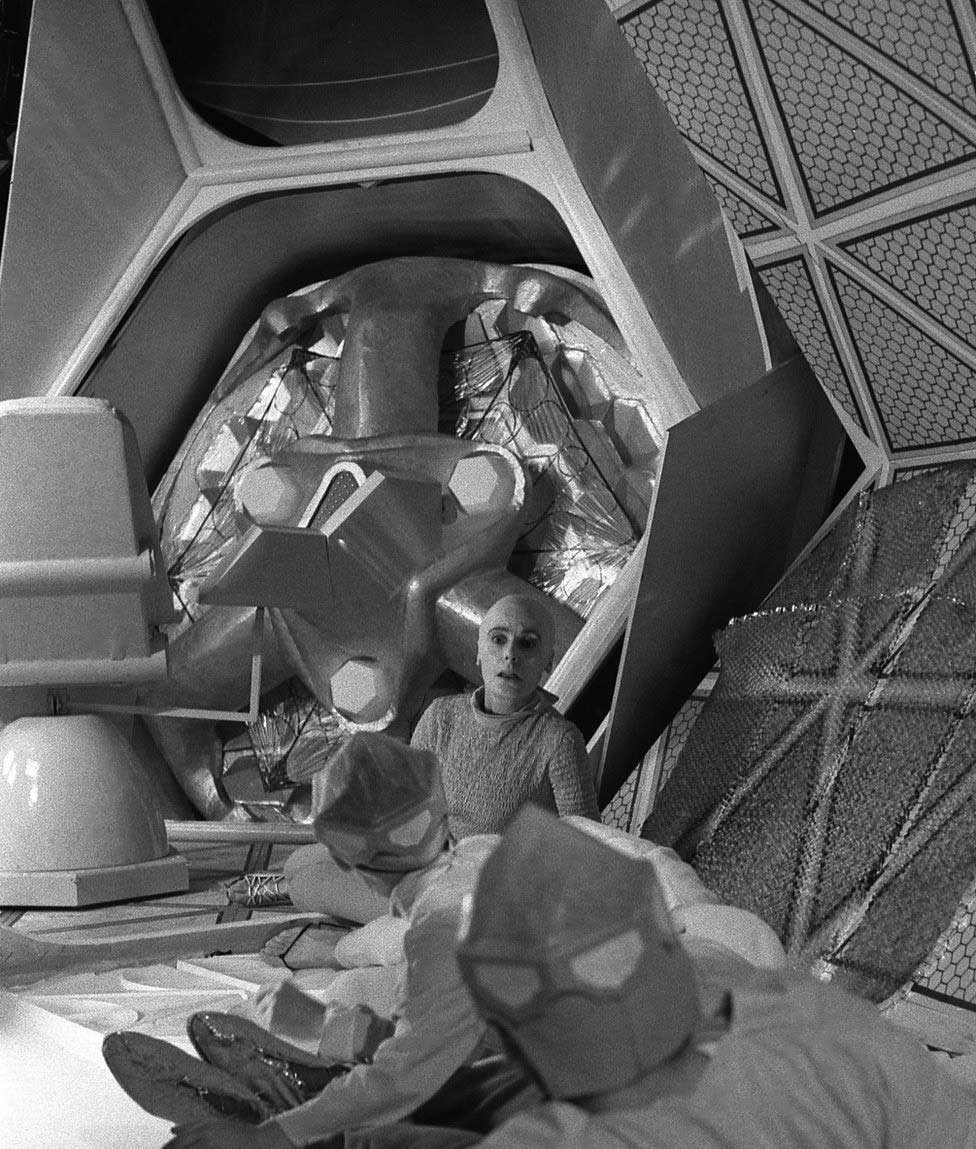
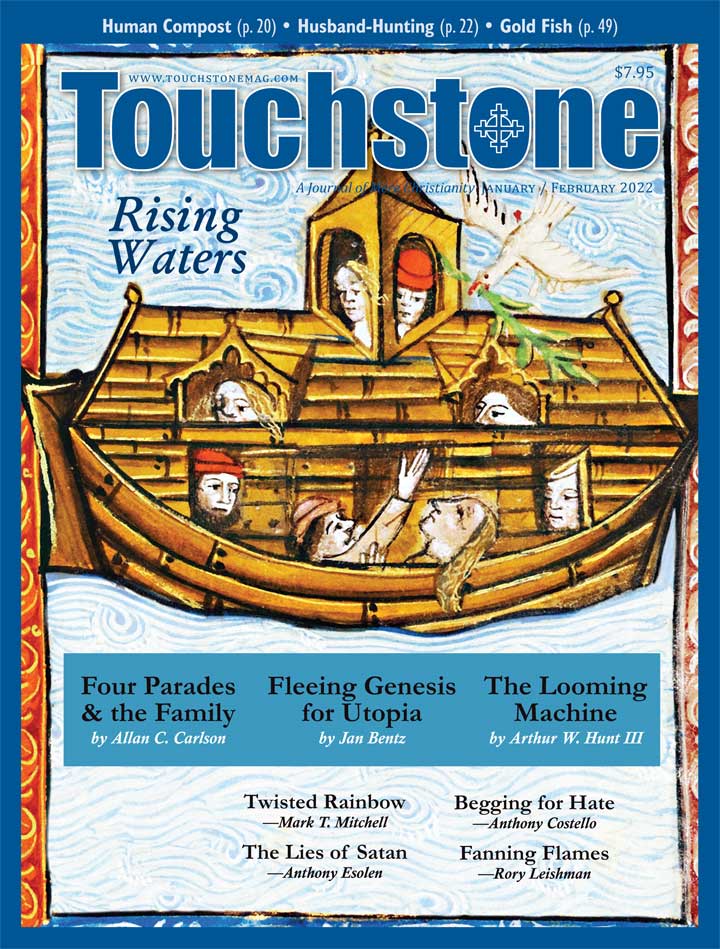
The Machine Looms
E. M. Forster's Prophetic View into Machine Culture
by Arthur W. Hunt III
Samuel Morse probably thought he was only being witty when he tapped out the first telegraph message in 1844: "What . . . hath . . . God . . . wrought?" He must have known that he was obliterating time and space forever for the human race; otherwise, he would not have claimed, as he did, that what he was doing amounted to creating "an enormous brain of nerves" that would unite the country into one big neighborhood.
A poem was even written to celebrate his efforts. "The Victory" declared, "We are one!" Then the Civil War broke out.
THIS ARTICLE ONLY AVAILABLE TO SUBSCRIBERS.
FOR QUICK ACCESS:
Arthur W. Hunt III is a former professor of public speaking at the University of Tennesse at Martin. He is now preparing to transition to ministry-related service and lives in the greater Memphis area.
A Journal of Mere Christianity—Delivered to Your Door
- Essays on theology, culture, and the Church
- Contributors from across the Christian traditions

Six print issues (one year) of Touchstone, plus full online access and PDF downloads for only $39.95.

Get a one-year full-access subscription to the Touchstone online archives for only $19.95.
bulk subscriptions
Order Touchstone subscriptions in bulk and save $10 per sub! Each subscription includes 6 issues of Touchstone plus full online access to touchstonemag.com—including archives, videos, and pdf downloads of recent issues for only $29.95 each! Great for churches or study groups.
Transactions will be processed on a secure server.
more on culture from the online archives

31.6—November/December 2018
Victimhood Culture Scapegoats Its Very Source by Michael P. Foley

32.2—March/April 2019
Reality Shows, Even in a Popular TV Series by C. E. Smith
20.7—September 2007
Paul Didn’t Build Bridges to Popular Culture by Russell D. Moore
more from the online archives

33.3—May/June 2020
Maternal Body: A Theology of Incarnation from the Christian East by Carrie Frederick Frost
Fertile Ground: A Pilgrimage Through Pregnancy by Laura S. Jansson by Agnes R. Howard

29.4—July/August 2016
on Noticing That Modern Science Has Rendered Atheism Irrational by Harry Biltz
23.5—September/October 2010
The Loss of a Christian Understanding of Virginity Is Pure Tragedy by Eleanor Bourg Donlon
calling all readers
Please Donate
"There are magazines worth reading but few worth saving . . . Touchstone is just such a magazine."
—Alice von Hildebrand
"Here we do not concede one square millimeter of territory to falsehood, folly, contemporary sentimentality, or fashion. We speak the truth, and let God be our judge. . . . Touchstone is the one committedly Christian conservative journal."
—Anthony Esolen, Touchstone senior editor
