




Rules for Rhymes
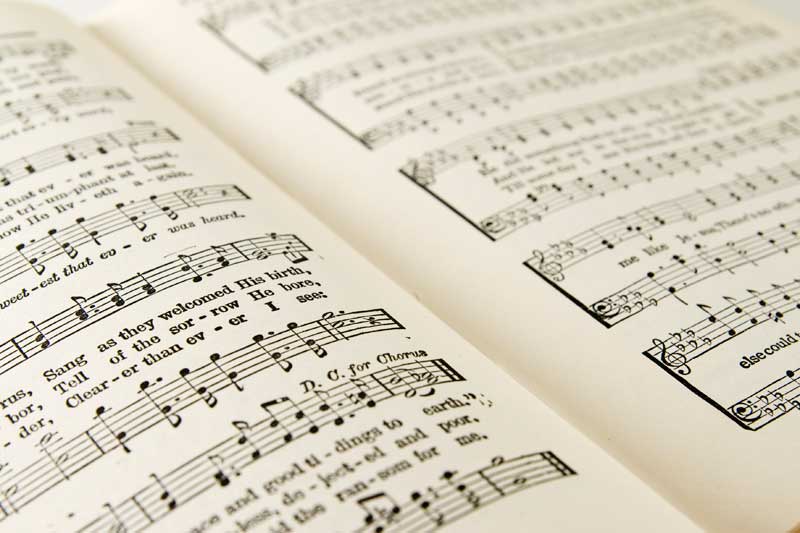
This once, dear readers, I'm going to do something I promise not to do again. I will look at one of my own hymns, written for Lent, from The Hundredfold: Songs for the Lord (Ignatius Press, 2019).
I do so not to boast. It's just that I have become aware that people with good intentions are attempting to write genuine and orthodox hymns, rather than the staggeringly awful stuff that spreads its rot from contemporary hymnals into the brains of those congregants who like it or who put up with it, while others, irritated or embarrassed or bored, fall away.
How do you write a hymn? What is poetically permissible in our time? What special features must a hymn possess that a lyric poem in general need not possess?
Such questions do not admit of a dogmatic answer. With this art as with any, we feel our way. Some vetoes we may assert with confidence, just as, whatever we may choose for a formal banquet, mud pies and dead rats will not be on the menu. The text must be grammatical (goodbye, Catholic editors who mangled "Of the Father's Love Begotten" and "For All the Saints" and many more old poems whose grammar you evidently did not understand). The text must be orthodox (goodbye, "We Are the Bread of Life," with all your self-celebrating brethren). The text must be intelligent, not dumb or mantra-like (goodbye, most praise-and-worship songs).
English songs almost always rhyme. You must do so also. But unless you are writing comedy (think of Tom Lehrer, rhyming don't shade your eyes with plagiarize) you don't want to call attention to it. Rhymes should feel easy, not labored. Full rhymes are best, but a few old near-rhymes that English poets have always used are yours to use also, especially if the visual resemblance assists: good, food; God, blood; noise, rejoice. But avoid mere assonance, because it will stick out, like the screech of a violin bow almost drawn right across the string. Raise and day do not rhyme. Seek and feed do not rhyme.
Grammar & Meter
What about early modern English grammatical forms? Are they still alive for us? Some are, I think, and some are not. The second-person pronouns thou, thy, thine, and thee are alive for anyone who says the Lord's Prayer, and thine and thee are, for English hymns, indispensable. The dark back-rounded vowel of you sounds like a bassoon at the end of a song; it is much inferior to the bright front-unrounded vowel of thee. But the real advantage with thee and thine is, aside from their versatility for rhymes, that they form powerful pairs with me and mine. Consider these lines, from two well-known old hymns:
Take my will and make it thine;
It shall be no longer mine. ("Take My Will")Other refuge have I none,
Hangs my helpless soul on thee;
Leave, ah, leave me not alone,
Still support and comfort me. ("Jesus, Lover of My Soul")
That there is a sacral coloring to those old pronouns is an advantage, not a fault.
But the -est and -eth verbal endings we must probably discard; -eth has become a feature of mockery, like the orthography of Ye Olde Shoppe. Similarly, we must discard most (but by no means all) inversions of ordinary word order, though inversions that are readily understood and that help to end sentences on the emphatic are ours to use still. Recall Howard Cosell's famous cry in the boxing match of the century: "Down goes Frazier, down goes Frazier!"
Anthony Esolen is Distinguished Professor of Humanities at Thales College and the author of over 30 books, including Real Music: A Guide to the Timeless Hymns of the Church (Tan, with a CD), Out of the Ashes: Rebuilding American Culture (Regnery), and The Hundredfold: Songs for the Lord (Ignatius). He has also translated Dante’s Divine Comedy (Random House) and, with his wife Debra, publishes the web magazine Word and Song (anthonyesolen.substack.com). He is a senior editor of Touchstone.
A Journal of Mere Christianity—Delivered to Your Door
- Essays on theology, culture, and the Church
- Contributors from across the Christian traditions

Six print issues (one year) of Touchstone, plus full online access and PDF downloads for only $39.95.

Get a one-year full-access subscription to the Touchstone online archives for only $19.95.
bulk subscriptions
Order Touchstone subscriptions in bulk and save $10 per sub! Each subscription includes 6 issues of Touchstone plus full online access to touchstonemag.com—including archives, videos, and pdf downloads of recent issues for only $29.95 each! Great for churches or study groups.
Transactions will be processed on a secure server.
more on poetry from the online archives
37.5—Sept/Oct 2024
A Battle Plan for Peace While Growing Old by Anthony Esolen
more from the online archives

30.2—March/April 2017
on Reading Don Quixote in Its Original Christian Context by Luis Cortest

33.3—May/June 2020
On Flight & Fight in the Present Tribulation by Douglas Farrow
calling all readers
Please Donate
"There are magazines worth reading but few worth saving . . . Touchstone is just such a magazine."
—Alice von Hildebrand
"Here we do not concede one square millimeter of territory to falsehood, folly, contemporary sentimentality, or fashion. We speak the truth, and let God be our judge. . . . Touchstone is the one committedly Christian conservative journal."
—Anthony Esolen, Touchstone senior editor
