




Lethal Sentiments
Anthony McCarthy on Fetal Pain & False Humanitarianism
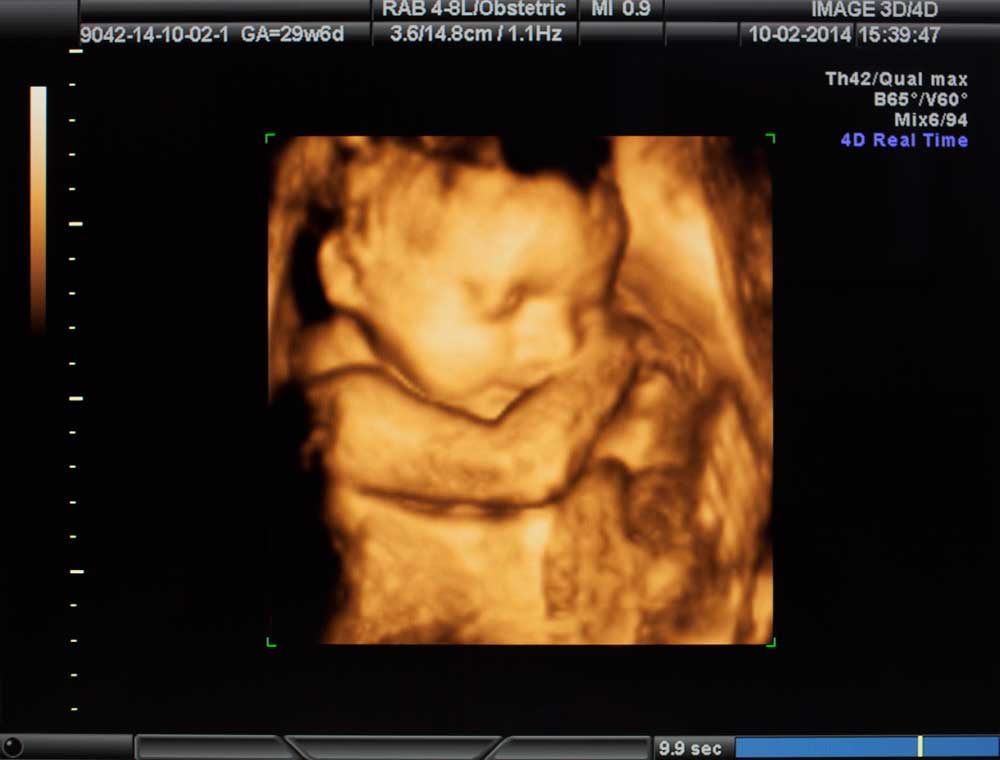
In a paper published last January in the Journal of Medical Ethics, the authors conclude that, in the light of recent neuroscientific data, they "no longer view fetal pain (as a core, immediate sensation) in a gestational window of 12–24 weeks as impossible based on the neuroscience." The lead author, Professor Stuart Derbyshire, a psychologist, was a member of the Working Party of the Royal College of Obstetricians and Gynaecologists, which put out a widely quoted report in 2010 stating that "the experience of pain needs cognitive, sensory and affective components, as well as the necessary anatomical and physiological neural connections." The report concluded that the unborn can only experience pain after 24 weeks, but that in any case, analgesics for a fetus being aborted are, on balance, not to be recommended even after that point.
Derbyshire now rejects such views and recommends that analgesics be considered much earlier, "especially after 18 weeks." In the light of new data, the (pro-choice) Derbyshire and his (pro-life) co-author write:
THIS ARTICLE ONLY AVAILABLE TO SUBSCRIBERS.
FOR QUICK ACCESS:
Anthony McCarthy is the founder and director of Bios Centre and a visiting scholar in moral philosophy at the International Theological Institute in Trumau, Austria. He previously held the post of research fellow at the Anscombe Bioethics Centre in Oxford and holds degrees in philosophy from King's College London, University College London, and the University of Surrey. He has lectured widely and published on ethical issues for both academic and wider audiences.
A Journal of Mere Christianity—Delivered to Your Door
- Essays on theology, culture, and the Church
- Contributors from across the Christian traditions
Subscribe (Print + Online) 
Six print issues (one year) of Touchstone, plus full online access and PDF downloads for only $39.95.
Subscribe (Online Only) 
Get a one-year full-access subscription to the Touchstone online archives for only $19.95.
bulk subscriptions
Order Touchstone subscriptions in bulk and save $10 per sub! Each subscription includes 6 issues of Touchstone plus full online access to touchstonemag.com—including archives, videos, and pdf downloads of recent issues for only $29.95 each! Great for churches or study groups.
Transactions will be processed on a secure server.
more on abortion from the online archives

24.1—January/February 2011
How Planned Parenthood's Founder Played the Christians, and Won by Allan C. Carlson
26.1—Jan/Feb 2013
on Abortion as a Matter of National Welfare by W. Ross Blackburn

30.3—May/June 2017
on the Misuse of Property Rights to Justify Slavery & Abortion by Robert Hart
more from the online archives
32.2—March/April 2019
Misguided Mercy & Dante's Infernal Purgation by Joshua Hren


33.2—March/April 2020
on How Bodily Resurrection Informs Social Justice by W. Ross Blackburn
calling all readers
Please Donate
"There are magazines worth reading but few worth saving . . . Touchstone is just such a magazine."
—Alice von Hildebrand"Here we do not concede one square millimeter of territory to falsehood, folly, contemporary sentimentality, or fashion. We speak the truth, and let God be our judge. . . . Touchstone is the one committedly Christian conservative journal."
Support Touchstone
—Anthony Esolen, Touchstone senior editor
