Lingering in Lübeck
If none of the music of Dieterich Buxtehude had survived, the German organist and composer would still be known as a footnote in the career of his fellow Lutheran Johann Sebastian Bach. In the autumn of 1705, the 20-year-old Bach was granted a four-week leave of absence from his post as organist at the Neuekirche in Arnstadt. From there, he reportedly walked north 260 miles to the town of Lübeck. Since 1668, the Marienkirche in Lübeck had been blessed by the musical presence of Buxtehude, the man Bach considered the greatest living musical practitioner.
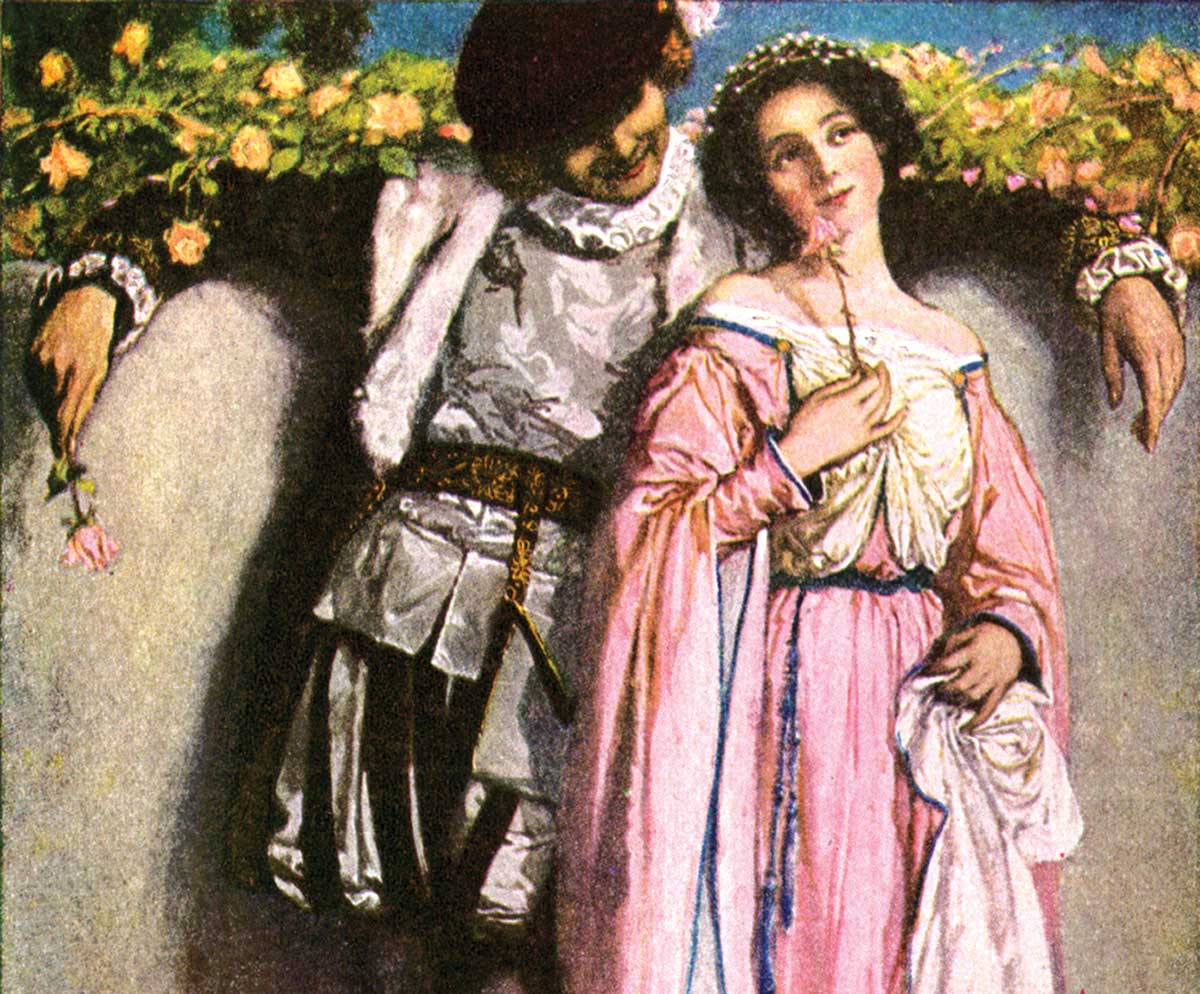
Buxtehude was getting on in years; he had been scouting for a successor for some time, and young Bach may have been interested in taking the job. It would have given him an opportunity to ply his art and craft on the magnificent organ at the Marienkirche, then the third-largest church in Germany, in a city with a strong commitment to music. But Buxtehude expected that the man who took the job would also take his daughter as wife. After all, when his predecessor, Franz Tunder, had handed over the job to him, Buxtehude had married his daughter.
Bach ended up staying in Lübeck for more than his allotted four weeks; it was closer to four months before he returned to Arnstadt, much to the displeasure of his employers. But his extended stay in Lübeck was not to court Anna Margaretha Buxtehude (who was, after all, ten years his senior). His love-interest focused on the remarkable musical wisdom of her brilliant father.
In addition to receiving Franz Tunder's daughter to have and to hold, Dieterich Buxtehude inherited from his predecessor a tradition of organizing a concert series of sacred music performed on the five Sunday evenings before Christmas. Supported by the wealthy and grateful burghers of Lübeck, these Abendmusiken (evening concerts) were a remarkable occasion for presenting choral music with sacred texts that didn't have to fit within a particular place in the liturgy or the Church calendar. As the organist at the Marienkirche, Buxtehude had no responsibilities for organizing the service music of the choir; that duty fell to the cantor. But Buxtehude had a love and a gift for composing for the voice, in German and Latin, and the annual series of Abendmusiken offered him a setting in which to experiment with musical forms without worrying about distracting from the event of the liturgy.
When Bach arrived in Lübeck in the late fall of 1705, rehearsals for that year's five concerts would already have been underway. He may well have been tapped to play violin in one or more of the performances (and thus to pick up some pocket money to help cover his travel expenses). If he had returned home on schedule, he probably would have missed most of that season's concerts. Given Buxtehude's age, Bach might never have had a chance like this again (as it happened, Buxtehude died a year and a half later). The younger man—just launching his vocation—must have decided early during the sequence of rehearsals to stay as long as possible. And the stay—until February—was life-changing: in Bach: Music in the Castle of Heaven, conductor John Eliot Gardiner writes that, while in Lübeck, Bach "witnessed dazzling concerted music on a monumental scale as well as small-scale chamber music of the most intimate, devotional kind. Memories of these—and of Buxtehude's own special style of playing the organ—would stay with him all his life."
Italian Influences
One of the striking aspects of the music Bach was being exposed to in these Abendmusiken was the influence of the past century of musical experimentation pioneered by Italian composers. Heinrich Schütz (1585–1672) was only the first of a number of German composers to benefit from studies in Venice or Rome. (See "Schütz: Baroque before Bach," Touchstone, September/October 2015 for more details.) Influenced by the work of Giovanni Gabrieli, Claudio Monteverdi, Giacomo Carissimi, and others, these German composers returned to their more staid German courts and churches with expressive musical techniques that served well the new emphasis on individual and personal devotion advanced by Lutheran Pietism.
Musicologist Christoph Wolff observes that the Pietists' emphasis on more deliberate individual spirituality first affected the texts selected in the composition of sacred music. He explains that "pure scriptural texts were complemented, framed, or even replaced by sacred poetry which invariably favored a highly expressive and often figurative language, particularly for describing deep devotional love for Jesus." German composers soon realized that many musical devices most fully explored by Italian composers offered tools more capable of doing justice to the sentiments in such texts.
It was primarily in the music of composers based in the north German cities on the Baltic coast, such as Lübeck, where this Italian influence could be heard most strongly. And although he never studied in Italy, Buxtehude absorbed from his local contemporaries and predecessors the musical vocabulary that, as John Eliot Gardiner summarizes, grafted "Italian styles of church music on to the native rootstock, fusing the vigor of vernacular declamation with the colour and passion of Italian sonorities." Gardiner also takes note of the ecumenical aspect of this artistic grafting, a dimension of this chapter in music history that readers of Touchstone will especially appreciate. To hear in the music of composers such as Dieterich Buxtehude echoes of the sound of Monteverdi or Carissimi is astounding, "given the bitter feeling between Catholic and Protestant, and the traces which remained of a deep-seated Germanic fear of the corruptive forces of Italian culture."
Linger with the Music
It is no wonder that young Bach lingered in Lübeck. And now—thanks to a number of relatively recent recordings—we can all linger with Buxtehude's music, and enjoy the marriage of truth and beauty. Here are three quick recommendations: Buxtehude: Abendmusik, performed by Vox Luminis; the two CDs (or their digital offspring) of Buxtehude Sacred Cantatas, featuring the Purcell Quartet with Emma Kirkby, Peter Harvey, and other singers; and one or more of the ten albums of Buxtehude's vocal music that form part of the Buxtehude Opera Omnia, directed by Ton Koopman. Listen, and be grateful that you didn't have to walk 260 miles to do so.
Ken Myers is the host and producer of the Mars Hill Audio Journal. Formerly an arts editor with National Public Radio, he also serves as music director at All Saints Anglican Church in Ivy, Virginia. He is a contributing editor for Touchstone.
A Journal of Mere Christianity—Delivered to Your Door
- Essays on theology, culture, and the Church
- Contributors from across the Christian traditions

Six print issues (one year) of Touchstone, plus full online access and PDF downloads for only $39.95.

Get a one-year full-access subscription to the Touchstone online archives for only $19.95.
bulk subscriptions
Order Touchstone subscriptions in bulk and save $10 per sub! Each subscription includes 6 issues of Touchstone plus full online access to touchstonemag.com—including archives, videos, and pdf downloads of recent issues for only $29.95 each! Great for churches or study groups.
Transactions will be processed on a secure server.
more from the online archives

calling all readers
Please Donate
"There are magazines worth reading but few worth saving . . . Touchstone is just such a magazine."
—Alice von Hildebrand
"Here we do not concede one square millimeter of territory to falsehood, folly, contemporary sentimentality, or fashion. We speak the truth, and let God be our judge. . . . Touchstone is the one committedly Christian conservative journal."
—Anthony Esolen, Touchstone senior editor