Feature
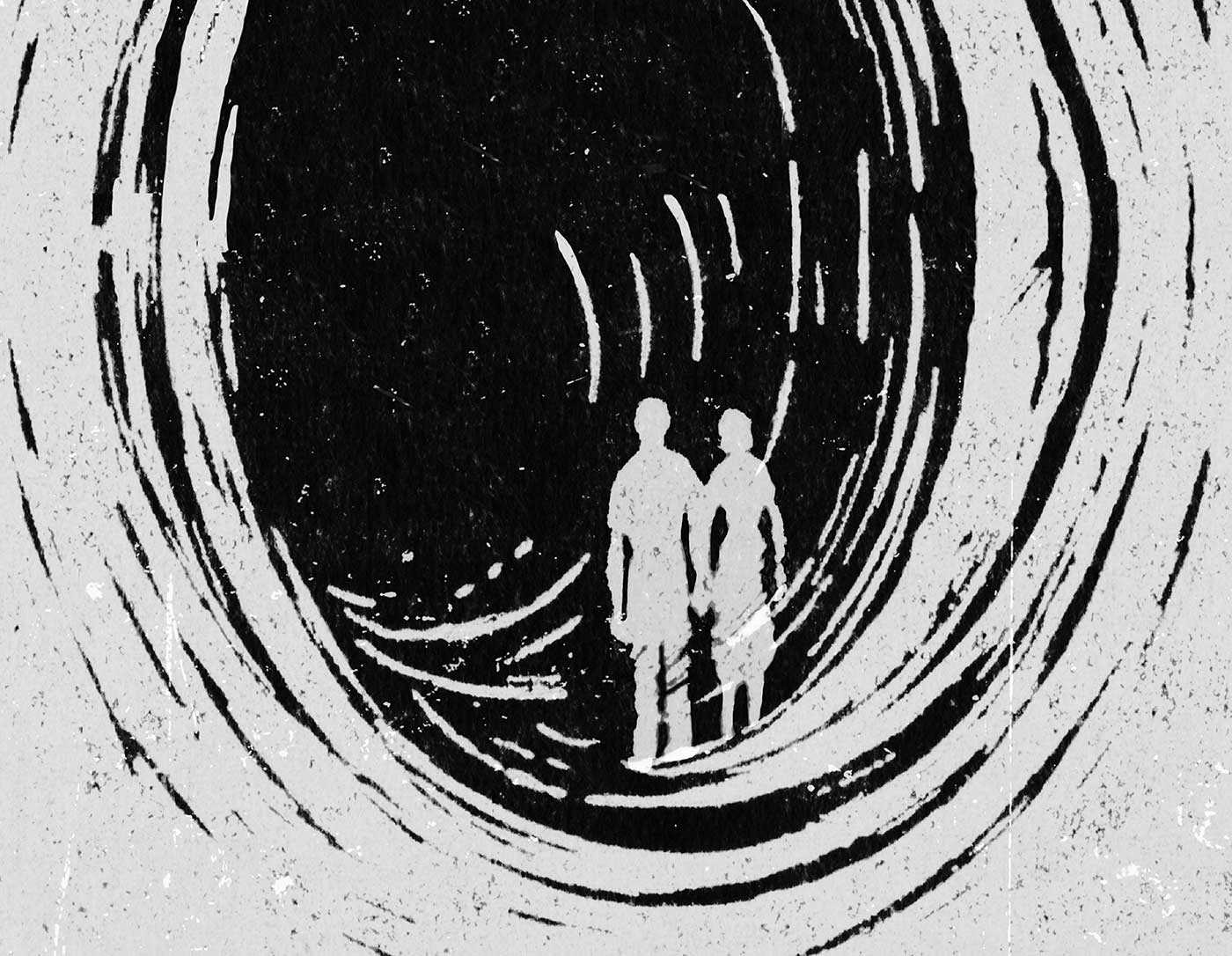
Lady with a Sword
The Dramatic Life & Legacy of Dorothy L. Sayers
Let us take particular notice of the empty brain. Here Sloth is in a conspiracy with Envy to prevent people from thinking. Sloth persuades us that stupidity is not our sin, but our misfortune: while Envy at the same time persuades us that intelligence is despicable—a dusty, highbrow, and commercially useless thing.
—Dorothy L. Sayers, "The Other Six Deadly Sins," in Creed or Chaos? (1949)
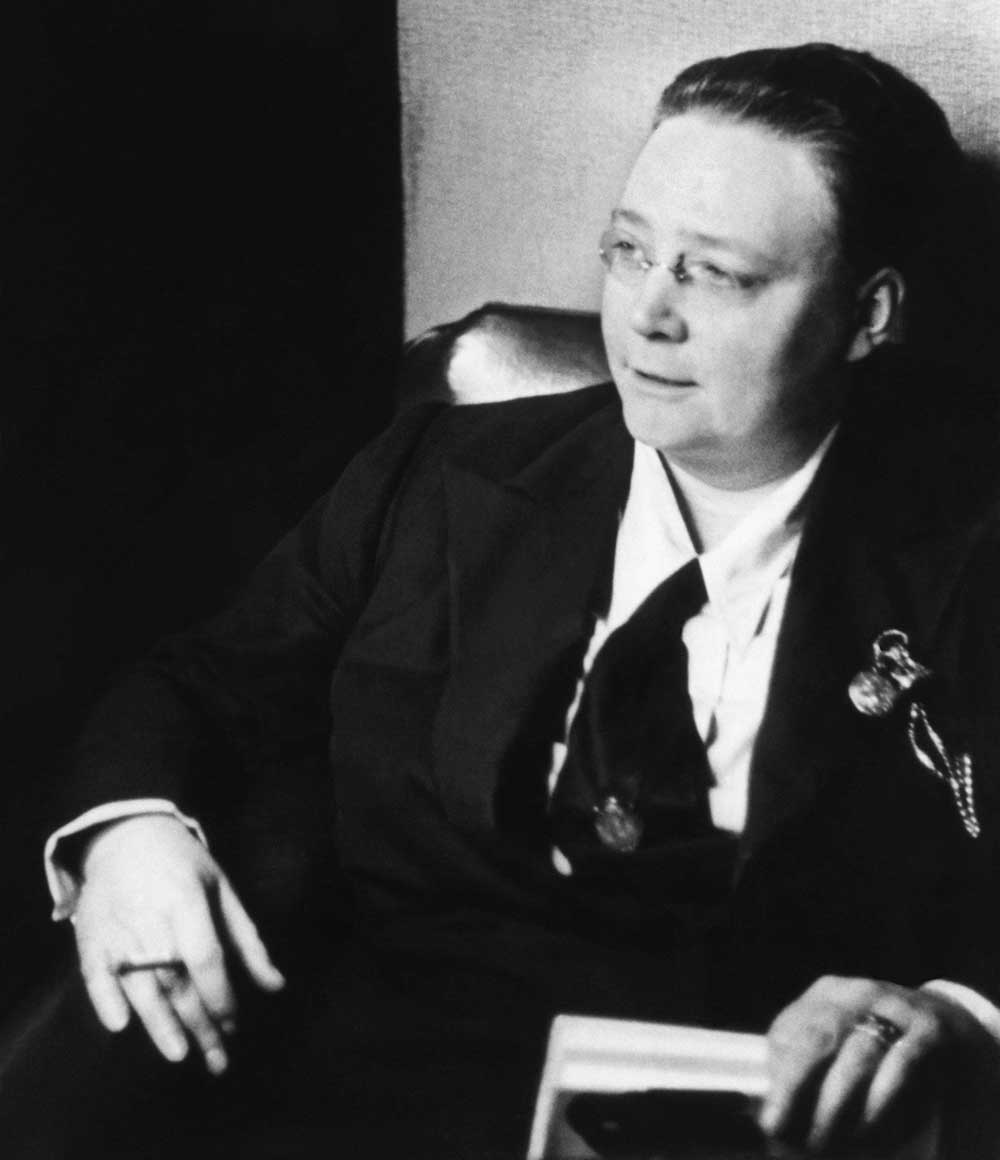
On the surface, the crime novels of Dorothy L. Sayers, featuring amateur detective Lord Peter Wimsey, can appear merely diverting, a good choice when one is looking for a little light reading. Wimsey often spouts nonsense, like Bertie Wooster, but woven underneath and behind the seeming frivolity are universal themes. Sayers leaves clues, not just to the solution of the crime, but also into the depths of human character and the role of conscience, responsibility, and God's laws of justice. Even the off-hand remarks of her characters pack a punch. (Why is Detective Parker reading a commentary on Hebrews, and Lord Peter a folio Dante in Whose Body? I leave it to you to find out.)
Dorothy Sayers was an adept writer of murder mysteries, but she was also a poet, Christian apologist, and playwright. In these roles she was never diplomatic. She wasn't able to tip-toe around a ticklish subject; no, she waded in swinging, taking a good bit of fiendish delight in the battle, no matter what topic she was tackling, from sloppy prose to flabby theology. Jumping into the fray, she challenged sweetly pious Christians and highbrow atheists alike. Often the determined unbeliever responded with interest, and the spineless believer straightened up under her blunt tongue.
Sayers won't allow our minds to rot, even when she is at her most entertaining. A polymath herself, she was constantly urging Christians and seekers alike to eschew intellectual laziness. "A Note on Creative Reading" in her 1940 book Begin Here: A War-Time Essay is a challenge to escapist readers like me. She worried that intellectual rigor would be put aside for the duration of the war, a concern that has its parallel today. She advises reading the book reviews in "a decently serious paper" and ordering the books that look intriguing.
If the book, when obtained, does not interest you, ask yourself why; and have the elementary politeness to give yourself a sensible answer. Does the subject displease you?—and if so, is it by any chance one of those disquieting things that you "would rather not know about", though you really ought not to shirk it? Does the author's opinion conflict with some cherished opinion of your own?—If so, can you give reasons for your own opinion? (Do try and avoid the criticism that begins: "We do not like to think" this, that or the other; it is often so painfully true that we do not like to think.) Or is it that the author is ignorant, illogical or superficial? (Are you sure? Have you taken the trouble to verify his references? Can you support your own view from your reading or experience?) Or is his style dull, obscure, or ugly? Does he write bad English? If you think so, justify yourself by examples and be sure you know why they are bad.
What was her driving ambition? To stir up Christians to experience the gospel as truth and to confront intellectuals with the case for the reality of the Word Incarnate. As she wrote to Charles Williams in 1944:
If God gave us an intellect, it was presumably that we should use it in His service. . . . Of course, the experience of the presence of God is not the same thing as having opinions about Him. But false and ignorant opinions are an obstacle to spiritual experience, and it is our business to remove those false opinions and cure that ignorance as far as we can.
The Pioneer
Sayers was born in 1893 and educated at home—her father was an Anglican rector—until she went to boarding school at sixteen. In 1915 she received a certificate of first-class honors in medieval French literature from the all-woman Somerville College, Oxford. Notice that she did not receive a diploma. Women did not achieve that possibility until 1920; in that year she was one of the first to be granted a retroactive MA.
Carole Vanderhoof resides at the Bellvale Bruderhof, a Christian community in Chester, New York, with her husband of 40 years and two parakeets. She works for Plough Publishing and is the editor of The Gospel in Dorothy L. Sayers: Selections from Her Novels, Plays, Letters, and Essays (Plough Publishing House, 2018).
A Journal of Mere Christianity—Delivered to Your Door
- Essays on theology, culture, and the Church
- Contributors from across the Christian traditions

Six print issues (one year) of Touchstone, plus full online access and PDF downloads for only $39.95.

Get a one-year full-access subscription to the Touchstone online archives for only $19.95.
bulk subscriptions
Order Touchstone subscriptions in bulk and save $10 per sub! Each subscription includes 6 issues of Touchstone plus full online access to touchstonemag.com—including archives, videos, and pdf downloads of recent issues for only $29.95 each! Great for churches or study groups.
Transactions will be processed on a secure server.
more on biographical from the online archives
more from the online archives

calling all readers
Please Donate
"There are magazines worth reading but few worth saving . . . Touchstone is just such a magazine."
—Alice von Hildebrand
"Here we do not concede one square millimeter of territory to falsehood, folly, contemporary sentimentality, or fashion. We speak the truth, and let God be our judge. . . . Touchstone is the one committedly Christian conservative journal."
—Anthony Esolen, Touchstone senior editor