




View
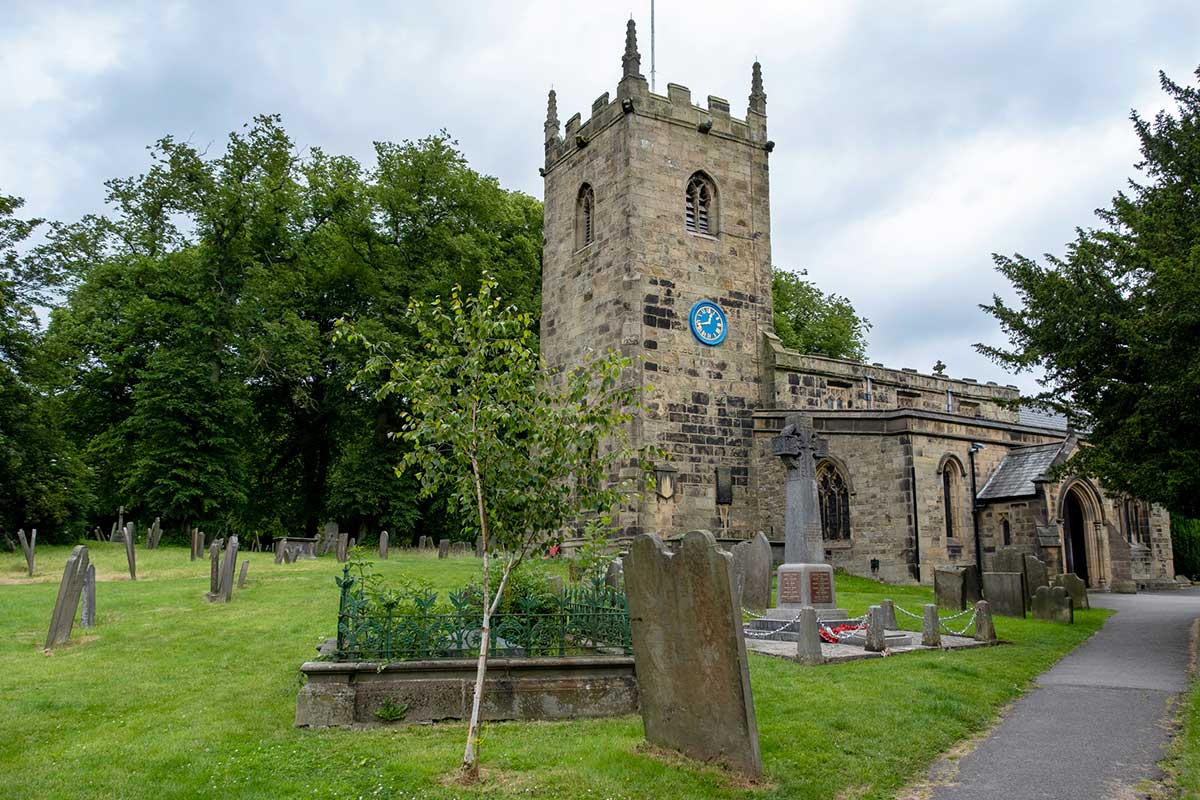
The Plague Village of Eyam
Gary Thomson on an Enduring Story of Sacrifice to Save Others
In these times of quarantine and "social distancing," a timeless story from a Derbyshire village in England reminds us of the abiding power of faith and self-sacrifice.
The village, Eyam, twelve miles west of Sheffield, is one of a cluster of Saxon-Age settlements lying in the Hope Valley along a wooded meander of the River Derwent. This is the epicenter of Peak National Park, a region of extraordinary beauty. Walkers, painters, artists, and amateur historians all come to explore the open moors, sheltered dales, and villages that bring a nostalgic peace away from workaday routine.
THIS ARTICLE ONLY AVAILABLE TO SUBSCRIBERS.
FOR QUICK ACCESS:
Gary Thomson is a retired teacher residing in Ontario, Canada. During his teaching career he wrote inspirational and history-themed articles for readers of diverse faiths. These have appeared in Mature Years, Anglican Review, Military Chaplain, and Doctors' Review, among others. He was raised and nurtured in the Anglican faith.
A Journal of Mere Christianity—Delivered to Your Door
- Essays on theology, culture, and the Church
- Contributors from across the Christian traditions

Six print issues (one year) of Touchstone, plus full online access and PDF downloads for only $39.95.

Get a one-year full-access subscription to the Touchstone online archives for only $19.95.
bulk subscriptions
Order Touchstone subscriptions in bulk and save $10 per sub! Each subscription includes 6 issues of Touchstone plus full online access to touchstonemag.com—including archives, videos, and pdf downloads of recent issues for only $29.95 each! Great for churches or study groups.
Transactions will be processed on a secure server.
more on history from the online archives

28.3—May/June 2015
Whittaker Chambers's Lonely War Against Godless Collectivism by Hunter Baker
14.6—July/August 2001
The Transformed Relics of the Fall
on the Fulfillment of History in Christ by Patrick Henry Reardon

15.6—July/August 2002
Things Hidden Since the Beginning of the World
The Shape of Divine Providence & Human History by James Hitchcock
more from the online archives

37.5—Sept/Oct 2024
The Death of Conservatism & the Negative World by J. Douglas Johnson
32.4—July/August 2019
Does Biblical Language for Man Matter? by Stephen F. Noll
31.4—July/August 2018
The Difficulty of Apologetics for Dead Souls in the Real World by R. J. Snell
calling all readers
Please Donate
"There are magazines worth reading but few worth saving . . . Touchstone is just such a magazine."
—Alice von Hildebrand
"Here we do not concede one square millimeter of territory to falsehood, folly, contemporary sentimentality, or fashion. We speak the truth, and let God be our judge. . . . Touchstone is the one committedly Christian conservative journal."
—Anthony Esolen, Touchstone senior editor
