




As It Is Written . . .
From Morals to Mystery
by Patrick Henry Reardon
I have long esteemed the ancient and traditional lectionaries of the Church, in which the biblical readings chosen for special days and seasons are sometimes juxtaposed by reason of some perceived affinity between them. Because of the readings prescribed for the Holy Saturday vigil, for instance, my deepest memory of the parting of the Red Sea associates that event with the Creator's dividing the water above the firmament from the waters below the firmament.
Such juxtapositions, a feature of the old Christian lectionaries, are apparently rooted in the earlier lectionaries of the synagogue. Indeed, the most primitive Christian assemblies surely followed the scheduled sequences in those Jewish lectionaries to which they were accustomed; there are notable traces of this in the apostolic corpus. Many decades ago, Philip Carrington, relying especially on the format of the Codex Vaticanus, argued that the Gospel of Mark was structured to correspond to the seasonal synagogue readings.
THIS ARTICLE ONLY AVAILABLE TO SUBSCRIBERS.
FOR QUICK ACCESS:
Patrick Henry Reardon is pastor emeritus of All Saints Antiochian Orthodox Church in Chicago, Illinois, and the author of numerous books, including, most recently, Out of Step with God: Orthodox Christian Reflections on the Book of Numbers (Ancient Faith Publishing, 2019).
A Journal of Mere Christianity—Delivered to Your Door
- Essays on theology, culture, and the Church
- Contributors from across the Christian traditions

Six print issues (one year) of Touchstone, plus full online access and PDF downloads for only $39.95.

Get a one-year full-access subscription to the Touchstone online archives for only $19.95.
bulk subscriptions
Order Touchstone subscriptions in bulk and save $10 per sub! Each subscription includes 6 issues of Touchstone plus full online access to touchstonemag.com—including archives, videos, and pdf downloads of recent issues for only $29.95 each! Great for churches or study groups.
Transactions will be processed on a secure server.
more on bible from the online archives
32.2—March/April 2019
on Preserving Physical & Spiritual Nourishment by Nathanael Devlin
31.4—July/August 2018
on the Brevity & Theology of Her Recorded Words by Judith Anderson
more from the online archives
31.5—September/October 2018
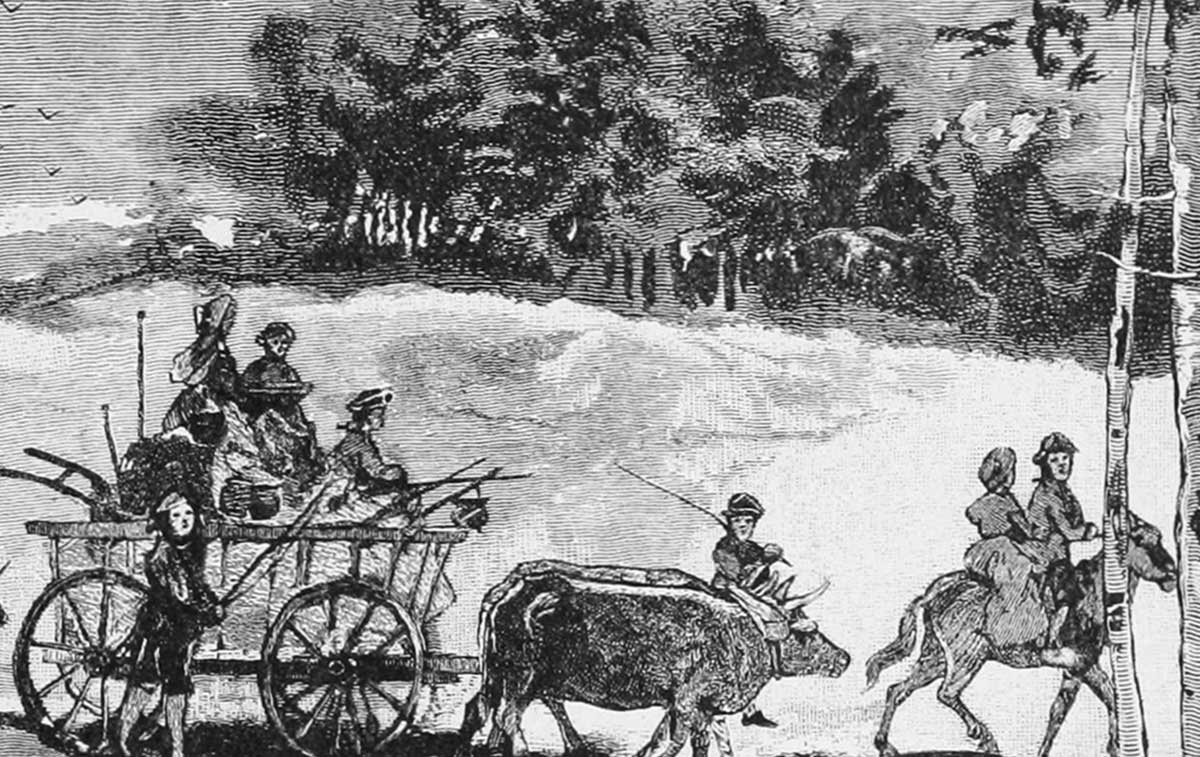
Errands into the Moral Wilderness
Forms of Christian Family Witness & Renewal by Allan C. Carlson

30.3—May/June 2017
on the Misuse of Property Rights to Justify Slavery & Abortion by Robert Hart

32.2—March/April 2019
Finding Him Again Through the Patriarchal Group by Anthony Esolen
calling all readers
Please Donate
"There are magazines worth reading but few worth saving . . . Touchstone is just such a magazine."
—Alice von Hildebrand
"Here we do not concede one square millimeter of territory to falsehood, folly, contemporary sentimentality, or fashion. We speak the truth, and let God be our judge. . . . Touchstone is the one committedly Christian conservative journal."
—Anthony Esolen, Touchstone senior editor
