




Illuminations
A Whole Poem
Anthony Esolen
Whenever I recommend the poetry of Christian hymns, and in doing so cast a cold eye on the incompetence and sloppy sentimentality of much of what we sing in our churches today, someone will accuse me of being an "elitist," as if that were a fit response to end all discussion. I typically reply in three ways.
First, I say that my friend has evaded the issue. If he wants to defend the art of a Marty Haugen or David Haas, let him do so, on the same grounds whereby we judge the worth of any poem, sacred or no. Then I remind him that all human cultures have had traditions of poetry—songs—handed down over the generations, beloved alike by old and young, rich and poor, men and women, whether the people were literate or not. We are the strange beings with no poetry in our souls. Finally, I ask him to turn to another art. Would he show the same indifference if an incompetent were to cover the walls of his home with paintings? Would he open his wallet for ugly and awkward furniture? If not, why the carelessness with poetry, with its peculiar power to enter the soul and to form it for good or bad?
I do know one of the reasons why. People in American churches don't think much about poetry, just as Libyans don't think much about igloos. They are as likely to read one good poem in a year as a Bedouin herdsman is to go ice fishing. That is a shame, and quite unnecessary; it is a lot easier to bring a good poem to an American congregation than to ship walruses on ice to Tripoli.
But would they know a good poem when they heard one? Perhaps not. We are too used to singing only a part of a poem, leaving off the last stanzas. That results in more than incompleteness. It gives people the sense that there never was anything to be complete or incomplete at all, only a series of related sentiments, to be cut short as you will. You can't intend to hurt the work of art when you don't know that there was a work of art to hurt in the first place. Everything is anticlimactic. But then, why should we build to a climax, when we're all right as we are?
Our Trouble
Here, though, is a poem that must be sung to its end, because otherwise it would make no sense, and because it asserts that we are not all right as we are, so that if we stop short, we leave ourselves where we do not want to be. It is Come, Holy Spirit, Heavenly Dove, by Isaac Watts. The poem is in Common Meter, so you may sing it to any one of hundreds of melodies, but the old Methodist Hymnal (1939) sets it to the sprightly St. Martin's, an unusual but I think effective choice. In the first stanza, we praise the Holy Spirit and beg him to come to us, setting forth our trouble in one little word:
Come, Holy Spirit, heavenly Dove,
With all thy quickening powers;Kindle a flame of sacred love
In these cold hearts of ours.
Well done, Dr. Watts. We ask to be quickened: to be brought to life. We ask the Spirit to kindle that sacred love, because on our own we do not have it. Our hearts are cold: the adjective alliterates with quickening and kindle, and that makes it seem the more isolated, out of order. Imagine ending the song here!
The second stanza explains why we are so cold, and how the chill is manifest:
Anthony Esolen is Distinguished Professor of Humanities at Thales College and the author of over 30 books, including Real Music: A Guide to the Timeless Hymns of the Church (Tan, with a CD), Out of the Ashes: Rebuilding American Culture (Regnery), and The Hundredfold: Songs for the Lord (Ignatius). He has also translated Dante’s Divine Comedy (Random House) and, with his wife Debra, publishes the web magazine Word and Song (anthonyesolen.substack.com). He is a senior editor of Touchstone.
A Journal of Mere Christianity—Delivered to Your Door
- Essays on theology, culture, and the Church
- Contributors from across the Christian traditions
Subscribe (Print + Online) 
Six print issues (one year) of Touchstone, plus full online access and PDF downloads for only $39.95.
Subscribe (Online Only) 
Get a one-year full-access subscription to the Touchstone online archives for only $19.95.
bulk subscriptions
Order Touchstone subscriptions in bulk and save $10 per sub! Each subscription includes 6 issues of Touchstone plus full online access to touchstonemag.com—including archives, videos, and pdf downloads of recent issues for only $29.95 each! Great for churches or study groups.
Transactions will be processed on a secure server.
more from the online archives
22.6—July/August 2009
on the Integration of Anger into the Virtuous Life by Leon J. Podles

19.10—December 2006
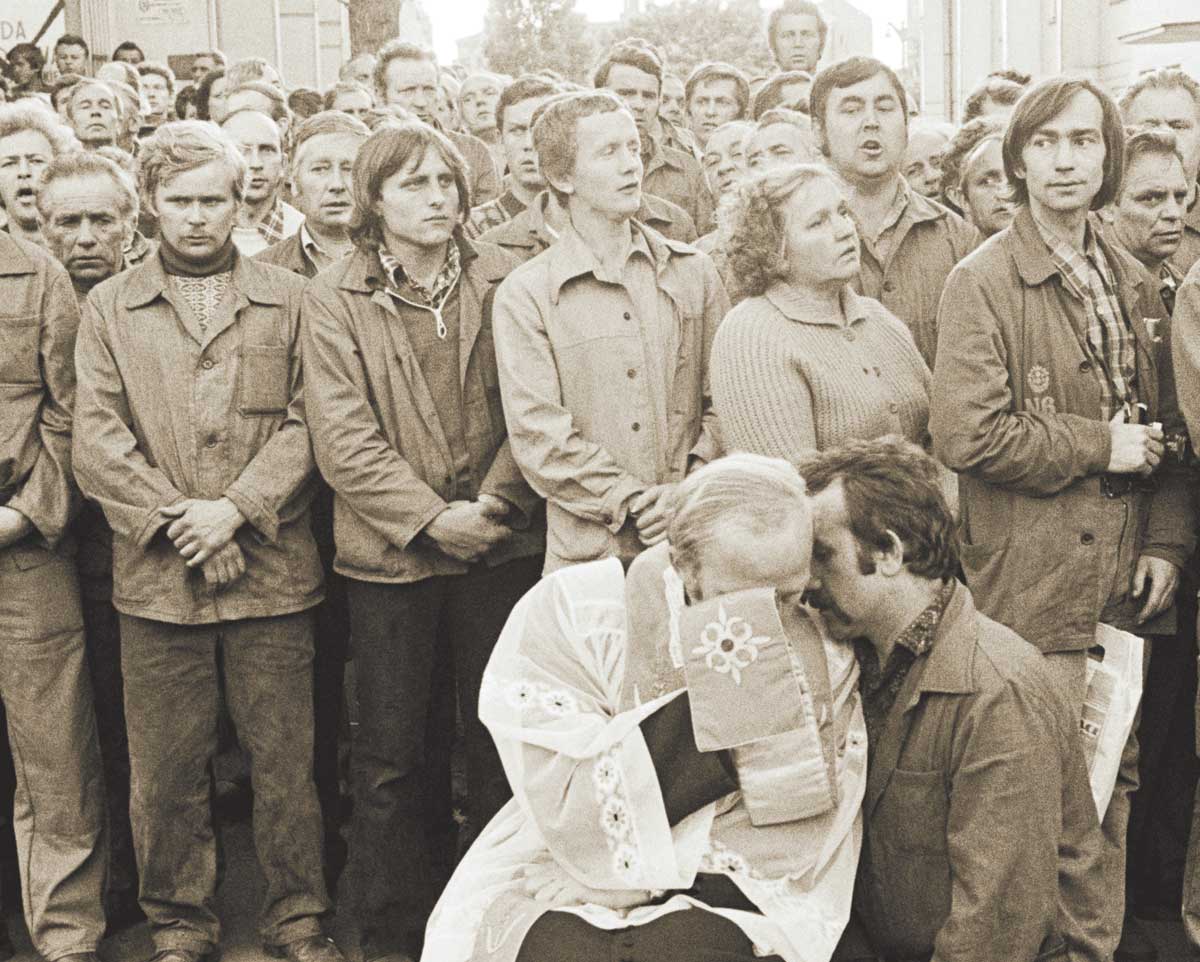
Workers of Another World United
A Personal Commemoration of Poland’s Solidarity 25 Years Later by John Harmon McElroy
calling all readers
Please Donate
"There are magazines worth reading but few worth saving . . . Touchstone is just such a magazine."
—Alice von Hildebrand"Here we do not concede one square millimeter of territory to falsehood, folly, contemporary sentimentality, or fashion. We speak the truth, and let God be our judge. . . . Touchstone is the one committedly Christian conservative journal."
Support Touchstone
—Anthony Esolen, Touchstone senior editor
