




Feature
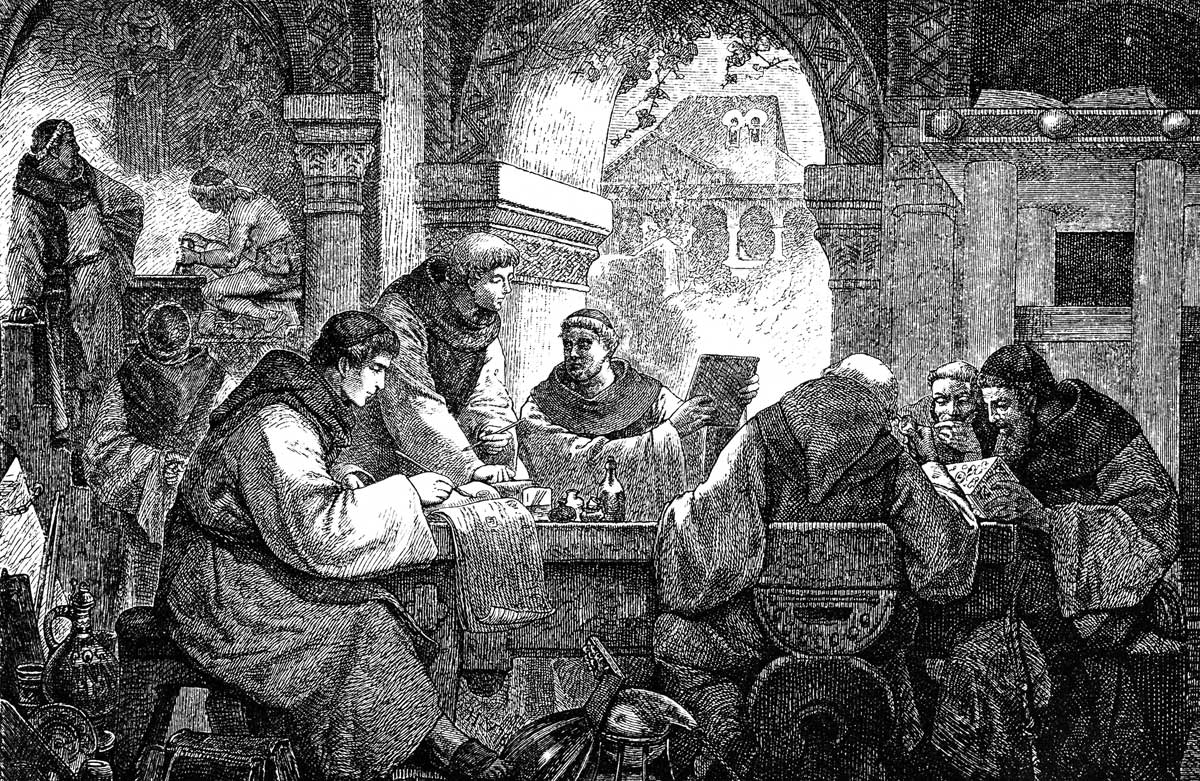
Medieval Thinking
Our Modern Rights Tradition Has Much Older Roots Than Many Realize
Andrew Latham & Laurel Kriesel-Bigler
The conventional account of the evolution of the modern rights tradition traces the birth of that tradition back to John Locke (1632–1704), the Glorious Revolution (1688), Thomas Paine (1737–1809), and the framers of the U.S. Constitution (1787–1789). According to this account, political and philosophical developments occurring first in early modern England and later in colonial America gave rise to a radically new understanding of rights.
The pre-modern understanding of rights—as articulated in the Magna Carta, for example—was that they were conditional claims made by people occupying particular social roles (vassals, for example) vis-à-vis people occupying different, and usually higher, social roles (lords, to continue the example). This understanding was radically reworked in the modern era, or so the conventional account would have it, by quintessentially modern thinkers like Locke, who redefined rights as unconditional and inalienable claims to such things as life, liberty, and the pursuit of happiness made by all persons against all other persons and especially the state.
THIS ARTICLE ONLY AVAILABLE TO SUBSCRIBERS.
FOR QUICK ACCESS:
Andrew Latham is a Professor of Political Science at Macalester College in Saint Paul, Minnesota. He is the author of Theorizing Medieval Geopolitics: War and World Order in the Age of the Crusades (2011), The Holy Lance (2015), a novel dealing with the Third Crusade, and Medieval Sovereignty (2022).
Laurel Kriesel-Bigler is Prof. Latham's research assistant.
A Journal of Mere Christianity—Delivered to Your Door
- Essays on theology, culture, and the Church
- Contributors from across the Christian traditions

Six print issues (one year) of Touchstone, plus full online access and PDF downloads for only $39.95.

Get a one-year full-access subscription to the Touchstone online archives for only $19.95.
bulk subscriptions
Order Touchstone subscriptions in bulk and save $10 per sub! Each subscription includes 6 issues of Touchstone plus full online access to touchstonemag.com—including archives, videos, and pdf downloads of recent issues for only $29.95 each! Great for churches or study groups.
Transactions will be processed on a secure server.
more on philosophy from the online archives
32.6—November/December 2019
An Open Letter to Christian Readers of Jordan Peterson & Roger Scruton by James Bryson
32.5—September/October 2019
Some Trivial Thoughts on the Study of Philosophy by Graeme Hunter
24.2—March/April 2011
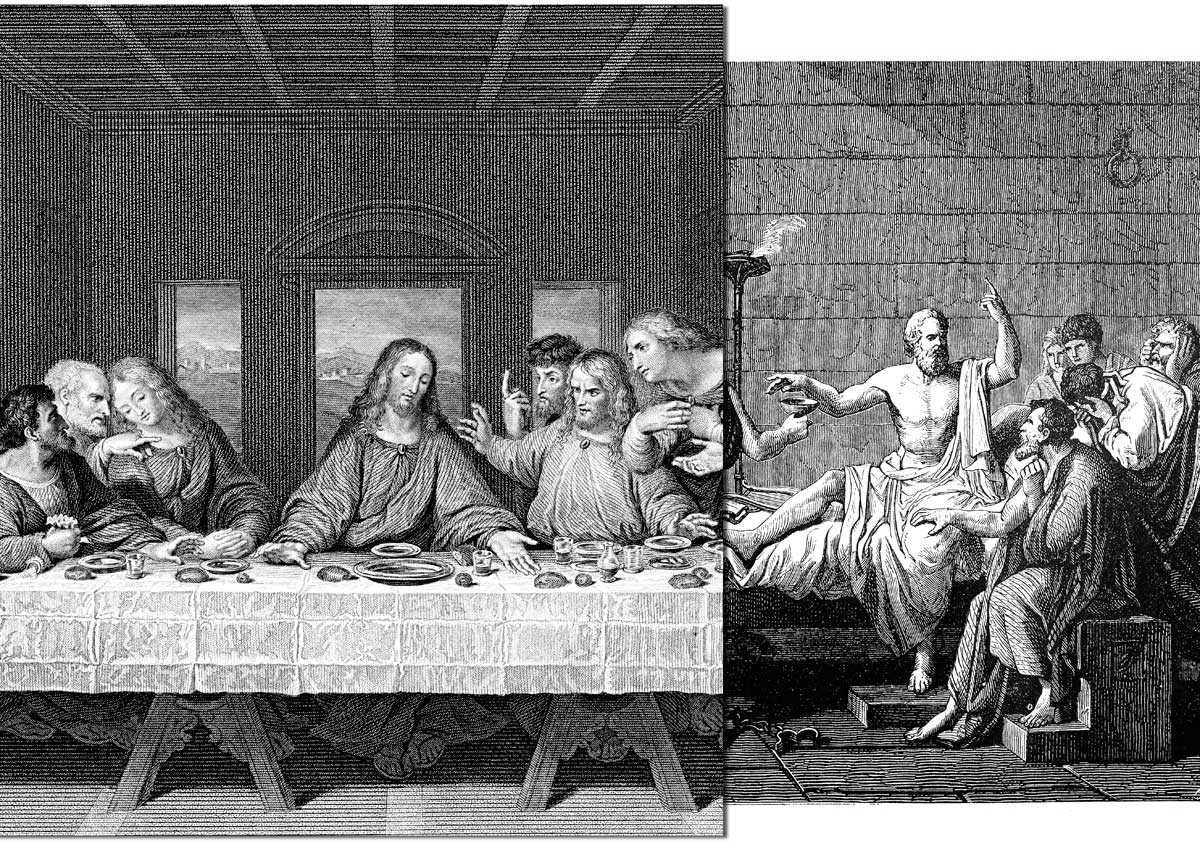
Certain Death & the Last Lectures of Socrates & Jesus by Randall B. Smith
more from the online archives


28.5—Sept/Oct 2015
Remembering Angka & the Idolatry of the Khmer Rouge 40 Years Later by Les Sillars

33.4—July/August 2020
Our Views on the President Are Not Crucial by S. M. Hutchens
calling all readers
Please Donate
"There are magazines worth reading but few worth saving . . . Touchstone is just such a magazine."
—Alice von Hildebrand
"Here we do not concede one square millimeter of territory to falsehood, folly, contemporary sentimentality, or fashion. We speak the truth, and let God be our judge. . . . Touchstone is the one committedly Christian conservative journal."
—Anthony Esolen, Touchstone senior editor
