




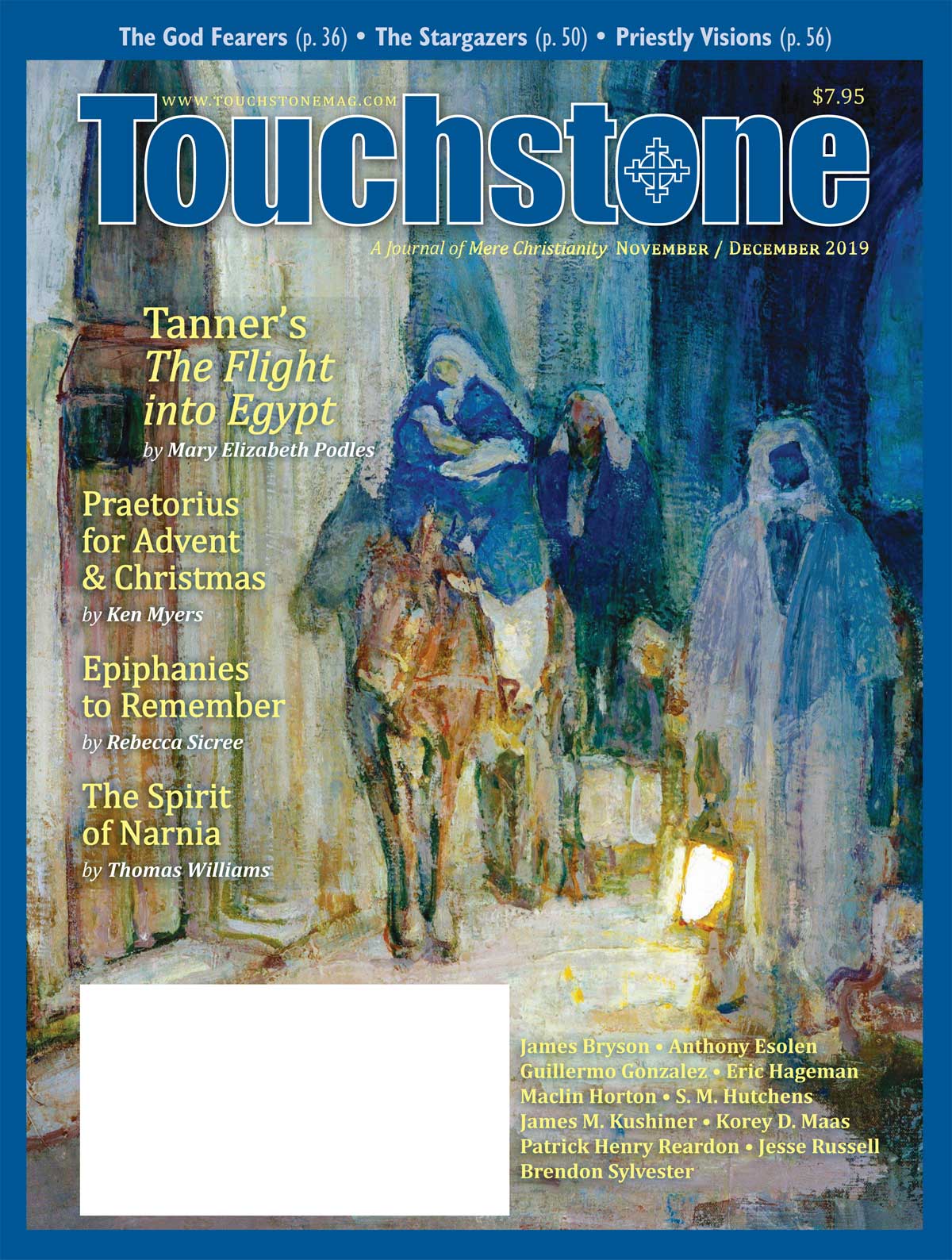
As It Is Written . . .
Priestly Visions
by Patrick Henry Reardon
Were it not for the contrary evidence, we might not suspect how important Israel's priests and the whole tribe of Levi became during their exile in Babylon. The idea is surprising at first. Because of the reforms of Hezekiah in the eighth century and of Josiah in the seventh, the ritual service of the priests and Levites had been restricted to the temple in Jerusalem; they could not offer sacrifice anywhere else. For that reason, we might have anticipated, after the temple's destruction in 587, a corresponding loss of importance for the tribe of Levi, and especially the house of Aaron. Without an altar, we would expect the priesthood to decline in importance.
Clearly, however, this was not the case. On the contrary, the priests and Levites became more important during that half-century of exile, particularly as scholars and teachers of the Torah. When the children of Israel returned to the Holy Land, beginning in 538, the priests and Levites among them enjoyed a level of authority notably higher than they enjoyed before the exile, because they had in the intervening years made themselves sopherim, "scribes," scholars of the Torah.
Ezra, the scholarly priest who came from Babylon to Jerusalem in 458, was the heir of those exilic priest/scribes who flourished a century earlier. In fact, many exegetes, starting with St. Jerome, have suggested that God's people received the full, integral text of the Torah from the editing hands of Ezra.
The interests, preoccupations, and concerns of the priesthood are rather prominent in Numbers; various sacrificial laws come to mind (15:1–21; 28:1—29:40), for instance, and sundry priestly duties (10:1–10; 18:1–7; 19:1–22), along with provisions for the support of Levitical families (18:8–32; 35:1–8). Aaron's household receives particular attention: his is the only rod that blossoms (17:1–13; cf. Heb 9:3–4), and things go badly for those who challenge his primacy (16:1–40).
The priestly concerns of Numbers follow those of Leviticus, which is supremely the priestly book of the Old Testament. Leviticus, in turn, with its sustained emphasis on ritual and cultic purity, is the logical sequel to the completion and appointments of the tabernacle in the final chapters of Exodus. Thus, notwithstanding the many disparate elements found in the material between Exodus 36 and Aaron's death in Numbers 20, one foundational theme gives coherence to the whole: the correct, the orthodox, worship of God, especially as it is related to the house of God.
Ritual purity, feast days, sacrifices and other rites, the priestly service, vestments, ordinations, liturgical furniture and appointments, lampstands, altars, and so on—they all come down to one thing: the proper worship of God in his house. This is clearly the dominant idea.
Now, since I have placed the full, integral message of the Pentateuch, including Numbers, in the sixth century, why this concern with God's house? How does one explain it? After all, the temple was gone—disappeared! Is there any evidence, then, that concerns about the temple still mattered to the tribe of Levi, who spent a half-century in Babylon without it? Did those priestly scribes really think about the house of God any longer?
I am convinced they thought of little else.
In the earlier stage of the exile, even before Solomon's temple was destroyed, an exiled priest living in Babylon, while he prayed in the Spirit on the banks of the Kabari Canal, received his first vision pertinent to the subject we are discussing.
The revelation had to do with "four living creatures," he tells us, ceaselessly moving and transcendent beings, of whom a later visionary says, "they were in the midst of God's throne and round about it." This priest, who no longer had access to the temple on earth, was initiated into the higher model. The date was August 4, 593 b.c., the fifth day of the fourth month of the fifth year of the exile of King Jehoiakin.
Patrick Henry Reardon is pastor emeritus of All Saints Antiochian Orthodox Church in Chicago, Illinois, and the author of numerous books, including, most recently, Out of Step with God: Orthodox Christian Reflections on the Book of Numbers (Ancient Faith Publishing, 2019).
A Journal of Mere Christianity—Delivered to Your Door
- Essays on theology, culture, and the Church
- Contributors from across the Christian traditions

Six print issues (one year) of Touchstone, plus full online access and PDF downloads for only $39.95.

Get a one-year full-access subscription to the Touchstone online archives for only $19.95.
bulk subscriptions
Order Touchstone subscriptions in bulk and save $10 per sub! Each subscription includes 6 issues of Touchstone plus full online access to touchstonemag.com—including archives, videos, and pdf downloads of recent issues for only $29.95 each! Great for churches or study groups.
Transactions will be processed on a secure server.
more from the online archives

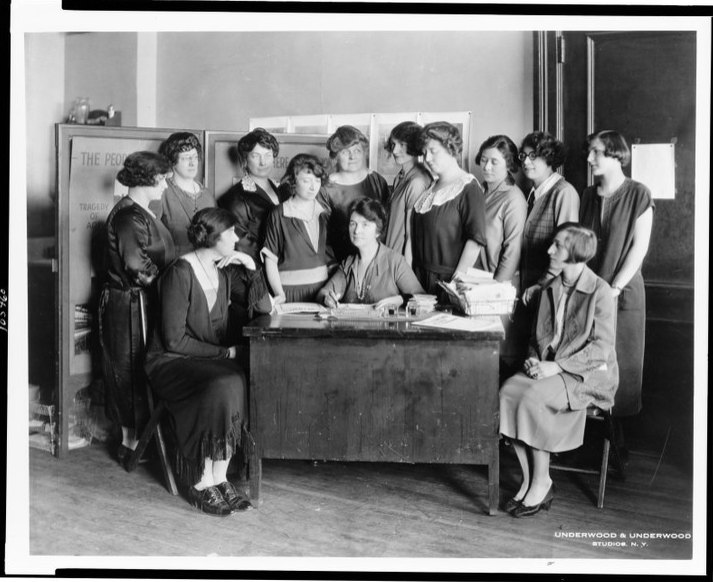
24.1—January/February 2011
How Planned Parenthood's Founder Played the Christians, and Won by Allan C. Carlson
14.1—January/February 2001
The Christian Heart of Fatherhood
The Place of Marriage, Authority & Service in the Recovery of Fatherhood by John M. Haas
calling all readers
Please Donate
"There are magazines worth reading but few worth saving . . . Touchstone is just such a magazine."
—Alice von Hildebrand
"Here we do not concede one square millimeter of territory to falsehood, folly, contemporary sentimentality, or fashion. We speak the truth, and let God be our judge. . . . Touchstone is the one committedly Christian conservative journal."
—Anthony Esolen, Touchstone senior editor
