





Feature
Thy Law Is Truth
The Living Space Between Faith & Reason
There are few questions more momentous than that of faith. In whom or what should I trust—and why? Of course there are many kinds of faith, and no simple answer can be given that will cover all of them. Plainly reason must play a role at some level, but how and why is not easy to say, least of all when it comes to faith in God.
Aristotle famously warned that a correct beginning is necessary to avoid great errors at the end. In that spirit, I wish to focus here on the basic question of the nature of faith and its relationship to reason. I will begin with what I call mundane faith, the sort that is involved in believing in a loved one, a leader, or perhaps even an ideal or political program. Faith in this sense seems to be an inescapable element of human life, however keenly we may be aware of its potential for failure. The important question is how it relates to reason, and whether we can find in this relationship a clue that points beyond the mundane to more controversial and problematic forms of faith. In particular, how does mundane faith relate to religious faith, and is there a bridge connecting the two?
I wish to suggest that intermediate between them there is a third kind of faith, which I will call rational faith. In calling it "rational" I mean not that it is required by reason (although in some sense it is), but that it is a faith that makes reason possible. Recognizing the role of rational faith as intermediary between mundane and religious faith will enable us to see their
underlying unity, and how reason welcomes and even requires them all.
Of course, how and why one comes to faith in God is also crucial to determining the content of that faith. I hope that the line of thought offered here will show the intimate connection between belief in God and the imperative of obedience. By this I mean obedience not merely to one who wields ultimate power, but to the Truth that we seek whenever we act as rational beings. In that light, this essay is a defense, not only of faith, but more specifically of the kind of faith that issues in a love of truth and a zeal for obedience. To put this another way, the faith I shall be defending is not merely the affirmation of certain propositions, but a living faith that is capable of transforming human life.
Mundane Faith
Let us begin with the simple statement, "I have faith in you." We have all used or at least heard such an expression before, but probably without considering it very carefully. When one does so, one soon finds that it reveals some interesting features. The speaker does not claim to know that the person addressed is trustworthy or bound to succeed—not in the same way that he knows, say, that the person being addressed has brown hair or is five feet tall. On the other hand, the speaker does not merely hope that the person addressed has these traits, either. To say "I hope that you'll do it" and "I have faith that you'll do it" are entirely different. The speaker's attitude falls somewhere between hope and knowledge, involving a determination to act and believe as if he knows that the person addressed is trustworthy or bound to succeed, while recognizing that, in the strictest sense, he does not.
Put in such bald terms, the speaker's attitude may seem irrational. Why should one decide to act as if he possesses knowledge when he does not? Yet almost everyone would recognize that there are times when such an attitude is appropriate, and indeed is rational in any sense worthy of the name. We can readily imagine circumstances in which a parent speaking to a child, a teacher to a pupil, or a coach to an athlete might naturally and appropriately adopt such an attitude, sometimes on only the slimmest evidence. Indeed, we can imagine circumstances in which not to do so would be a grave wrong. For a mother and father to refuse to place confidence in their child, lacking any compelling reason, would be to fail of their duty as parents. The child needs the confidence and trust that only they can bestow. Perhaps hazarding it is a risk, but to be a parent is to take such risks.
What this shows, I think, is that there are times when one has to be willing to believe beyond the evidence, in the sense of forming a belief that the evidence does not require and may even weigh against. Of course, this makes the worry about rationality all the more troublesome. Isn't to be rational precisely to allow one's beliefs to be governed by the evidence? And if so, are not the parents in fact acting contrary to reason? On such a view we might still say that their faith is permissible, and perhaps even obligatory, but we would have to admit that it is, strictly speaking, irrational.
Such a conclusion would be deeply pessimistic. It implicitly admits that reason and morality are at odds, so that to do what is right may require being irrational. Before adopting such a dismal expedient, we ought to think more carefully about reason itself. The slogan that "one must allow one's beliefs to be governed by the evidence" presupposes that there is a single correct way of determining what the evidence is and how it is to be weighed. Surely it is obvious that, in the cases we are considering, this is false. To return to the example of a mother and her child, she has to decide which of the child's acts and proclivities to remember, and which to ignore or to trust that he will overcome. Yes, she may be wrong, but so too may those who judge otherwise.
Assessing another person's character always involves some element of decision regarding which pieces of evidence to weigh heavily, and which to minimize or ignore. What distinguishes the decision made by the mother from that of a disinterested observer is that hers is governed by her commitment to the child. To allow it to be governed in this way is not irrational; she is the child's mother, and to be rational requires that she take that fact into account. What would be truly irrational would be to act as if she had no special bond to the child and ought to judge her child's character in the same way as anyone else.
David Bradshaw is a Professor of Philosophy at the University of Kentucky and the author of Aristotle East and West: Metaphysics and the Division of Christendom (Cambridge University Press), as well as numerous articles on ancient, medieval, and patristic philosophy. He and his wife attend St. Athanasius Orthodox Church in Nicholasville, Kentucky.
A Journal of Mere Christianity—Delivered to Your Door
- Essays on theology, culture, and the Church
- Contributors from across the Christian traditions

Six print issues (one year) of Touchstone, plus full online access and PDF downloads for only $39.95.

Get a one-year full-access subscription to the Touchstone online archives for only $19.95.
bulk subscriptions
Order Touchstone subscriptions in bulk and save $10 per sub! Each subscription includes 6 issues of Touchstone plus full online access to touchstonemag.com—including archives, videos, and pdf downloads of recent issues for only $29.95 each! Great for churches or study groups.
Transactions will be processed on a secure server.
more on philosophy from the online archives
24.2—March/April 2011
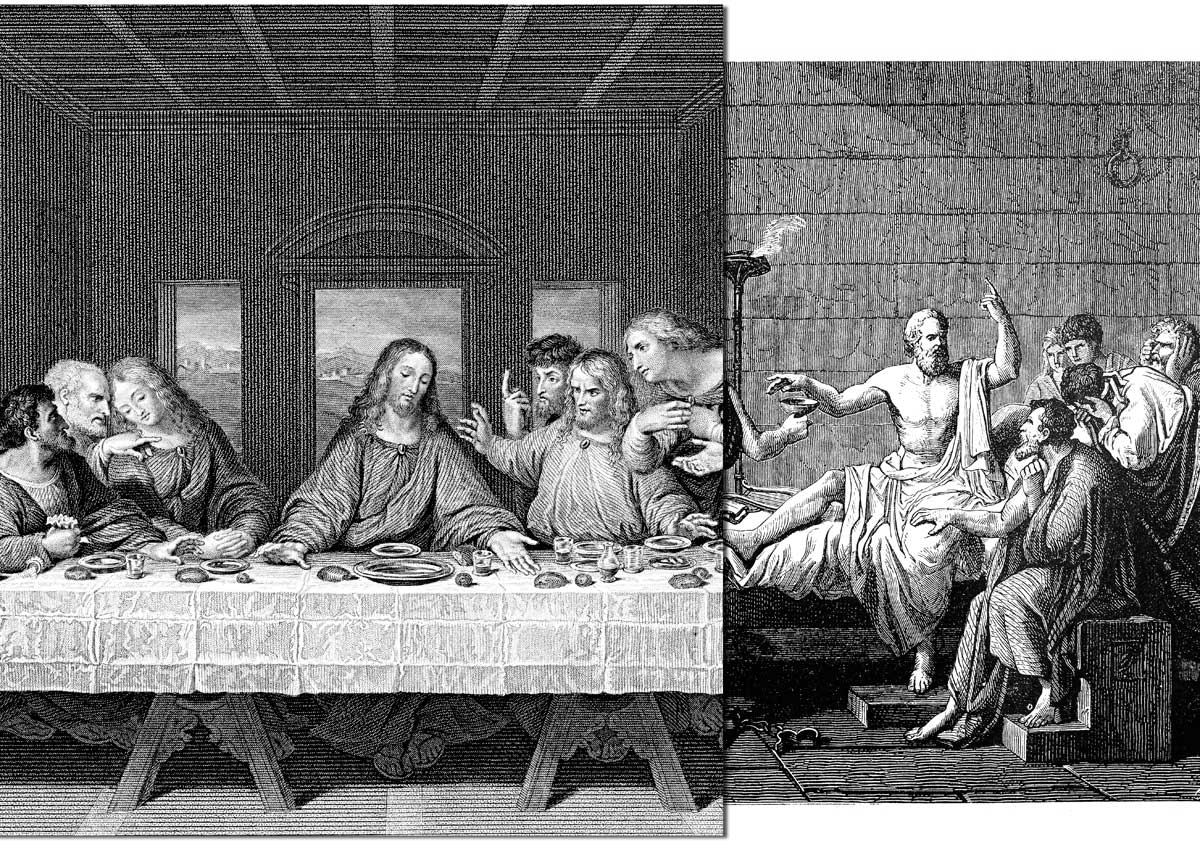
Certain Death & the Last Lectures of Socrates & Jesus by Randall B. Smith
33.4—July/August 2020
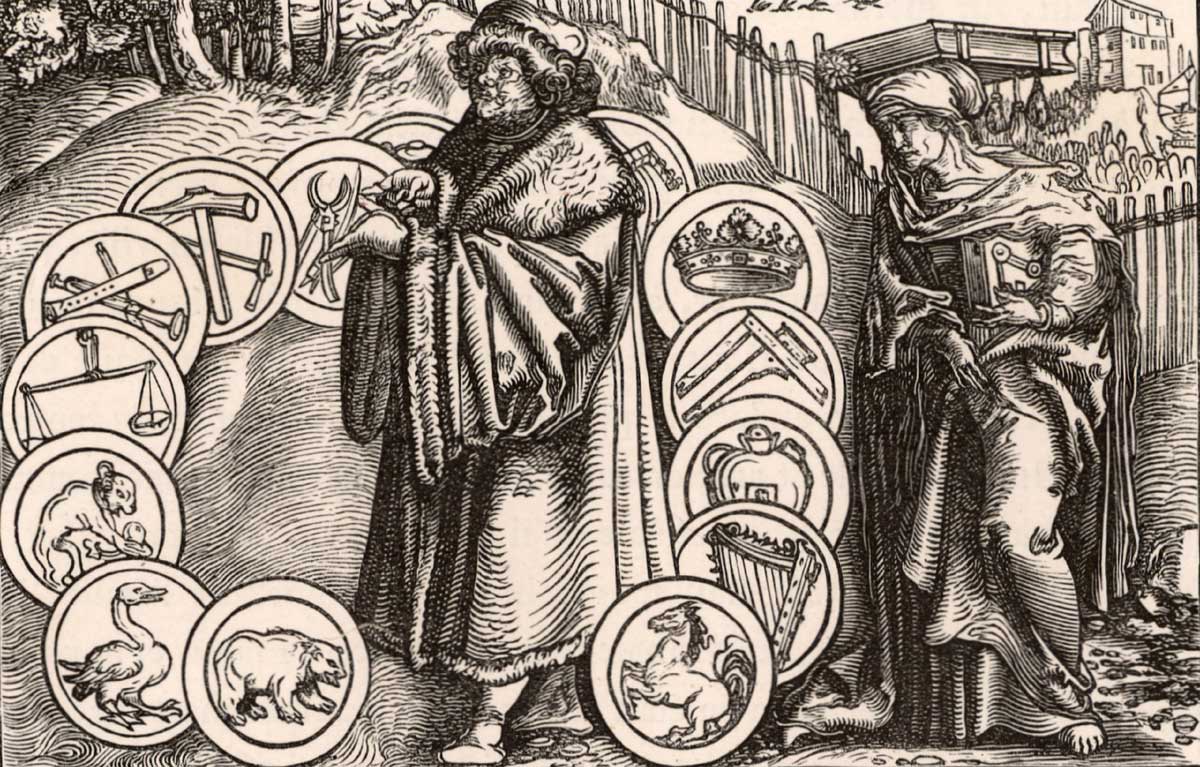
on Boethius's Consolation in a Time of Plague by Thomas Albert Howard
more from the online archives
31.6—November/December 2018
on Futility & the Open Door to Deliverance by Patrick Henry Reardon

26.1—Jan/Feb 2013
Manly Chastity, Hedonism & the Law of Non-contradiction by Anthony Esolen
calling all readers
Please Donate
"There are magazines worth reading but few worth saving . . . Touchstone is just such a magazine."
—Alice von Hildebrand
"Here we do not concede one square millimeter of territory to falsehood, folly, contemporary sentimentality, or fashion. We speak the truth, and let God be our judge. . . . Touchstone is the one committedly Christian conservative journal."
—Anthony Esolen, Touchstone senior editor
