





From Heavenly Harmony
The Beauty of Many as One
by Ken Myers
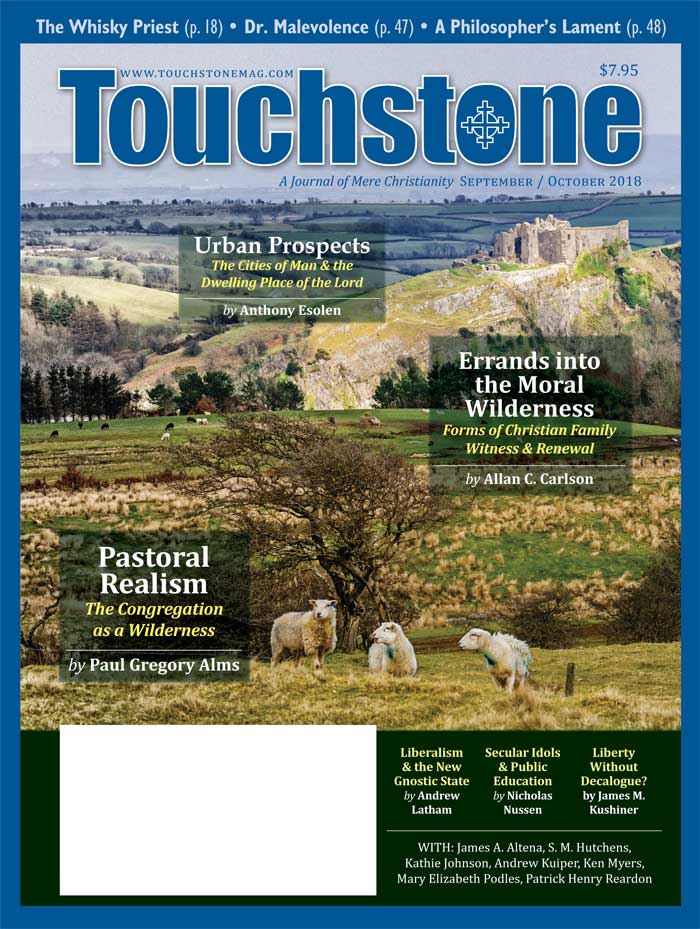
"The history of Western music," pronounced the English composer Edmund Rubbra, "is the history of the form-compelling power of counterpoint." In simple terms, counterpoint describes music that features more than one melodic line sounded simultaneously, each line harmonically and rhythmically engaged with the others. The term comes from the Latin punctus contra punctum "point against point." But the againstness in counterpoint isn't a matter of stark or arbitrary opposition. We perceive beauty in the artful use of counterpoint because it reveals the ultimately harmonious relatedness at the heart of a Creation called forth by a Triune God. The contra in counterpoint is a fruitful against, involving (as Rubbra described it) "the cross-fertilization of melodic lines, the genes in each combining to form a totally new musical being."
Counterpoint is a feature evident in instrumental as well as vocal music, but its richest early expressions were in liturgical choral works, where the mystery of the One Who Is Three was daily described and enacted. The choral music of the sixteenth and early seventeenth centuries has long been recognized as a rich lode of contrapuntal wisdom for composers and performers to mine. The intricate textures of the music of this period were still easily understood as earthly expressions of heavenly realities. Contrapuntal complexities could be analyzed and systematized, but the joy they evoked was evidence that they were more than the sum of their mathematical and aural characteristics.
The self-consciously progressive spirit of the seventeenth and eighteenth centuries was decidedly more rationalistic and more practical than the spirit of earlier ages, and increasingly more earthly than heavenly minded. James Gaines has observed that by the time Johann Sebastian Bach was achieving new heights and depths of contrapuntal glory, "the [Enlightenment] critics of counterpoint were renouncing music's allegorical and cosmic nature, its claim to be a manifestation of the divine. To this generation, music was not to be written according to any higher theory or objective than that of sensual, aural pleasure."
Not surprisingly, the music written by such scoffers has not stood the test of time as Bach's has, and the greatest composers of later centuries continued to rely on contrapuntal techniques to deepen their musical expression. In Edmund Rubbra's judgment, "Beethoven, Verdi, Sibelius, Nielsen, Holst, all illustrate in their development the tendency of musical thought, as it matures, to move always nearer to the pure springs of contrapuntal thinking."
Trinitarian Listening
As I suggested above, I think there is a theological explanation for this phenomenon. The conversational dance experienced in counterpoint is an analogue of the Trinity.
The late Robert Jenson once claimed that
the final word about God is that he is beautiful, and that . . . he is beautiful with the kind of beauty that music has. Indeed . . . he is beautiful with the kind of beauty that a certain kind of music has. The last word about God . . . is that he is a great fugue, of Father, Son, and Spirit.
Like the Orthodox David Bentley Hart (see, e.g., The Beauty of the Infinite), the Lutheran Robert Jenson believed that musical counterpoint (fugues being one notable type of counterpoint) is an echo of the dynamic interpersonal beauty of the Trinity, whose image-bearers we are and whose character is experienced in the order of Creation. Counterpoint was not an invention of the Western musical tradition, but a discovery of a latent feature of Creation's goodness.
It is a feature that can only be understood by participation, either through singing or through active, attentive listening. And the listening has to be trinitarian rather than unitarian. "A type of listening that accepted a single melodic line as perfect and self-sufficient would not only view the combination of different melodic lines as unnecessary and chaotic, but as a cancellation of the perfection of each." So writes Edmund Rubbra describing what I think of as unitarian listening. "In this case listening would tend to separate out mentally the constituent threads in the musical tapestry, instead of unifying these threads into an entity as perfect as that of a single line."
That act of hearing as one a group of two or more musical lines—trinitarian listening—does take practice; it does require an attentiveness that contemporary habits of music-as-background typically discourage. But then how many contemporary habits are we eager to endorse?
Ken Myers is the host and producer of the Mars Hill Audio Journal. Formerly an arts editor with National Public Radio, he also serves as music director at All Saints Anglican Church in Ivy, Virginia. He is a contributing editor for Touchstone.
A Journal of Mere Christianity—Delivered to Your Door
- Essays on theology, culture, and the Church
- Contributors from across the Christian traditions

Six print issues (one year) of Touchstone, plus full online access and PDF downloads for only $39.95.

Get a one-year full-access subscription to the Touchstone online archives for only $19.95.
bulk subscriptions
Order Touchstone subscriptions in bulk and save $10 per sub! Each subscription includes 6 issues of Touchstone plus full online access to touchstonemag.com—including archives, videos, and pdf downloads of recent issues for only $29.95 each! Great for churches or study groups.
Transactions will be processed on a secure server.
more on music from the online archives
33.3—May/June 2020
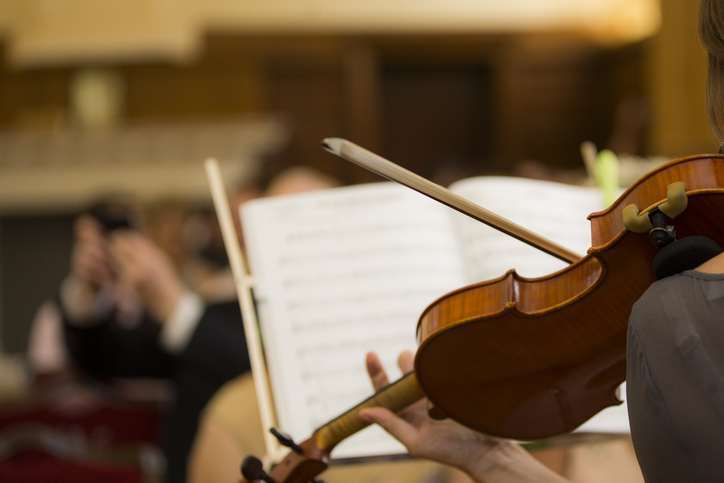
Bach's Cantata BWV 106, Gottes Zeit ist die allerbesteZeit (God's time is the very best time) by Ken Myers
more from the online archives
31.6—November/December 2018
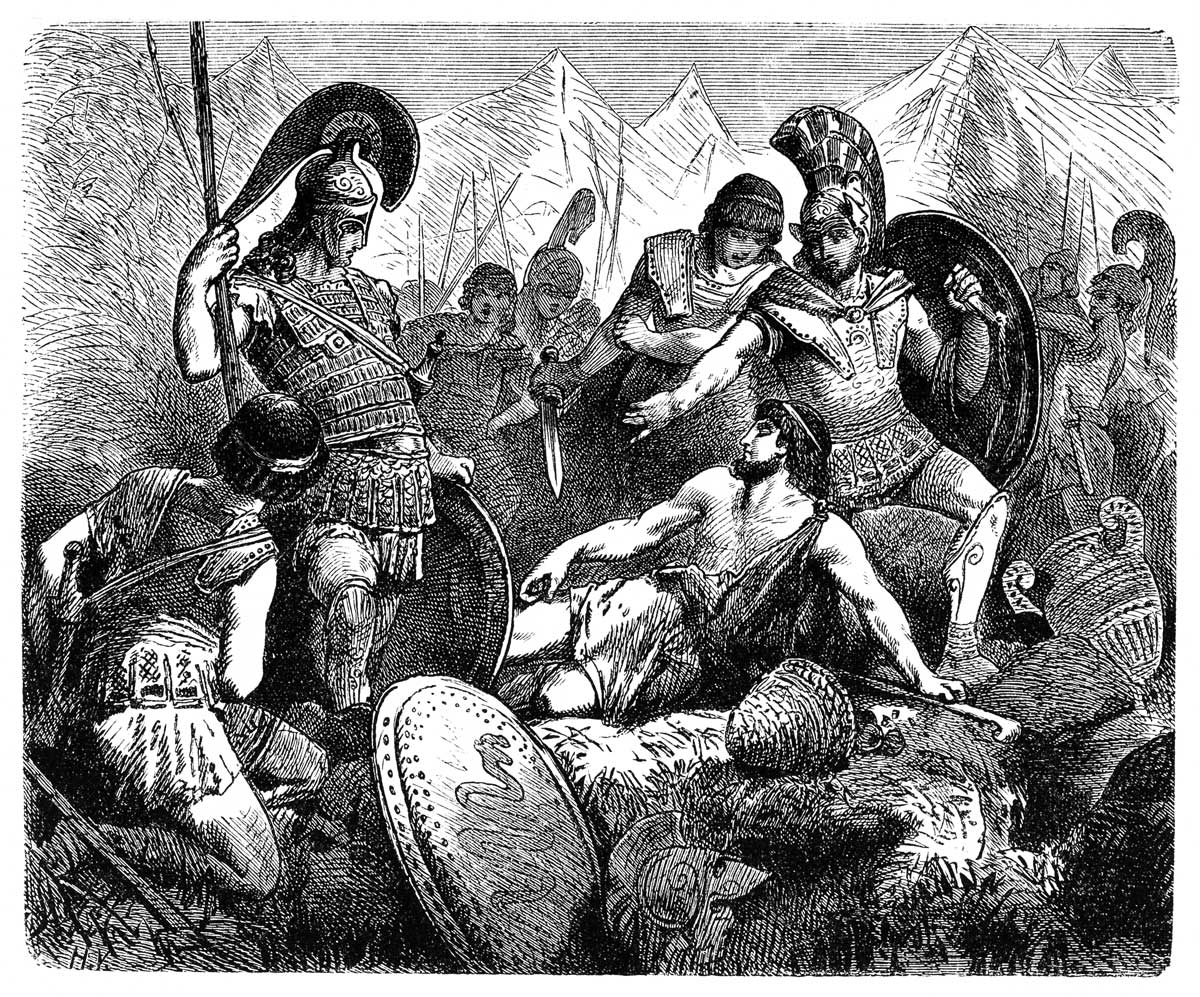
on Futility & the Open Door to Deliverance by Patrick Henry Reardon
36.1—Jan/Feb 2023
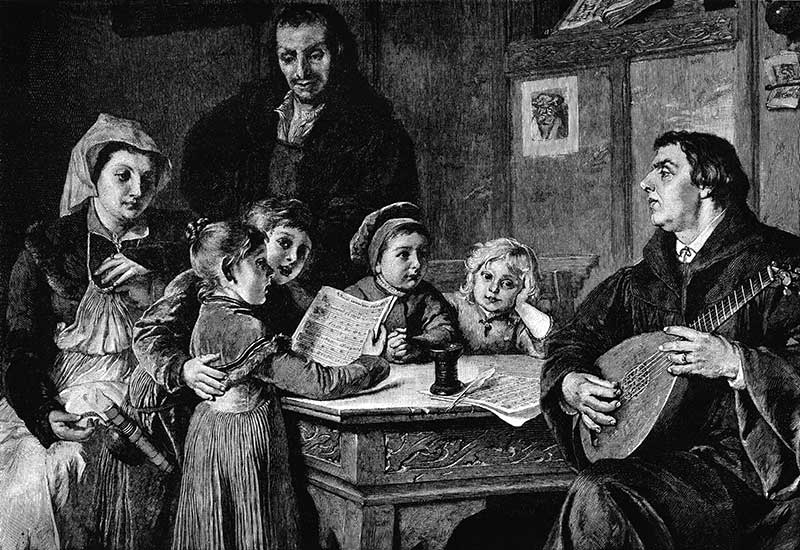
A History of the Protestant Debate over Contraception by James A. Altena

24.5—Sept/Oct 2011
on Wondering or Wandering Through College Education by Anthony Esolen
calling all readers
Please Donate
"There are magazines worth reading but few worth saving . . . Touchstone is just such a magazine."
—Alice von Hildebrand
"Here we do not concede one square millimeter of territory to falsehood, folly, contemporary sentimentality, or fashion. We speak the truth, and let God be our judge. . . . Touchstone is the one committedly Christian conservative journal."
—Anthony Esolen, Touchstone senior editor
