




Review
Out of the Box
Our Secular Age: Ten Years of Reading and Applying Charles Taylor
Collin Hansen, ed.
The Gospel Coalition, 2017
(176 pages, $15.99, paperback)
reviewed by Louis Markos
n the fall of 2015, my son had an opportunity to study for a semester in Athens, Greece. Before he left, I did my best to equip him for the spiritual challenge he would face during his sixteen weeks in the country where all four of my grandparents were born. Though we had often discussed the apologetical arguments for the existence of God, the creation of the world, the authority of the Bible, the claims of Christ, and the historicity of the Resurrection, I knew that none of these arguments per se would provide him with the armor he needed.
What he would need to protect his faith during his sojourn in the city where Paul had preached the gospel nearly two thousand years ago was not a battery of rational arguments, but a firm sense of the reality of Christ and the gospel. His faith, I warned him, would not be so much challenged in Greece as it would be ignored. What he would encounter in post-Christian Europe was not a culture that attacked Christianity, but one that considered it irrelevant. Yes, God might very well exist, but his existence could exert no real weight on people's lives, choices, and self-identities.
In short, he was about to enter into what Charles Taylor has taught us to call a secular age. Born in 1931 in Quebec, Canada, Taylor is a Catholic philosopher who possesses a monumental, if not preternatural, grasp of the political-intellectual-spiritual history of the West. In his game-changing book, A Secular Age (Harvard, 2007), he laid out, in 800 pages of dense, often tortured prose, the process by which Western culture slowly transitioned from a place where nearly everyone took for granted the existence of God and the supernatural realm to one where the Christian worldview is just one choice among many—and not the best choice at that.
For those who lack the time and patience to wade through Taylor's tome, a brief summary and analysis of A Secular Age became available in 2014 in the form of James K. A. Smith's How (Not) to Be Secular: Reading Charles Taylor. Three years after that most welcome précis, The Gospel Coalition, in the first of what I hope will be a long line of published books, has provided the Christian community—particularly the Evangelical Protestant community—with a collection of essays on how to apply Taylor's insights to the tasks of sharing the gospel and discipling believers in the twenty-first century.
Porous & Buffered Selves
Edited by Collin Hansen, editorial director for The Gospel Coalition (which, to this point, has equipped believers through cyberspace rather than print), Our Secular Age: Ten Years of Reading and Applying Charles Taylor offers a dozen essays by writers from all areas of Christian ministry who are eager to extract nuggets of evangelical gold from Taylor's formidable philosophical-sociological mine. Before addressing some of these finely crafted essays, I would like to survey some of the key elements of A Secular Age that are referenced by a majority of the contributors.
According to Taylor, pre-modern people possessed a porous self rather than a buffered self. That is to say, they and their various cultures were open to the supernatural: in both its angelic form and its demonic. That openness, or vulnerability, to the sacred often led to fear and anxiety, but it also inspired awe, gratitude, and a sense of transcendence. While the porous self might have been too quick to seek a direct spiritual cause for physical and mental maladies, earthquakes and hurricanes, droughts and plagues, he also saw life as imbued with a higher meaning and purpose that did not cease with death. Likewise, though pre-modern communities could be legalistic, authoritarian, and overly judgmental, they did provide order and structure through rituals, societal expectations, and fixed codes of conduct.
Not so with the buffered self that succeeded in casting off its vulnerability both to the spiritual realm and to tight-knit, religious communities. Science and reason could now provide explanations for all natural phenomena; there was no need for recourse to the supernatural. Though belief in God was not abolished, at least not in the democratic West, buffered selves lived out their lives in what Taylor calls the "immanent frame." In this frame, pleasure, success, relationships, even morality were all to be confined to the natural, disenchanted world, without any danger, or fear, of interference from the transcendent realm.
Freedom itself was to be gained, and defined, by one's success at liberating himself from old social-religious-sexual structures that prevented him from realizing his "right" to full self-actualization. On the surface, such freedom did not do away with the need for family, church, and friendship, but those ties to others increasingly came to be judged by the happiness and human flourishing they brought to oneself, rather than the duty and sacrifice extended to others.
Louis Markos , Professor in English and Scholar in Residence at Houston Baptist University, holds the Robert H. Ray Chair in Humanities. His 19 books include Lewis Agonistes; Restoring Beauty: The Good, the True, and the Beautiful in the Writings of C. S. Lewis; On the Shoulders of Hobbits: The Road to Virtue with Tolkien and Lewis; and From A to Z to Narnia with C. S. Lewis.
A Journal of Mere Christianity—Delivered to Your Door
- Essays on theology, culture, and the Church
- Contributors from across the Christian traditions

Six print issues (one year) of Touchstone, plus full online access and PDF downloads for only $39.95.

Get a one-year full-access subscription to the Touchstone online archives for only $19.95.
bulk subscriptions
Order Touchstone subscriptions in bulk and save $10 per sub! Each subscription includes 6 issues of Touchstone plus full online access to touchstonemag.com—including archives, videos, and pdf downloads of recent issues for only $29.95 each! Great for churches or study groups.
Transactions will be processed on a secure server.
more on culture from the online archives
20.7—September 2007
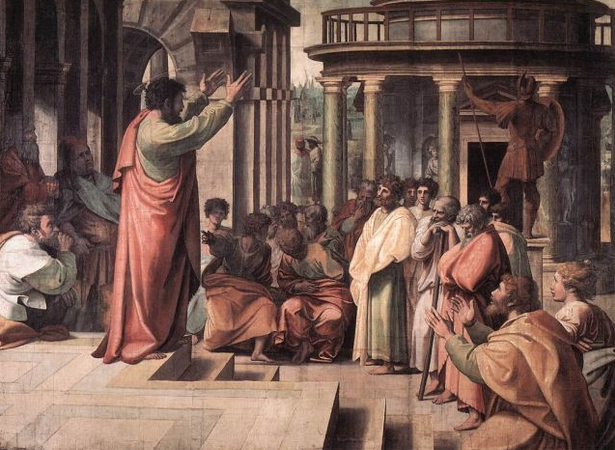
Paul Didn’t Build Bridges to Popular Culture by Russell D. Moore
35.2—Mar/Apr 2022
on Fatigued Christians Deciding to Engage the Culture by Keith Lowery

32.4—July/August 2019
Will Islamicization Become Its New Future by Peter Riddell
more from the online archives
26.1—Jan/Feb 2013
on Abortion as a Matter of National Welfare by W. Ross Blackburn

calling all readers
Please Donate
"There are magazines worth reading but few worth saving . . . Touchstone is just such a magazine."
—Alice von Hildebrand
"Here we do not concede one square millimeter of territory to falsehood, folly, contemporary sentimentality, or fashion. We speak the truth, and let God be our judge. . . . Touchstone is the one committedly Christian conservative journal."
—Anthony Esolen, Touchstone senior editor
