Review
The Pains of Nineveh
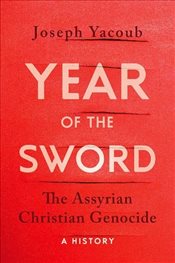
Year of the Sword: The Assyrian Christian Genocide, A History
by Joseph Yacoub, tr. James Ferguson
Oxford University Press, 2016
(295 pages, $29.95, hardcover)
reviewed by Anne Barbeau Gardiner
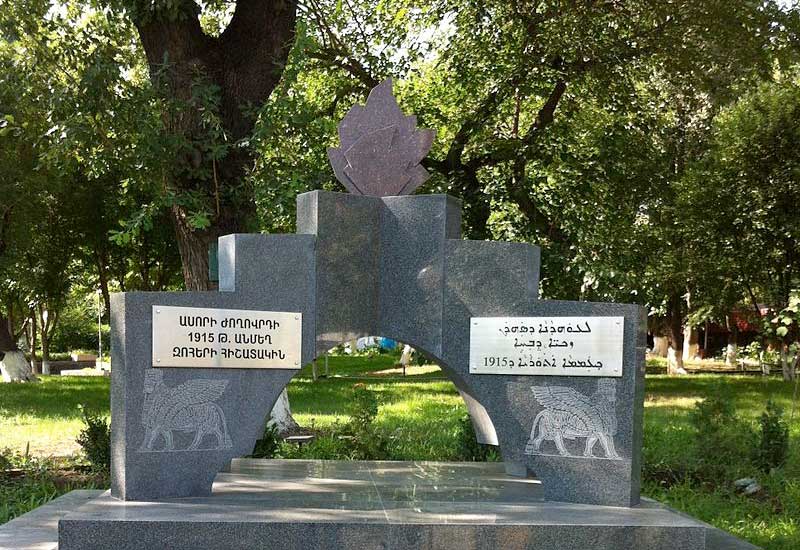
After World War II, the Assyrian genocide of 1915 fell into oblivion, although ten years earlier, in 1935, the League of Nations had declared, “It is probable that there is no human community in relative terms that has suffered trials and blows comparable to those endured by that small group, both Nation and Church, that bears the name of Assyrian.” Indeed, nearly half the population of this people was exterminated about a century ago.
After 1975 Assyrians in great numbers began migrating to the West, and in the 1980s Joseph Yacoub, who taught at the Catholic University of Lyon, started collecting and publishing testimonies about the 1915 genocide. This gripping book is the result. The memory of that tragic event has been so well revived that recently the German Bundestag, on June 2, 2016, passed a unanimous resolution recognizing the genocide a century ago of not only Armenians, but also Assyrians, Arameans, and Chaldeans.
At the start of the twentieth century, the Assyrians, the same people who had inhabited Mesopotamia 5,000 years ago, were still living in the same region—in Persian Azerbaijan, Eastern Anatolia, and the plains of Mosul and Nineveh. They numbered around 600,000 and still spoke Aramaic, the language of Christ. Most belonged to the Syriac Orthodox Church of Antioch and All the East or the Ancient Church of the East, which in the twelfth century had reached as far as Peking. Some were Chaldeans who had united with the Catholic Church in 1522. The 1915 genocide caused around 250,000 of these people to perish. Their cultural heritage was attacked as well. Hundreds of their churches, some dating to the first century, were destroyed, as were many libraries with manuscripts and books in Aramaic.
There is no shortage of documentation for this genocide. We find reports, often from eyewitnesses, in at least seven languages: Aramaic, Arabic, English, Russian, German, Italian, and French. Moreover, “the story is one and the same.” The scholar Gilbert Murray observed that the cumulative effect of this evidence must “overpower any skepticism” because the witnesses are “credible” and their evidence “concurring.”
From January to May 1915 The New York Times published a series of articles on the massacres as they were taking place in Persian Urmia, denouncing them and lamenting the brutal treatment of women. The British Blue Book of 1916, an official parliamentary report titled “Documents Relating to the Treatment of Armenians and Assyrian Christians,” is especially impressive. The historians Lord James Bryce and Arnold Toynbee assembled 21 reports on the Assyrians. Toynbee noted that many eyewitness accounts of the genocide were from foreign residents in the Ottoman Empire, such as those residing at the American Presbyterian Mission.
Ordered from the Top
Yacoub shows that the genocide was ordered from the top level of the Ottoman government. The Young Turk revolution in 1909 had inaugurated a policy of Turkification, a call to “homogenize” the population by repressing the minorities. From nationalism, the Young Turks moved on to Islamism, despotism, and terrorism. When the three pashas Talaat, Enver, and Djemal lost their Balkan territories in 1912–1913, they began using the Christians as scapegoats, accusing them of being traitors, enemies of Turkey who were “plotting with the Russians to destabilize the [Ottoman] Empire.” Most of the Christians lived in rural villages and were incapable of being foreign agents, but this big lie was useful to legitimate the coming massacres.
When World War I was declared in September 1914, Turkey joined Germany against Russia and the Allies. Two months later, on November 29, 1914, Sultan-Caliph Mehmed V proclaimed jihad against Christians. In Kurdish lands, the Kurds swore an oath to join in the “great jihad” and were provided by the Ottoman government with clothes and arms, including bombs for mountain fighting. The government’s plan was to use the war as a cover to exterminate the Armenians and Assyrians. Yacoub shows how the genocide was state-approved, “premeditated,” and “systematically executed.” Talaat Pasha gave orders from the top, and the Circassian Rashid Bey was “the Great Chief” of the exterminators, serving as an instrument of the sultan and his ministers.
The call to jihad was followed first by attacks in the region of Urmia and Salmas in Persian Azerbaijan, attacks that lasted from the start of January, when the Russians left, to the end of May 1915, when the Russians returned. A vast army of 20,000 Turkish soldiers accompanied by 10,000 turbaned Kurds descended on the rural villages. Dr. William Shedd of the American mission reported that the Muslim villagers joined in the looting and violence against their Christian neighbors and that Shiite Persians were united with the Sunni Turks and Kurds in the jihad. A few Kurds objected, but they were quickly silenced.
Anne Barbeau Gardiner is Professor Emerita of English at John Jay College of the City University of New York. She has published on Dryden, Milton, and Swift, as well as on Catholics of the 17th century.
A Journal of Mere Christianity—Delivered to Your Door
- Essays on theology, culture, and the Church
- Contributors from across the Christian traditions

Six print issues (one year) of Touchstone, plus full online access and PDF downloads for only $39.95.

Get a one-year full-access subscription to the Touchstone online archives for only $19.95.
bulk subscriptions
Order Touchstone subscriptions in bulk and save $10 per sub! Each subscription includes 6 issues of Touchstone plus full online access to touchstonemag.com—including archives, videos, and pdf downloads of recent issues for only $29.95 each! Great for churches or study groups.
Transactions will be processed on a secure server.
more on martyrdom from the online archives
more from the online archives
calling all readers
Please Donate
"There are magazines worth reading but few worth saving . . . Touchstone is just such a magazine."
—Alice von Hildebrand
"Here we do not concede one square millimeter of territory to falsehood, folly, contemporary sentimentality, or fashion. We speak the truth, and let God be our judge. . . . Touchstone is the one committedly Christian conservative journal."
—Anthony Esolen, Touchstone senior editor