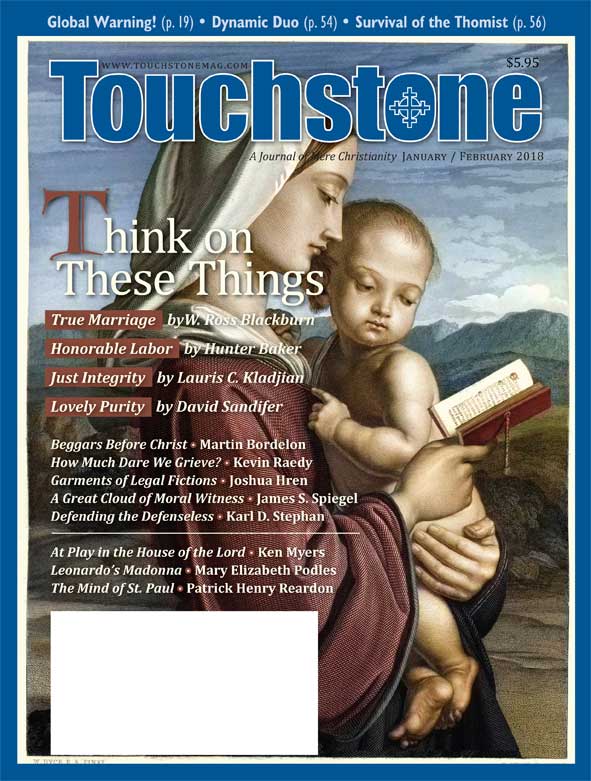
Defending the Defenseless by Karl D. Stephan

Review Feature

Defending the Defenseless

An Image of God: The Catholic Struggle with Eugenics by Sharon M. Leon
Beyond the Abortion Wars: A Way Forward for a New Generation by Charles C. Camosy
Embryos Under the Microscope: The Diverging Meanings of Life by Jane Maienschein

reviewed by Karl D. Stephan

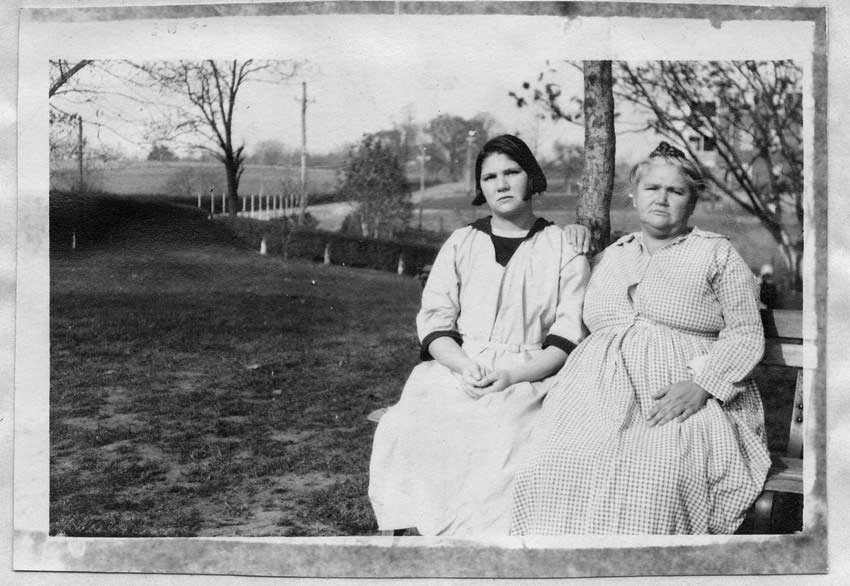
On May 2, 1927, the U.S. Supreme Court decided the case of Carrie Buck v. John Bell. Carrie Buck was a pregnant teenage girl from Virginia whose pregnancy resulted from being raped by her foster mother's nephew. Her foster parents decided to cover up the crime by committing Carrie to the Virginia State Colony for Epileptics and Feebleminded, claiming she was feebleminded, epileptic, and promiscuous.

The superintendent of the colony, Dr. Albert Sidney Priddy, a convert to the then-popular human selective breeding movement known as eugenics, petitioned the colony's board of directors to have Carrie sterilized under a recently passed state law that allowed for the compulsory sterilization of the unfit. Knowing that such an action might receive legal challenges, he decided to make Carrie's situation a test case. The colony's co-founder and lawyer, Aubrey Strode, asked a personal friend and lawyer named Irving Whitehead to represent Carrie so that the case could go forward. The colony's surgeon, Dr. John Bell, was named as defendant. Priddy's hope was that the courts would validate the new law and remove any concerns that compulsory sterilization could be further opposed in court.
The lawyers' plans went smoothly, Whitehead offering only token opposition to the colony's stated intention to sterilize Carrie without her consent. A circuit court and an appeals court in Virginia upheld the law, and then the Supreme Court agreed to hear the case.

According to Priddy, Carrie's mental age was only nine. Her mother, Emma, had been committed to the colony four years earlier for prostitution, and the prosecution cited Carrie's pregnancy as evidence that the family was just the sort that compulsory sterilization was designed for.

Presented with largely one-sided evidence, the Supreme Court decided 8–1 in favor of the law. The redoubtable 86-year-old Oliver Wendell Holmes Jr. wrote the majority opinion. While he admitted that forcing an unwilling person to submit to sterilization was a serious affair, he believed that the state's interest in reducing the number of feebleminded, vicious, and otherwise ill-behaved progeny justified such a measure. He wrote, "It is better for all the world, if instead of waiting to execute degenerate offspring for crime, or to let them starve for their imbecility, society can prevent those who are manifestly unfit from continuing their kind. . . . Three generations of imbeciles are enough." The lone dissenting vote on the case was that of Justice Pierce Butler, a Catholic.

Carrie gave birth to a daughter she named Vivian. Then, on October 19, 1927, she underwent an involuntary sterilization procedure, and was subsequently paroled. Her life after her release from the colony was apparently normal, without further legal entanglements, and she lived long enough to be interviewed by a historian who uncovered the truth about her rape. She died in 1983. Her daughter Vivian died of complications from measles at the age of eight, at about the time the Buck v. Bell decision emboldened proponents of eugenics to get statutes similar to Virginia's enacted in other states. By 1933, 27 of the 48 states of the union had such laws.

Three Books: History, Philosophy, Biology

Carrie was a defenseless victim of those who saw her as something less than a human being. Her rapist saw her as an object on which to satisfy his lust. Dr. Priddy saw her as a means of testing whether involuntary sterilization could withstand legal scrutiny. And the state of Virginia saw her as a drain upon limited public resources, resources that could be stretched farther if she was prevented from propagating more of her kind.

Seeing and perceiving are different acts. Anyone who isn't physically blind can see, but perception involves interpreting what one sees and understanding the reality behind what is presented to one's vision. Radically different perceptions account for the conflicts described in three recent books that deal in one way or another with issues surrounding pregnancy and childbirth. Historian Sharon M. Leon, a research associate professor at George Mason University, has written a history of how Catholics dealt with the rise of the eugenics movement in the U.S. In An Image of God: The Catholic Struggle with Eugenics (Univ. of Chicago Press, 2013), she tells Carrie's story, which she sees as marking the high point in the influence of eugenics on public policies and laws. If a situation like Carrie's arose today, her foster parents, instead of committing her, would probably put tremendous pressure on her to have an abortion. Charles C. Camosy's Beyond the Abortion Wars: A Way Forward for a New Generation (Eerdmans, 2015) deals with the crude ways abortion is often discussed in the public square by many on both sides of the debate, and expresses the hope that attention to finer distinctions among reasons for abortion may lead both to fewer abortions and to the reconciliation of opposing sides—a hope that, in my view, is likely to be disappointed. And historian of biology Jane Maienschein's Embryos Under the Microscope: The Diverging Meanings of Life (Harvard Univ. Press, 2015) is, among other things, an excellent illustration of Matthew 13:14, in which Jesus, quoting Isaiah, says, "seeing ye shall see, and not perceive."

Leon's Chronicle


A Journal of Mere Christianity—Delivered to Your Door

  • Essays on theology, culture, and the Church
  • Contributors from across the Christian traditions

Subscribe (Print + Online)

Six print issues (one year) of Touchstone, plus full online access and PDF downloads for only $39.95.

Subscribe (Online Only)

Get a one-year full-access subscription to the Touchstone online archives for only $19.95.


bulk subscriptions

Order Touchstone subscriptions in bulk and save $10 per sub! Each subscription includes 6 issues of Touchstone plus full online access to touchstonemag.com—including archives, videos, and pdf downloads of recent issues for only $29.95 each! Great for churches or study groups.

Transactions will be processed on a secure server.


more on abortion from the online archives
30.3—May/June 2017

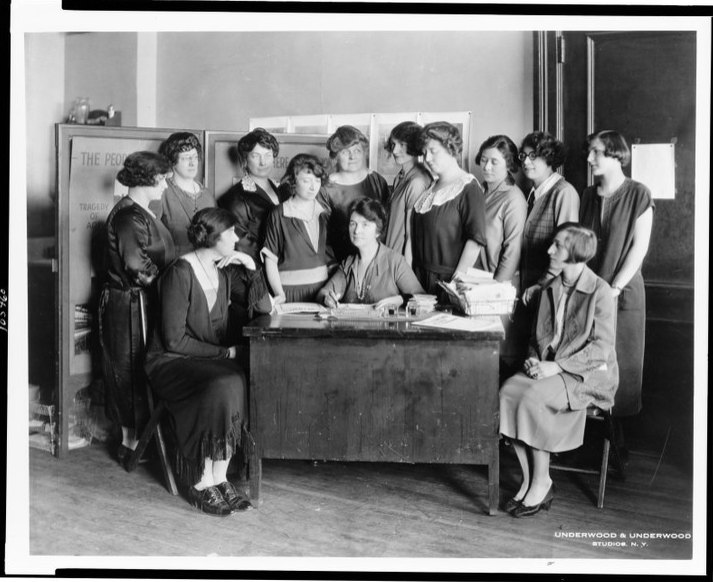
Known Trespassing

on the Misuse of Property Rights to Justify Slavery & Abortion by Robert Hart

26.1—Jan/Feb 2013

The Destroyer of Peace

on Abortion as a Matter of National Welfare by W. Ross Blackburn
27.2—March/April 2014

The Rights of Aphrodite

on C. S. Lewis & the New State Paganism by W. E. Knickerbocker


more from the online archives

33.4—July/August 2020

No Option

Clear Out the Rubble & Rebuild! by Anthony Esolen

32.6—November/December 2019

Strategic Christians

The Year of Our Lord 1943: Christian Humanism in an Age of Crisis by Alan Jacobs by Jesse Russell

5.3—Summer 1992

The Bible Tells Me So

Everything You Need to Know About Morality & the Bible by David Mills

calling all readers

Please Donate

"There are magazines worth reading but few worth saving . . . Touchstone is just such a magazine."
—Alice von Hildebrand

"Here we do not concede one square millimeter of territory to falsehood, folly, contemporary sentimentality, or fashion. We speak the truth, and let God be our judge. . . . Touchstone is the one committedly Christian conservative journal."
—Anthony Esolen, Touchstone senior editor

Support Touchstone

00