




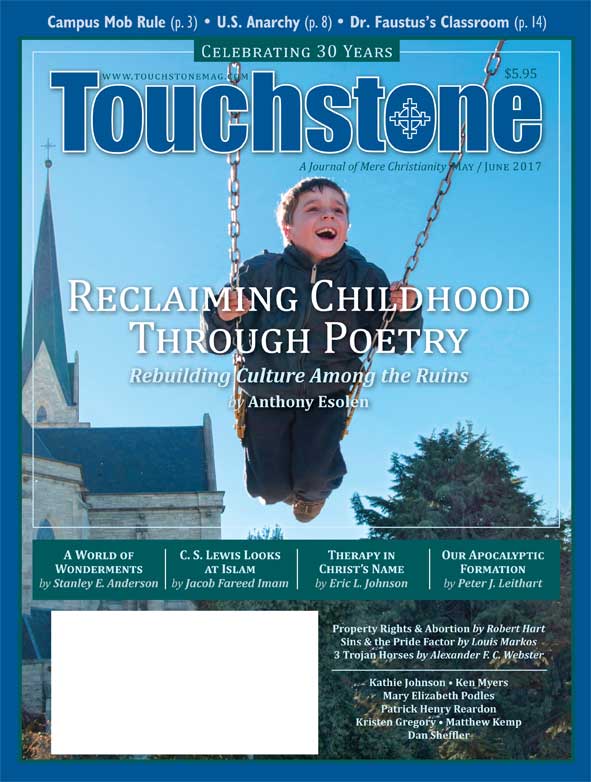
Feature
The Look of Revelation
Christian Formation in Our Apocalyptic Age
Every summer brings another string of apocalyptic blockbusters to the movie theaters. Godzilla rises from the sea. A meteor smashes into the earth. Volcanoes threaten towns; viruses spread like wildfire; aliens invade. Robots take over, evolving into ex machinas. Terrorists storm the White House. Superheroes do their superheroics against the backdrop of inky Gotham cityscapes. Zombies occupy Pemberly, of all places, so it's a good thing Elizabeth Bennet is a ninja. It's as if every Hollywood studio has hired Left Behind creators Tim LaHaye and Jerry Jenkins as script consultants.
If we can trust the signals coming from pop culture, we live in a world charged with what one film critic, following Kierkegaard, calls "apocalyptic dread."
Dystopian film is hardly new. Fritz Lang's Metropolis was released in 1926, the Cold War haunted Hollywood for decades, and the 1970s produced formulaic disaster films. What's new is the scale of the threats, and the frequency of apocalyptic drama. Nuclear families are still the focus of many stories—Tom Cruise wants to reunite his already-broken family when the Martians invade in Spielberg's War of the Worlds—but the family is trying to survive a global catastrophe now, not a burning building or a crashed airliner. As for frequency: Film scholar Kristen Thompson writes that "twenty-five disaster movies appeared throughout the eighties. But in the nineties fifty-six disaster movies were released, with fourteen films released in the peak year 1997." Wikipedia lists over 60 "apocalyptic" films and television shows from the period 2000–2009, and nearly as many for the period 2010–2016.
Elite culture betrays a similar level of anxiety. Cormac McCarthy's The Road took the dark foreboding of No Country for Old Men several leagues further. Serious analyses of contemporary civilization employ the word "end" with unsettling frequency. Francis Fukuyama got ahead of the pack with his pre-9/11 The End of History. One of Rene Girard's last books was Battling to the End, and David Goldman, writing under the pseudonym Spengler, warns about coming demographic disaster in a book with the faux-reassuring title, It's Not the End of the World, It's Just the End of You. Survivalists and investment advisors explain how to survive and even profit from the end of the world as we know it. Political writers speak of the "end of the nation state," and Canadian theologian Douglas Farrow warns of the "end of marriage."
Writers who don't use overtly apocalyptic language still warn that we are in an age of catastrophic change. Zygmunt Bauman has argued in several books that we now live in a "liquid" society, in which all formerly sure ground has become unstable. Distinctions apparently rooted in the nature of things—like male and female—are deconstructed, and moral principles once thought to be inescapable are flouted. All that's solid melts into air, into thin air.
Threats come from every direction at once. Depending on your politics, you might spend your sleepless nights worrying over Islamic terror or over global warming. Depending on whom you to talk to, either (or both) threaten to bring about TEOTWAWKI, "the end of the world as we know it." For some, declining birthrates pose a quieter, but more decisive threat. That, combined with the surge of immigration, has sharpened questions about the fate of Europe: A generation from now, will Europe still be populated by Europeans? The recession of 2008 added to our doomsday fears. The prospect that our greatest technological achievements will lead to our downfall produces its own brand of nightmares: of robots taking over the world, of our brains becoming little more than nodes in a Google network, of inescapable surveillance and the "end of privacy." (I found five books on Google with that title). A tiny minority are energized by all this, for they see the end of humanity as cracking open the door for trans-human existence.
Some will want to cut through the details and answer the question "Do we live in an apocalyptic age?" with a one-word affirmative: Trump.
The Gift of Calm
I don't wish to belittle these fears. Many of the threats are real, and cumulatively they seem all-encompassing. And we are singularly ill-equipped to grapple with them. As Robert Joustra and Alissa Wilkinson point out in How to Survive the Apocalypse, moderns think that these disasters are entirely of our own making and that salvation is therefore entirely in our own hands. If we face an end, it's not a divine judgment, but the result of our technological or political failures. We can't look to heaven for help; we have to find technical and political solutions to problems created by our technology and politics. We are not the first civilization to be jolted by apocalyptic dread, but we are one of the first to experience the dread of secular apocalypse.
In these circumstances, the Church offers the gift of calm. That may occasion some surprise, even among Christians. After all, the Bible is one of the chief sources of apocalyptic; the last book of the Christian Bible is the first book ever to bear the title "Apocalypse." Few texts present as relentless a parade of terrors as the book of Revelation. Stars fall from heaven and poison water supplies. Dreadful locust-scorpions arise from hell to torment men. A beast like a dragon comes from the sea to prey on the saints, to overcome and kill them. Earthquakes and lightning and hailstorms come in the wake of the pouring out of vials of wrath-wine.
Peter J. Leithart is an ordained minister in the Presbyterian Church in America and the president of Trinity House Institute for Biblical, Liturgical & Cultural Studies in Birmingham, Alabama. His many books include Defending Constantine (InterVarsity), Between Babel and Beast (Cascade), and, most recently, Gratitude: An Intellectual History (Baylor University Press). His weblog can be found at www.leithart.com. He is a contributing editor of Touchstone.
A Journal of Mere Christianity—Delivered to Your Door
- Essays on theology, culture, and the Church
- Contributors from across the Christian traditions

Six print issues (one year) of Touchstone, plus full online access and PDF downloads for only $39.95.

Get a one-year full-access subscription to the Touchstone online archives for only $19.95.
bulk subscriptions
Order Touchstone subscriptions in bulk and save $10 per sub! Each subscription includes 6 issues of Touchstone plus full online access to touchstonemag.com—including archives, videos, and pdf downloads of recent issues for only $29.95 each! Great for churches or study groups.
Transactions will be processed on a secure server.
more on christianity from the online archives

27.5—Sept/Oct 2014
on Growing Vegetables as a Primer in Moral Philosophy by Rachel Lu
31.1—January/February 2018
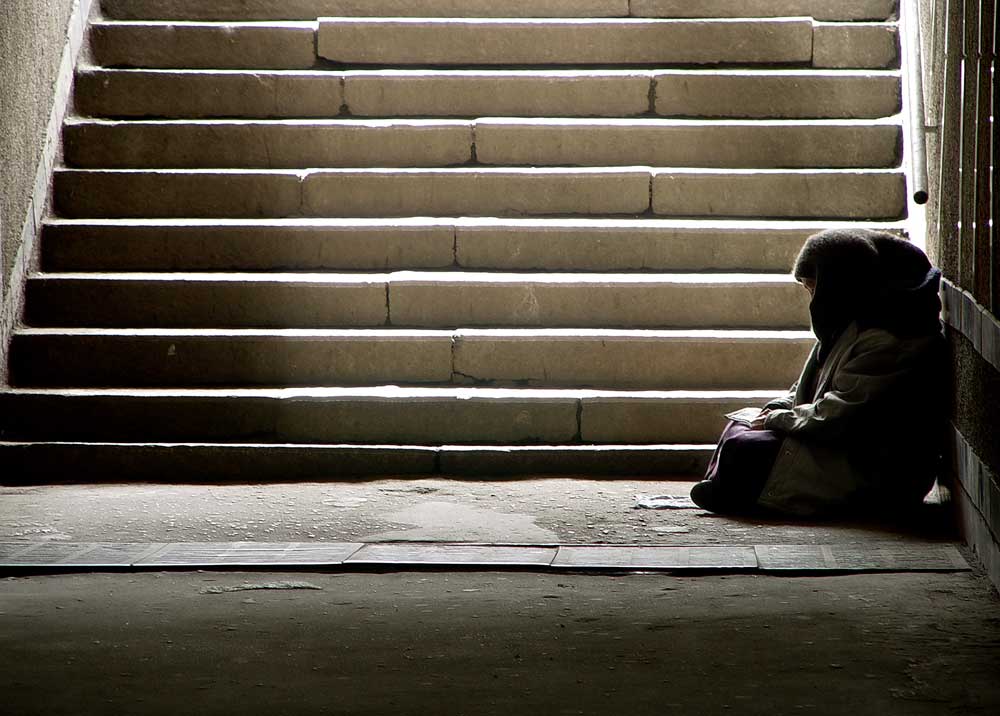
on Taking the Measure of the Deserving & the Undeserving Poor by Martin Bordelon
more from the online archives
27.2—March/April 2014
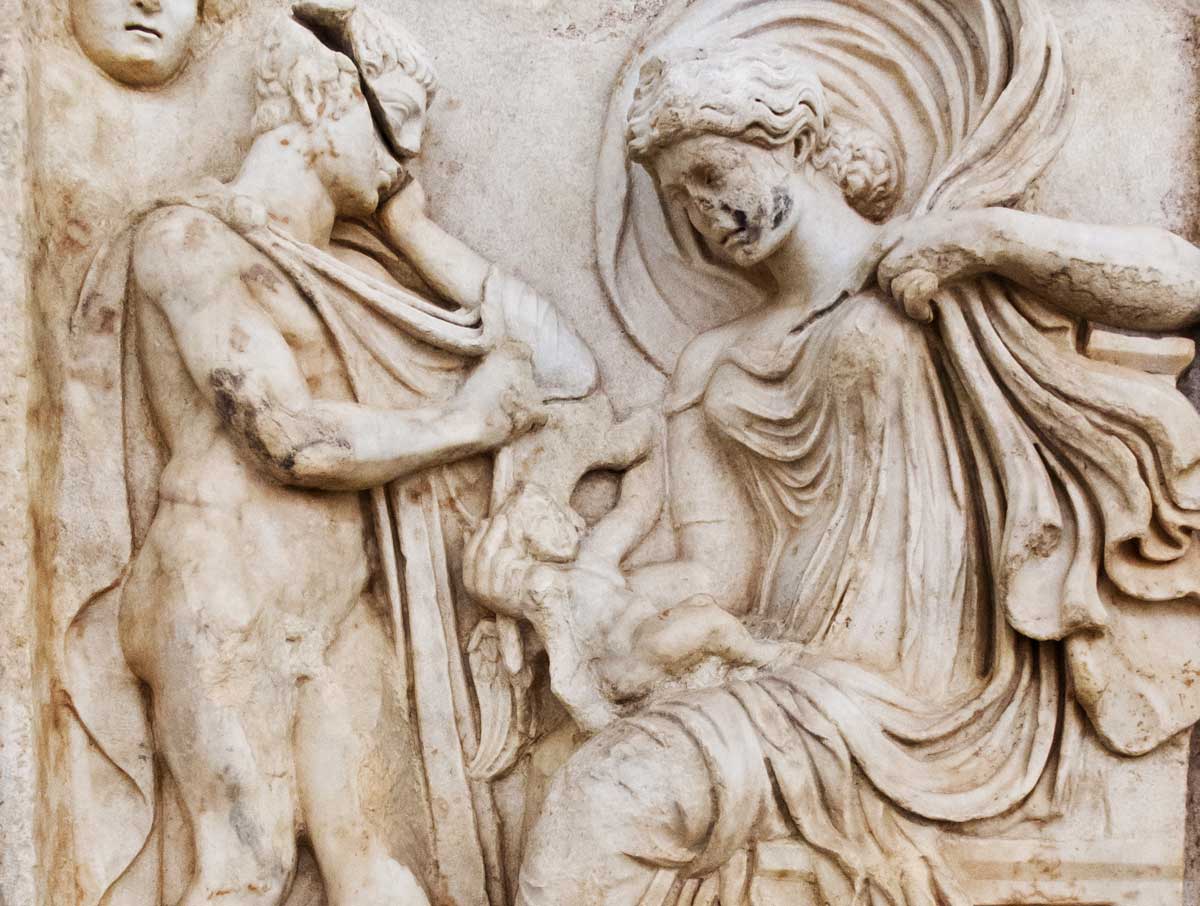
on C. S. Lewis & the New State Paganism by W. E. Knickerbocker
27.5—Sept/Oct 2014
The Culture of Death's Campaign Against the Catholic Church by Brantly Millegan
31.1—January/February 2018
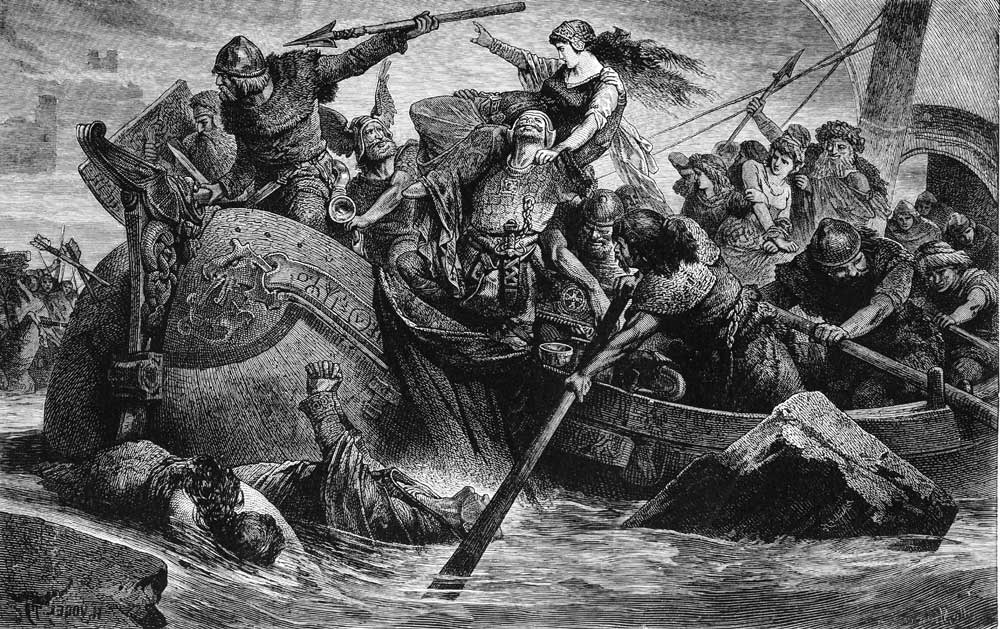
on Ragnarök, an Extreme Weather Event & the Paths to Conversion by Timothy J. Burbery
calling all readers
Please Donate
"There are magazines worth reading but few worth saving . . . Touchstone is just such a magazine."
—Alice von Hildebrand
"Here we do not concede one square millimeter of territory to falsehood, folly, contemporary sentimentality, or fashion. We speak the truth, and let God be our judge. . . . Touchstone is the one committedly Christian conservative journal."
—Anthony Esolen, Touchstone senior editor
