




A Global Conflict of Interest
The Clash Between Religion & Secularism Overshadows The Clash of Civilizations
by David V. Hicks
Almost a quarter century has passed since Samuel P. Huntington wrote The Clash of Civilizations and proposed "a map of the post-Cold War world." In spite of many thoughtful demurs, his map still serves as a touchstone for scholars and pundits who think and write about everything from the emerging world order to the cause of yesterday's terrorism attack in Nigeria or Paris. "It is my hypothesis," writes Huntington,
that the fundamental source of conflict in this new world will not be primarily ideological or primarily economic. The great divisions among humankind and the dominating source of conflict will be cultural. Nation states will remain the most powerful actors in world affairs, but the principal conflicts of global politics will occur between nations and groups of different civilizations. The clash of civilizations will dominate global politics. The fault lines between civilizations will be the battle lines of the future.
Huntington's theory posits a number of conflicting civilizations: Islamic, Slavic-Orthodox, Western, Confucian, Japanese, Hindu, Latin American, and possibly African. He believes that with the demise of fascist Germany and communist Russia, the ideological struggles of the twentieth century are at an end. He describes in detail Islam's "bloody borders" and rather brilliantly anticipates that Western democracy will strengthen anti-Western political forces in the Arab world. At the same time, his theory frequently fails his own test. "If civilization is what counts," he claims, "the likelihood of violence between Ukrainians and Russians should be low."
It is not my purpose, however, to score pettifogging points with the benefit of hindsight. Rather, I'd like to suggest that there is a simpler and more useful paradigm in helping us account for what's happening in our world. This paradigm is embedded but not drawn out in Huntington's essay. A simple question can help us identify it. What is it about all the other "civilizations" Huntington names that separate them from the West? Isn't it, essentially, religion? All of the non-Western civilizations recognize a moral order deriving from religious beliefs or sacred texts that pre-exist them and act as the source of their laws and traditions. By labeling China Confucian rather than communist, Huntington includes even China in this distinction. Only the ideological West, built on the shaky foundation of successive revolutions, has explicitly rejected religion as the source of its moral order and has sought to make the amorphous, ever-changing, and often violent "will of the people" the source of its laws and legitimacy. Indeed, the ideology of the West is more accurately described as "secular democracy," which may be the reason that, as Huntington claims, "Western efforts to propagate (its ideas) produce instead a reaction against 'human rights imperialism' and a reaffirmation of indigenous values, as can be seen in the support for religious fundamentalism by the younger generation in non-Western cultures."
Can religion really co-exist with an ideology that recognizes nothing except itself as "sacred" and sees itself as the final arbiter of life, morality, rights, norms, and liberty? Can it get along with an ideology that regards God as a human invention, an intruder in the public square, and a useful tool to be invoked only during times of crisis? Democracy places its faith in a process of collective human decision making, confident that faithful adherence to this process will yield the best outcomes and ensure justice for all. But historically, this has clearly not always been the case. What, then, are the religious to do when the processes of secular democracy—the votes of the people, the decisions of the judges, or the "executive orders" of the leaders—offend their consciences, violate their norms, or simply result in bad outcomes? Or when these processes take away the rights and liberties they alone can grant and guarantee? It doesn't take a religious person to realize that making a headcount the ground for one's liberties and rights invests the politically powerful and influential with the attributes of a capricious deity. Clearly, the secular democracy that America wishes to export to the world is antithetical to the world's civilizations, based as they are on religious rather than secular presuppositions. And there is growing evidence that this form of democracy is even hostile to
the West.
A better paradigm than Huntington's might be this: With the fall of the Soviet Union and the decline and discrediting of communist ideology, the Cold War ended and a new historical dialectic, or perhaps just one that lived in the shadows of the ideological conflicts of the twentieth century, began to emerge. This dialectic pits a secular and essentially anti-religious version of democracy against the ancient world religions.
With the triumph of secular democracy in the West over communism in the East, it initially appeared that Fukuyama's thesis was correct: history was coming to an end. The forces and values of secular democracy had won a decisive victory, partly on the strength of their spurious claim to oppose "godless communism." These forces would now prove irresistible. It was only a matter of time before all "civilizations" would adopt the Western version of democracy. But then, how does one account for the repeated rejection or failure of this version in the new millennium in Turkey, Russia, India, Egypt, and China, for example?
One has to wonder if the West was showing its true colors and deep understanding of this paradigm when it systematically propped up "secular" dictators in the Middle East and Africa—the Shah of Iran, Ben Ali, Hosni Mubarak, and Saddam Hussein just for starters. Certainly, it showed no concern for democracy in most instances. Was this to protect Western interests in the region or to thwart the religious aspirations of the people in these countries? This may sound far-fetched to the God-blind secularists in the West, but the average person on the streets of Cairo or the young Somali immigrant on the streets of Minneapolis who is ready to fight for the new caliphate in Syria may not think so.
Why Western Eyes Can't See
David V. Hicks is a former naval officer and educator with a thirty-year career in independent education, including serving as Chief Academic Officer for Meritas LLC, a family of independent K–12 schools. He and his wife, Mary Elizabeth, have four grown children and live on a ranch near Harrison, Montana. They own and operate a certified organic market farm in Bozeman, where they are also members of St. Anthony the Great Orthodox Church.
A Journal of Mere Christianity—Delivered to Your Door
- Essays on theology, culture, and the Church
- Contributors from across the Christian traditions

Six print issues (one year) of Touchstone, plus full online access and PDF downloads for only $39.95.

Get a one-year full-access subscription to the Touchstone online archives for only $19.95.
bulk subscriptions
Order Touchstone subscriptions in bulk and save $10 per sub! Each subscription includes 6 issues of Touchstone plus full online access to touchstonemag.com—including archives, videos, and pdf downloads of recent issues for only $29.95 each! Great for churches or study groups.
Transactions will be processed on a secure server.
more on liberalism from the online archives
17.4—May 2004
The Unhappy & Abusive Marriage of Liberalism & Modernism by James Hitchcock
29.1—Jan/Feb 2016
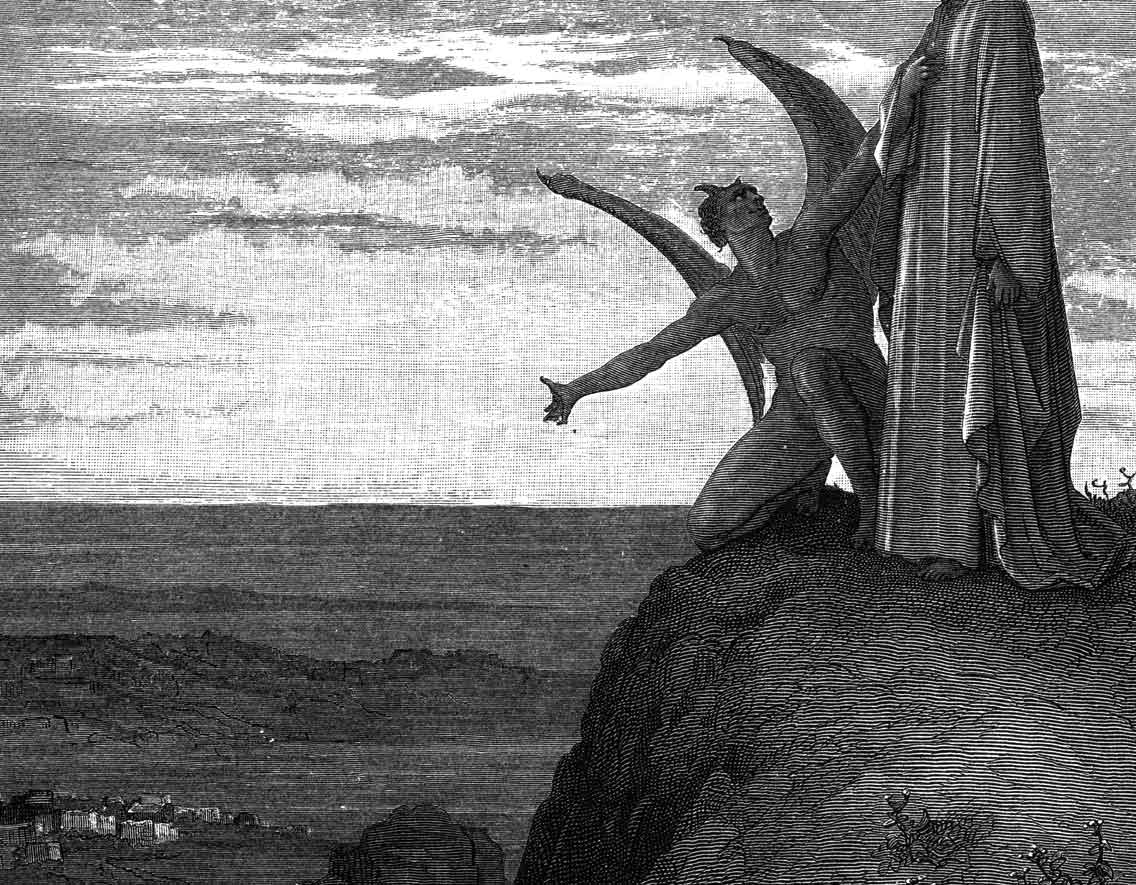
Secular Credibility Is a Devilish Temptation by James Hitchcock
31.5—September/October 2018
The Rise of the Gnostic Liberal State After Christianity by Andrew Latham
more from the online archives
23.5—September/October 2010
The Loss of a Christian Understanding of Virginity Is Pure Tragedy by Eleanor Bourg Donlon
27.5—Sept/Oct 2014
The Culture of Death's Campaign Against the Catholic Church by Brantly Millegan
calling all readers
Please Donate
"There are magazines worth reading but few worth saving . . . Touchstone is just such a magazine."
—Alice von Hildebrand
"Here we do not concede one square millimeter of territory to falsehood, folly, contemporary sentimentality, or fashion. We speak the truth, and let God be our judge. . . . Touchstone is the one committedly Christian conservative journal."
—Anthony Esolen, Touchstone senior editor
