




Book Review
Readable & Repeatable
The Collected Works of G. K. Chesterton
Vol. 36: The Illustrated London News, 1932–1934
Ignatius Press, 2011
(611 pages, $29.95, paperback)
reviewed by John C. "Chuck" Chalberg
Writers as prolific as G. K. Chesterton will inevitably be accused of repeating themselves, or of having nothing new to say, which may not be the same thing. Chesterton's response to either charge was to laugh and plead guilty. His jovial reply reflected his wonderful ability to combine strong convictions and deep humility into one roly-poly package. That ability was neither feigned nor rehearsed. Both the convictions and the humility were thoroughly genuine.
It's not possible to do justice to three years' worth of weekly essays in a short review, but it's easy to reaffirm Chesterton's worth and encourage readers old and new to give him a second, tenth, or first look, as the case may be. There is, of course, the sheer pleasure of reading his prose, but readers may also find it stimulating to encounter Chesterton wrestling with something very much out of the blue, but not out of the ordinary, or they may be reassured to discover that the problems that concerned him were not that far removed from the troubles and worries of our own day. After all, humankind always manages to keep on making the same mistakes.
Chesterton's was a world of mad dictators and hard times, a world where Christianity was in crisis and yet not without hope, and a world still reeling from one revolution (Bolshevik) and on the verge of another (sexual). In sum, it was a world as much in need of men willing to fight the good fight as is our own.
A Double Loss
Written as they were for a London newspaper, the bulk of these essays presume an English readership, and many of them concern what Chesterton feared was a looming fight with Hitler. This was at a time when many on the English left were more enamored of Hitler than worried about him.
But Chesterton saw that Nazi Germany was anarchical in the worst sense of the word. After all, "nothing is so anarchical as discipline divorced from legitimate authority." Especially anarchical was the already apparent (to anyone who was paying attention) Nazi preoccupation with racialist notions and eugenics, both of which come in for withering criticism in these pages. Reading Chesterton, who was paying attention, on these topics ought to put to complete rest any suspicion that he was a Nazi sympathizer. The same goes for the charge that Nazism was a corruption of Christianity. To Chesterton, it was a perversion of paganism.
Today it is commonplace to complain of the rising tide of paganism in our culture, especially among the young. Chesterton was familiar with similar complaints in the England of his day. But in one insightful essay, he tells his readers that their complaints are misdirected: the problem is not that young people have turned to paganism, but that they have "lost any vestige of paganism." For the pagans of old at least understood that natural things had about them "a projected halo of the supernatural."
So where does that leave our young people's Christianity? The "sober truth" of the matter is that most of them never had any Christianity to lose in the first place. While this is not their fault, it is "surely their misfortune."
Chesterton concludes this essay with a typically Chestertonian twist. Because the young have lost their paganism, they are that much further from rediscovering Christianity. After all, in the "great days of paganism," people retained something that many in our modern world have lost—namely, the notion that there is "something about our world that is more real than realism." To a "real pagan," wine was always more than wine; "it was a god." And corn was more than corn; "it was a goddess."
John C. Chalberg writes from Minnesota.
A Journal of Mere Christianity—Delivered to Your Door
- Essays on theology, culture, and the Church
- Contributors from across the Christian traditions

Six print issues (one year) of Touchstone, plus full online access and PDF downloads for only $39.95.

Get a one-year full-access subscription to the Touchstone online archives for only $19.95.
bulk subscriptions
Order Touchstone subscriptions in bulk and save $10 per sub! Each subscription includes 6 issues of Touchstone plus full online access to touchstonemag.com—including archives, videos, and pdf downloads of recent issues for only $29.95 each! Great for churches or study groups.
Transactions will be processed on a secure server.
more from the online archives
27.3—May/June 2014
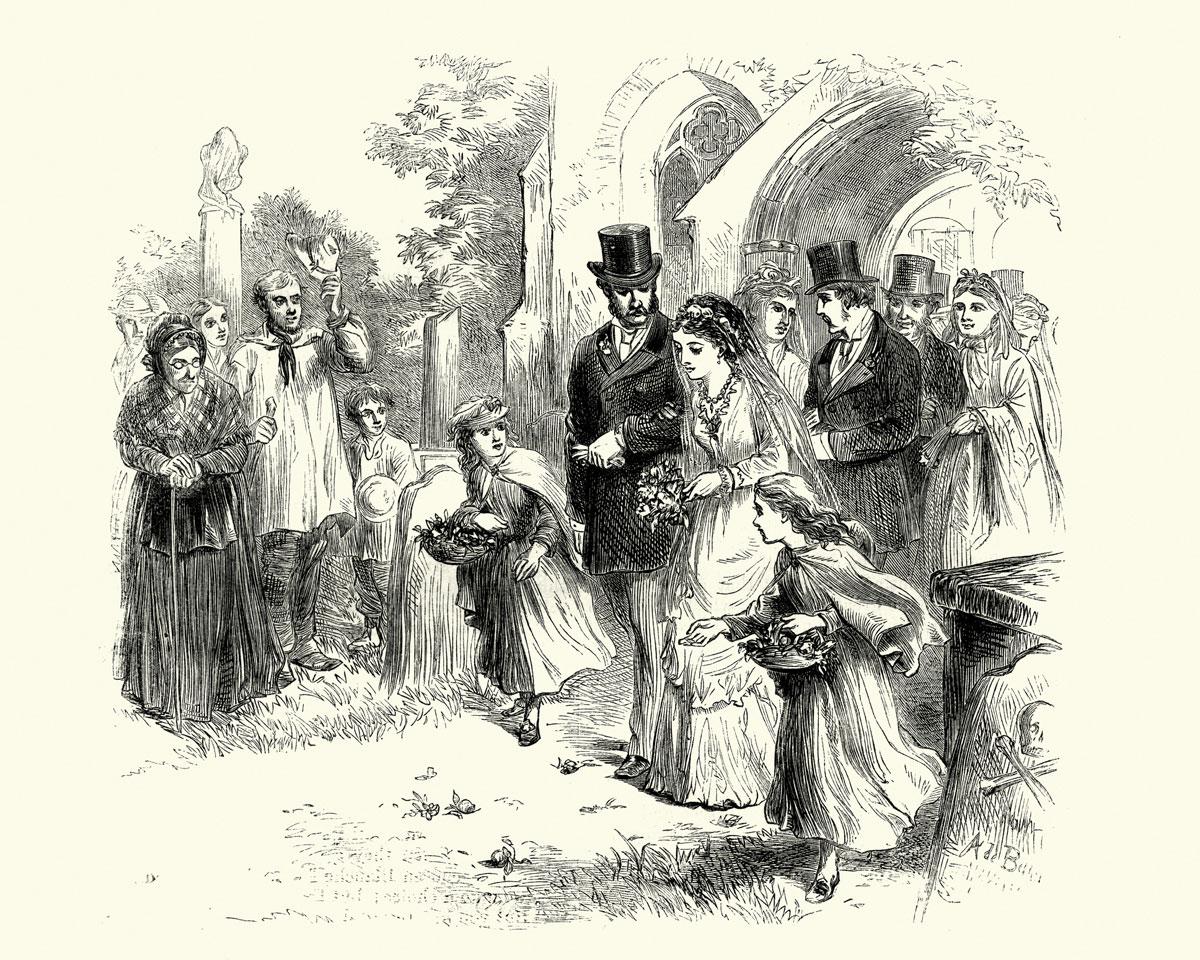
Facts versus Stereotypes About Love & Marriage in the Land of the Free by Allan C. Carlson
20.7—September 2007
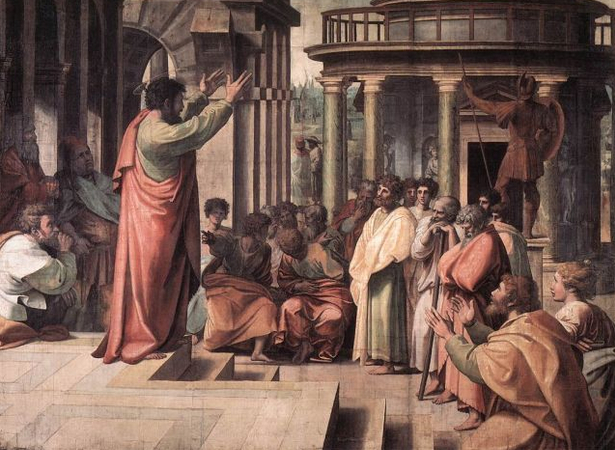
Paul Didn’t Build Bridges to Popular Culture by Russell D. Moore

calling all readers
Please Donate
"There are magazines worth reading but few worth saving . . . Touchstone is just such a magazine."
—Alice von Hildebrand
"Here we do not concede one square millimeter of territory to falsehood, folly, contemporary sentimentality, or fashion. We speak the truth, and let God be our judge. . . . Touchstone is the one committedly Christian conservative journal."
—Anthony Esolen, Touchstone senior editor
