The Pope & Intelligent Science by Phillip E. Johnson

The Pope & Intelligent Science

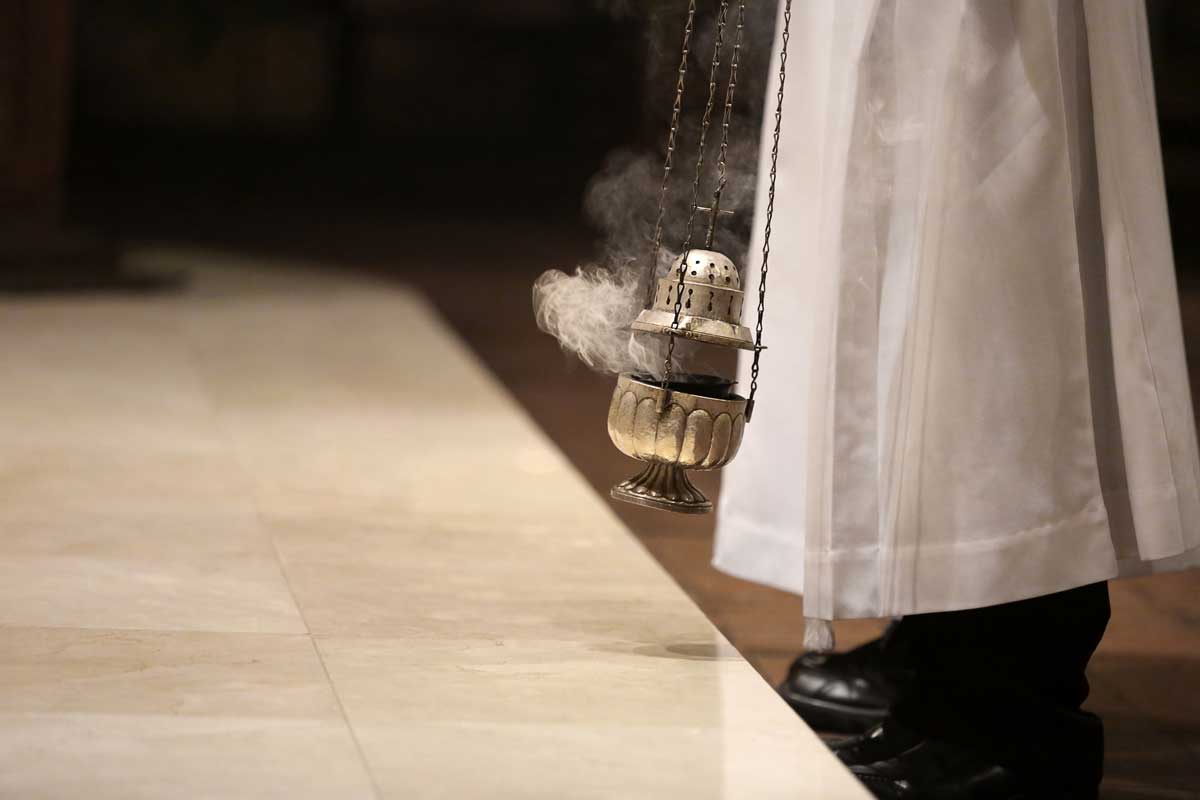
On the Saturday between Good Friday and Easter Sunday this year, Pope Benedict XVI explained in his Easter Vigil homily that, “If man were merely a random product of evolution in some place on the margins of the universe, then his life would make no sense or might even be a chance of nature. But no, Reason is there at the beginning: creative, divine Reason.”

I am impressed that Pope Benedict chose to include in his Easter Vigil homily an assertion of the reality of intelligent design in the origin of mankind. That testifies to the importance of the subject in his mind.

The pope’s statement that “Reason is there at the beginning” is not a restriction upon science, but a liberating principle that can free science and scientists from the oppressive force of scientific materialist philosophy. This philosophy compels them to conclude that man, and all other species, is solely the product of purposeless material causes, even when the evidence is pointing towards the necessary role of an intelligent cause in the history of life.

On that basis, I hope that Benedict’s homily sparks an invigorating and liberating discussion among Christian intellectuals and their secular counterparts about whether we can know that our existence has a “higher purpose” in spite of the dominance of materialistic ideology in the biological sciences over the past century and a half.

The Impeding Church

In my book Defeating Darwinism by Opening Minds, I wrote about what I call the “Inherit the Wind stereotype.” This stereotype has enabled the mandarins of biology to disqualify their critics by labeling them as religious fanatics who wish to shackle freedom of thought by requiring scientists to adhere to a biblical party line.

In a similar manner, by employing a “Galileo stereotype,” Darwinists outside and inside the church have successfully intimidated many Christians who try to argue that “Reason was there at the beginning” by warning them that they are repeating the Catholic Church’s disastrous error of employing the dreaded power of the Inquisition to silence Galileo when he pushed his claim that the Earth moves around the sun.

In my view, the pope and cardinals of the time would have done nothing wrong if, in this matter, they had limited themselves to exposing flaws in Galileo’s evidence or reasoning—even if their conclusions ultimately proved to be wrong. As a matter of fact, the doctors of the church could have made some good points against Galileo. For example, Galileo, not knowing that the oceanic tides are caused by the gravitational pull of the moon as it travels around the Earth, thought that the movement of the tides was one proof of the Earth’s movement in the heavens.

I read somewhere a statement attributed to Goethe: “A theory that is erroneous does no harm in itself. What does harm is when the error fortifies itself with power, and resists correction. That is the tragedy for which suffering lasts for centuries.” I am not certain that Goethe actually said that, but whoever said it deserves great credit for insight.

Galileo, in the words of the official transcripts of his 1633 trial, “was told to tell the truth; otherwise, one would have recourse to torture.” This single reference to torture is found near the end of the trial, after Galileo had already declared, “I do not hold this opinion of Copernicus.” The Inquisitors then imposed house arrest on him, placed his book on the Index of Forbidden Books, and forbade him to teach heliocentric views. We don’t know if Galileo actually feared torture, though the threat was always there. But it is true that the church impeded science in this matter, particularly in its sporadic opposition to Copernicus, although it is also true that the church was the patron of many scientists—including Galileo himself.

The Liberating Church


Phillip E. Johnson is Professor of Law (emeritus) at the University of California at Berkeley. He is the author of Darwin on Trial, The Wedge of Truth, The Right Questions (InterVarsity Press), and other books challenging the naturalistic assumptions that dominate modern culture. He is a contributing editor of Touchstone.

A Journal of Mere Christianity—Delivered to Your Door

  • Essays on theology, culture, and the Church
  • Contributors from across the Christian traditions

Subscribe (Print + Online)

Six print issues (one year) of Touchstone, plus full online access and PDF downloads for only $39.95.

Subscribe (Online Only)

Get a one-year full-access subscription to the Touchstone online archives for only $19.95.


bulk subscriptions

Order Touchstone subscriptions in bulk and save $10 per sub! Each subscription includes 6 issues of Touchstone plus full online access to touchstonemag.com—including archives, videos, and pdf downloads of recent issues for only $29.95 each! Great for churches or study groups.

Transactions will be processed on a secure server.


more on science from the online archives

17.6—July/August 2004

Reality & Reluctant Science

Old Science Confronts a Formidable Challenge in the Scientific ID Movement by Jay W. Richards

29.4—July/August 2016

Naked Truth

on Noticing That Modern Science Has Rendered Atheism Irrational by Harry Biltz

28.2—March/April 2015

The Icon of Materialism

Why Scientism's Cherished Progress Narrative Fails by Jonathan Witt

more from the online archives

33.2—March/April 2020

How It Happens

Easy Descent on an Unguarded Road by S. M. Hutchens

32.5—September/October 2019

Peter's Sword

by Patrick Henry Reardon

33.4—July/August 2020

The Joy of God

by S. M. Hutchens

calling all readers

Please Donate

"There are magazines worth reading but few worth saving . . . Touchstone is just such a magazine."
—Alice von Hildebrand

"Here we do not concede one square millimeter of territory to falsehood, folly, contemporary sentimentality, or fashion. We speak the truth, and let God be our judge. . . . Touchstone is the one committedly Christian conservative journal."
—Anthony Esolen, Touchstone senior editor

Support Touchstone

00