




Feature
Hope’s Eternal Spring
Shallow Optimism, Vain Hopes & God’s Absent Presence
And who is he that can hurt you,” St. Peter asks, “if you be zealous of good? But if also you suffer any thing for justice’ sake, blessed are ye. And be not afraid of their fear; and be not troubled. But sanctify Christ in your hearts, being ready always to satisfy every one that asketh you a reason of that hope which is in you” (1 Peter 3:13–15).
Calling for fortitude in a time of trial, Peter’s first epistle has an obvious bearing upon our lives at the beginning of the twenty-first century. Although Christians in this country do not face overt, violent persecution—at least, not yet—we are, if true to our vocation, estranged in many ways from the dominant culture that surrounds us and subject to misunderstanding, disdain, and sometimes outright hostility.
And while none of our politicians seems so wicked as the Roman Emperor Nero, author of savage persecution against Christians, including the martyrdom of the Prince of the Apostles, in some ways our current situation seems even more hopeless, since the last four decades have marked a precipitous decline in the prestige and influence of the Church in American society, and in the unity and practice of the faithful, insofar as such things may be outwardly perceived.
The hope of Christians, however, never changes or wavers; it only seems so when we confuse it with the shallow optimism of worldly expectation: the “hope” of acquiring earthly success, prosperity, and comfort or at least of escaping physical suffering, emotional turmoil, and moral temptation.
The hope of which we must always be ready with a reason is a specifically Christian, or “theological,” virtue, and it has but one source, designated by St. Peter: “Blessed be the God and Father of our Lord Jesus Christ, who according to his great mercy hath regenerated us unto a lively hope, by the resurrection of Jesus Christ from the dead” (1 Peter 1:3). The virtue of hope, then, rests on the virtue of faith, faith in the Resurrection of our Lord from the dead, and the virtue of charity grows out of these two and perfects them (see 1 Cor. 13:13).
Hope & Fear
To lack altogether these virtues is to be in a state of mortal sin; that is, in the state of the pagan Ephesians before their conversion, as described by St. Paul: “You were at that time without Christ, being aliens from the conversation of Israel and strangers to the testament, having no hope of the promise and without God in this world” (Eph. 2:12).
The ancient pagan world into which the apostles brought the gospel was thus faithless, hopeless, and loveless—that is why their message was the gospel, the “good news.” Our contemporary society seems to have reverted to this pagan condition, and the prospects for its reformation by any means that we can manage—political, educational, cultural—seem dim. This situation serves, nevertheless, to highlight the luminous reality of Christian hope in the face of worldly hopelessness.
It is helpful to notice that in secular terms the opposite of “hope” is “fear.” The point is made succinctly by Cicero during the century before the birth of our Lord in the Tusculan Disputations: “And if self-confidence, that is, a firm assurance of the mind, is a certain knowledge and sober opinion not rashly to be given, a lack of this confidence is also a fear of anticipated and looming evil; and, if hope is the expectation of good, the expectation of evil is necessarily fear.”
This is hardly the Christian view. For Cicero, “hope” lies within a man’s own capacities, within his reliance upon himself. Where this view of hope as the opposite of fear leads eventually may be perceived in the work of Cicero’s contemporary, the poet Lucretius, a follower of Epicurus, who attempts to free mankind from the fear of divine punishment in the afterlife by maintaining that death is absolute and final, that our soul with its conscious mind does not survive the dissolution of the body:
R. V. Young is Professor of English Emeritus at North Carolina State University, a former editor of Modern Age: A Quarterly Review, and the author of Shakespeare and the Idea of Western Civilization (Catholic University of America Press, 2022). He and his wife are parishioners at St. Ignatius of Antioch Church in Tarpon Springs, Florida. They have five grown children, fifteen grandchildren, and three great-grandchildren. He is a senior editor of Touchstone.
A Journal of Mere Christianity—Delivered to Your Door
- Essays on theology, culture, and the Church
- Contributors from across the Christian traditions
Subscribe (Print + Online) 
Six print issues (one year) of Touchstone, plus full online access and PDF downloads for only $39.95.
Subscribe (Online Only) 
Get a one-year full-access subscription to the Touchstone online archives for only $19.95.
bulk subscriptions
Order Touchstone subscriptions in bulk and save $10 per sub! Each subscription includes 6 issues of Touchstone plus full online access to touchstonemag.com—including archives, videos, and pdf downloads of recent issues for only $29.95 each! Great for churches or study groups.
Transactions will be processed on a secure server.
more from the online archives
30.5—Sept/Oct 2017
The Critical History Before, During & After Martin Luther by James Hitchcock
19.10—December 2006
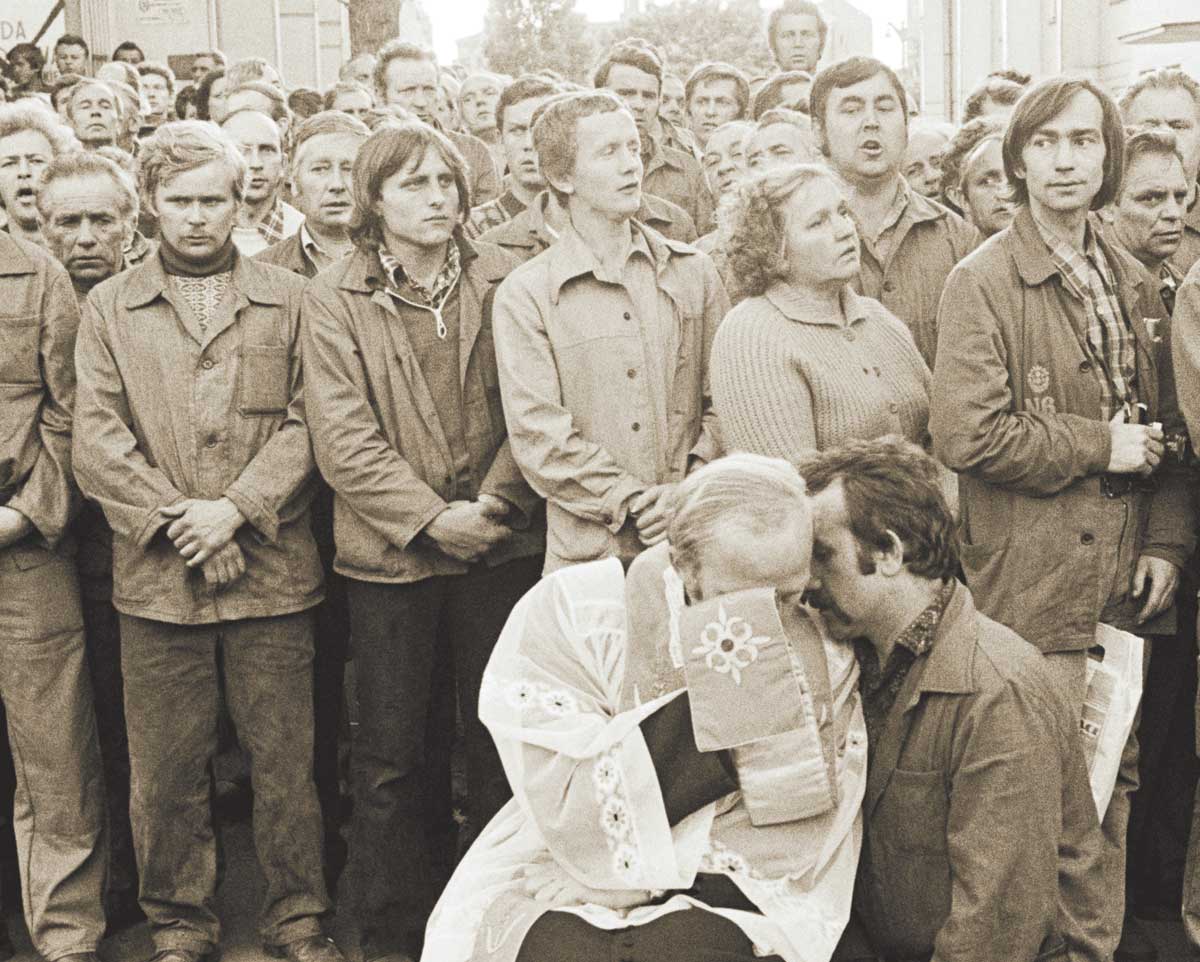
Workers of Another World United
A Personal Commemoration of Poland’s Solidarity 25 Years Later by John Harmon McElroy

33.1—January/February 2020
Do You Know Your Child’s Doctor?
The Politicization of Pediatrics in America by Alexander F. C. Webster
calling all readers
Please Donate
"There are magazines worth reading but few worth saving . . . Touchstone is just such a magazine."
—Alice von Hildebrand"Here we do not concede one square millimeter of territory to falsehood, folly, contemporary sentimentality, or fashion. We speak the truth, and let God be our judge. . . . Touchstone is the one committedly Christian conservative journal."
Support Touchstone
—Anthony Esolen, Touchstone senior editor
