Killing Disorders by Anne Barbeau Gardiner

Killing Disorders

Perpetration-Induced Traumatic Stress by Rachel M. MacNair

Perpetration-Induced Traumatic Stress: The Psychological Consequences Of Killing
Universe Press, 2005
(207 pages, $17.95, paperback)

reviewed by Anne Barbeau Gardiner

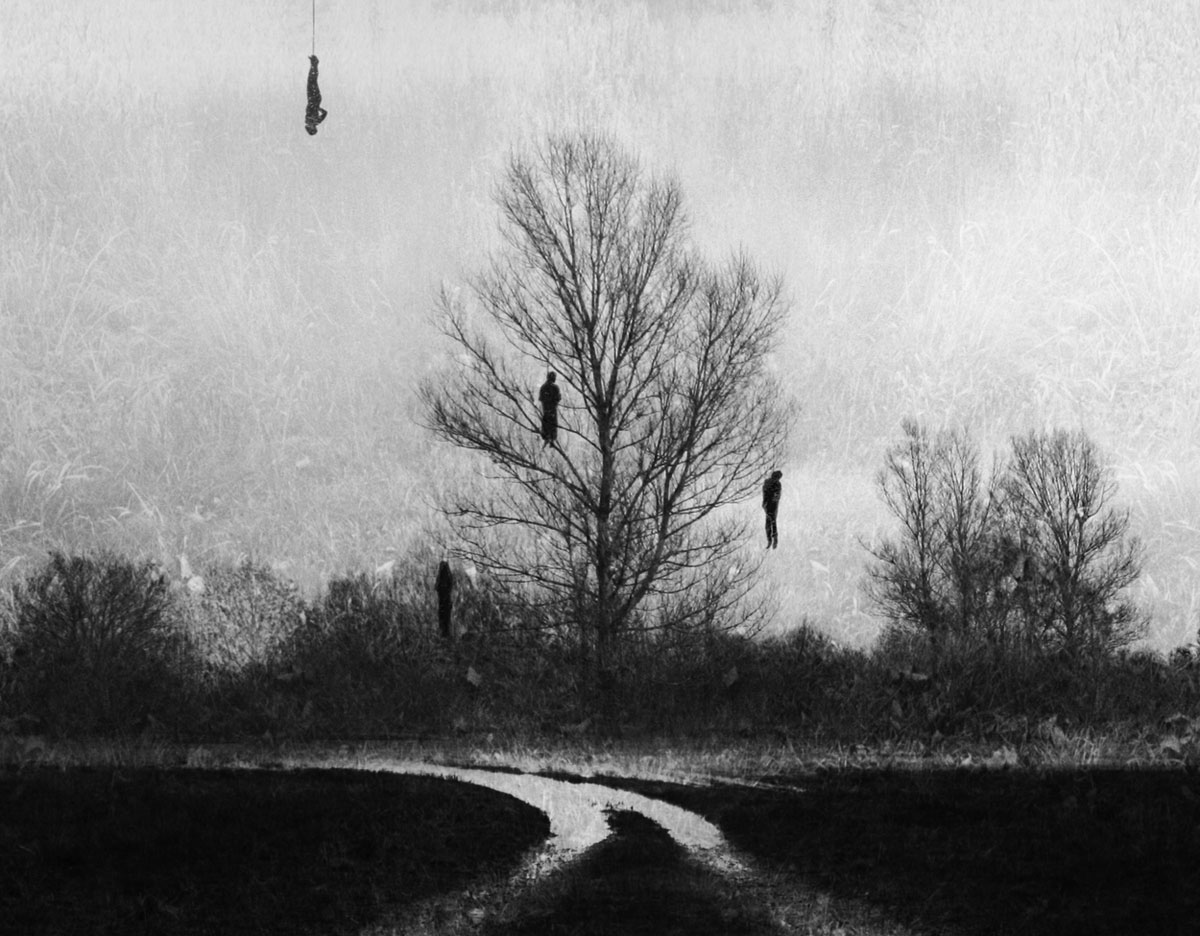
Even though human nature so resists causing death or harm to others that those who do it often suffer severe psychological problems, social scientists who study post-traumatic stress disorder (PTSD) almost never focus on the perpetrator, except in cases of “abusive violence” or “atrocities.”

Rachel MacNair, an independent researcher and director of the Institute for Integrated Social Analysis, does so in this very timely and important study of what she has named “perpetration-induced traumatic stress.” (She observes that “the concept that perpetration is itself a form of suffering is not unusual in religious literature.”)

Shell-Shocked

In the first chapter, she sifts through research done on combat veterans, which oddly enough rarely distinguishes those soldiers who killed intentionally from those who did not, and yet, as she demonstrates, the post-trauma symptoms of the former are worse than those of the latter. Indeed, “those who had killed in light combat had a higher mean score [of PTSD] than those who had not killed in heavy combat.”

The symptoms, years later, may include sudden rages, emotional numbing, insomnia, panic attacks, flashbacks, nightmares, intrusive thoughts and imagery, hyper-arousal, self-hatred, and substance abuse. Some of these reactions were once vaguely described as “shell shock,” “battle fatigue,” and “soldier’s heart” until the symptoms were studied more closely.

One reason there has been no focus on veterans who suffered perpetration-induced traumatic stress is that there is a consensus that the veteran has no reason to suffer apart from having committed “atrocities.” Only the villainous are supposed to suffer the psychological consequences of killing.

Looking at the testimony of public executioners and police officers, MacNair finds that even though their killings are socially sanctioned, a number still suffer post-traumatic stress similar to that endured by combat veterans. She cites Fred Allen, who after assisting in 120 executions was haunted by intrusive imagery: “Just like taking slides in a film projector and having a button and just pushing a button and just watching over and over, him, him, him.” She also cites John Robert Radclive, a former Canadian executioner, who lamented: “Now at night when I lie down, I start up with a roar as victim after victim comes up before me.”

In a chapter on the Nazis, she recounts how gas chambers were devised to create a “distance between executioner and victim” because of the “major psychological difficulties” developed by the Einsatzkommandos, earlier murder squads whose members would often commit suicide, go mad, or sink into alcoholism. One of these members, who had not even seen his victims’ faces when he shot them, lamented that he was haunted by their necks.


Anne Barbeau Gardiner is Professor Emerita of English at John Jay College of the City University of New York. She has published on Dryden, Milton, and Swift, as well as on Catholics of the 17th century.

A Journal of Mere Christianity—Delivered to Your Door

  • Essays on theology, culture, and the Church
  • Contributors from across the Christian traditions

Subscribe (Print + Online)

Six print issues (one year) of Touchstone, plus full online access and PDF downloads for only $39.95.

Subscribe (Online Only)

Get a one-year full-access subscription to the Touchstone online archives for only $19.95.


bulk subscriptions

Order Touchstone subscriptions in bulk and save $10 per sub! Each subscription includes 6 issues of Touchstone plus full online access to touchstonemag.com—including archives, videos, and pdf downloads of recent issues for only $29.95 each! Great for churches or study groups.

Transactions will be processed on a secure server.


more from the online archives

28.2—March/April 2015

As Goes Sweden

Neo-Pagan Family Policies Doom Any Recovery by Allan C. Carlson

32.2—March/April 2019

The Problem of Pity

Misguided Mercy & Dante's Infernal Purgation by Joshua Hren

31.2—March/April 2018

Watchful Dragons

Neil Gaiman’s Brush with Narnia Lingers by Russell D. Moore

calling all readers

Please Donate

"There are magazines worth reading but few worth saving . . . Touchstone is just such a magazine."
—Alice von Hildebrand

"Here we do not concede one square millimeter of territory to falsehood, folly, contemporary sentimentality, or fashion. We speak the truth, and let God be our judge. . . . Touchstone is the one committedly Christian conservative journal."
—Anthony Esolen, Touchstone senior editor

Support Touchstone

00