Right Alliances
Robert P. George on Our Ecumenical Touchstone
“Right Alliances” was given at a dinner celebrating Touchstone’s 100th issue, held in Washington, D.C., in late May. It has been revised slightly for publication.
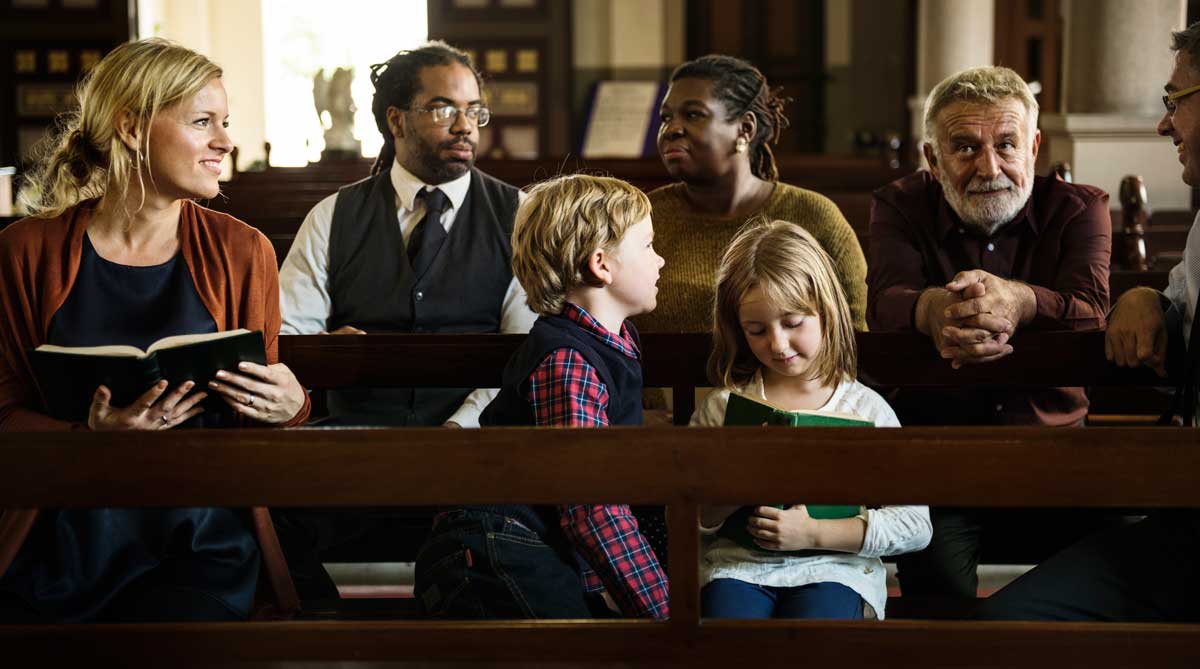
The fact that Protestant, Catholic, and Orthodox Christians are able to come together as we do tonight, in a spirit of fellowship and good will, is a tribute to our nation and to its great tradition of religious pluralism. Of course, it has taken us some time, we Protestants, Catholics, and Orthodox Christians, to get to this point.
There are people in this room who can remember a time when hostility and mutual suspicion across the lines of religious division was very much the order of the day. My dear friend Hadley Arkes of Amherst College talks about growing up in the 1950s in a neighborhood of Chicago so rife with religious prejudice that when a Unitarian family moved into the neighborhood the Ku Klux Klan showed up to burn a question mark on the lawn. Thank goodness that sort of hostility and mutual suspicion has disappeared.
Today’s Lines
Today we have very different lines of division. Touchstone highlighted the most politically salient of these in its provocative issue on “The Godless Party” (April 2003). The key division is not between Catholics and Protestants, or Christians and Jews, but rather between people—be they Evangelical and other conservative Protestants, faithful Catholics, Eastern Orthodox Christians, or observant Jews—who hold to the biblical view of life and cling to the Judeo-Christian ethic on the one side, and liberal secularists on the other.
Of course, not all who identify themselves with the great religious traditions side with the main body of believers or the traditions and faith of the Church. Plenty of self-identified Protestants, Catholics, and Jews side with liberal secularism on the great issues of the day, whether we are talking about abortion, the killing of embryos in scientific research, assisted suicide and euthanasia, marriage and sexual morality, or the place of religion and religiously informed moral judgment in American public life.
Liberal Catholics, for example, try to square the circle by claiming that their personal religious views are purely private matters that ought not to affect their behavior on questions of public policy. This was a dubious proposition when it was first announced by John F. Kennedy in his speech to Protestant ministers in Houston in 1960. Today, it is carried to the point of absurdity by such prominent liberal Catholics as the late president’s brother Teddy, who evidently believes that his religion is so private a matter that he will not impose it even on himself.
Let us take a moment to review the bidding. In the euphoria occasioned by the Second Vatican Council, observers looked forward to a flowering of ecumenism and perhaps even the reunification of the Christian Church. Official commissions were formed to reexamine issues that had historically divided Eastern and Western Christians, Protestants and Catholics, Christians and Jews. Denominational leaders sought opportunities for ecumenical cooperation, and theologians explored the possibility of compromises and new understandings to overcome differences in areas of doctrine, discipline, and authority.
One thing seemed certain back in those days: The ecumenical action would be on the left wing of the various religious communities, not on the right. Traditional Catholics, conservative Protestants, and orthodox Jews were viewed as part of the problem, not part of the solution. After all, interfaith dialogue would require flexibility, openness, tolerance—virtues of the religious and sociopolitical left, it was supposed in those days, not the right. Indeed, the alleged rigidity, dogmatism, and authoritarianism of conservative religious believers would, it was thought, make them obstacles to what was known as “the dialogical enterprise.”
Ecumenism would have to proceed despite anticipated conservative resistance. Then came the culture war.
Robert P. George is McCormick Professor of Jurisprudence and Director of the James Madison Program in American Ideals and Institutions at Princeton University (web.princeton.edu/sites/jmadison). His books include In Defense of Natural Law (Oxford University Press) and Conscience and Its Enemies (ISI Books). He has served as chairman of the U.S. Commission on International Religious Freedom. He is a senior editor of Touchstone.
A Journal of Mere Christianity—Delivered to Your Door
- Essays on theology, culture, and the Church
- Contributors from across the Christian traditions

Six print issues (one year) of Touchstone, plus full online access and PDF downloads for only $39.95.

Get a one-year full-access subscription to the Touchstone online archives for only $19.95.
bulk subscriptions
Order Touchstone subscriptions in bulk and save $10 per sub! Each subscription includes 6 issues of Touchstone plus full online access to touchstonemag.com—including archives, videos, and pdf downloads of recent issues for only $29.95 each! Great for churches or study groups.
Transactions will be processed on a secure server.
more on ecumenism from the online archives
more from the online archives
19.10—December 2006
Workers of Another World United
A Personal Commemoration of Poland’s Solidarity 25 Years Later by John Harmon McElroy
calling all readers
Please Donate
"There are magazines worth reading but few worth saving . . . Touchstone is just such a magazine."
—Alice von Hildebrand
"Here we do not concede one square millimeter of territory to falsehood, folly, contemporary sentimentality, or fashion. We speak the truth, and let God be our judge. . . . Touchstone is the one committedly Christian conservative journal."
—Anthony Esolen, Touchstone senior editor