




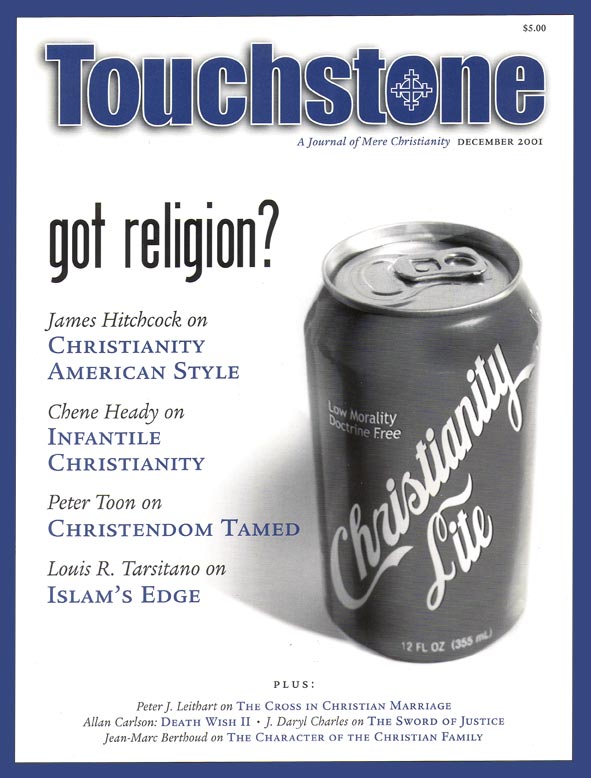
When Marriage Is Dying
Peter J. Leithart on the Meaning of Christian Marriage
Marriage is dying. That has been a recurrent theme of cultural conservatives for several decades. Recent census figures indicate that the number of single-parent families increased by 25 percent in the past decade. The 1990 census found 3.1 million unmarried couples living together, and that number had risen to 5.4 million by 2000. Nearly a third of American children are being raised without two parents.
Surveying this and other data, some commentators go further, and pronounce what amounts to a postmortem. Several years ago, Maggie Gallagher published a book on The Abolition of Marriage, and the Weekly Standard announced the “end of marriage” after the Vermont Supreme Court decided to extend marital rights to homosexual couples.
A number of factors have conspired to produce this crisis. Relaxation of divorce laws has led, unsurprisingly, to an alarming rise in divorce. Gay rights groups are trying to expand the legal meaning of marriage to include “same-sex unions.” More recently, detailed attention has been given to the effects of divorce on children, and the links between divorce, crime, educational decline, and other social pathologies have been documented.
Cultural shifts since the 1960s and 1970s have led to radical changes in the way many Americans view marriage and family. Instead of being viewed as a lifetime commitment, sealed with an oath before God, marriage has come to be viewed as a temporary alliance that either party can leave without fault. This instinctive view of marriage was upheld by American institutions; in 1885, the US Supreme Court decision in Murphy v. Ramsey stated that nothing was more important than that the law give support to “the idea of the family, as consisting in and springing from the union for life of one man and one woman in the holy estate of matrimony.”
Something More Fundamental
All this is no doubt true, and legal efforts to fix the problem must be explored. But something more fundamental has happened: Marriage is dying because we have forgotten that marriage is always about dying. When a man and woman appear for the marriage ceremony, they have usually spent the better part of their lives under the oversight of their parents. Parents have provided them with physical necessities, loved and cared for them, instructed them, and set an example for them in ways that no one can fully understand. At the wedding, that world dies. And when that world dies, the couple dies too.
This wedding marks the end of the former man and woman. Before vows are exchanged and they are pronounced man and wife, they were a single man and a single woman. When the rites have occurred, they will no longer be single ever again. They came separately, but go out as a couple. Two become one flesh.
The wedding is only the beginning of death. A man and woman who go through the ceremony and then live as they have always lived have not really understood what their marriage requires. Death at the wedding is a call to continual dying. At their wedding, a man and woman die to singleness, to the old relation with parents, to old habits and plans, and that death has to be worked out throughout the course of the marriage. After being married only a short time, most married couples discover just how self-centered they are, and they are called to die to that self-centeredness.
Weddings are not only a call to death for the couple, but also to everyone involved, especially the parents. Attentive parents naturally get into the habit of telling their children what to do, and that is a good habit. As children mature, of course, that habit is modified and curtailed, but on the wedding day it has to die. It is no longer the parents’ place to tell their married children how to order their lives. If the children are wise, they will seek advice and counsel and honor their parents. But they will not seek advice or honor their parents as they did during their years in their parents’ home.
And that means that parents, too, must die—show restraint, hold their tongues, stand back, even if it means standing back to watch their children make foolish decisions. The wedding day is a day of death for parents, after which they will never again be parents in the same way.
Peter J. Leithart is an ordained minister in the Presbyterian Church in America and the president of Trinity House Institute for Biblical, Liturgical & Cultural Studies in Birmingham, Alabama. His many books include Defending Constantine (InterVarsity), Between Babel and Beast (Cascade), and, most recently, Gratitude: An Intellectual History (Baylor University Press). His weblog can be found at www.leithart.com. He is a contributing editor of Touchstone.
A Journal of Mere Christianity—Delivered to Your Door
- Essays on theology, culture, and the Church
- Contributors from across the Christian traditions

Six print issues (one year) of Touchstone, plus full online access and PDF downloads for only $39.95.

Get a one-year full-access subscription to the Touchstone online archives for only $19.95.
bulk subscriptions
Order Touchstone subscriptions in bulk and save $10 per sub! Each subscription includes 6 issues of Touchstone plus full online access to touchstonemag.com—including archives, videos, and pdf downloads of recent issues for only $29.95 each! Great for churches or study groups.
Transactions will be processed on a secure server.
more on marriage from the online archives

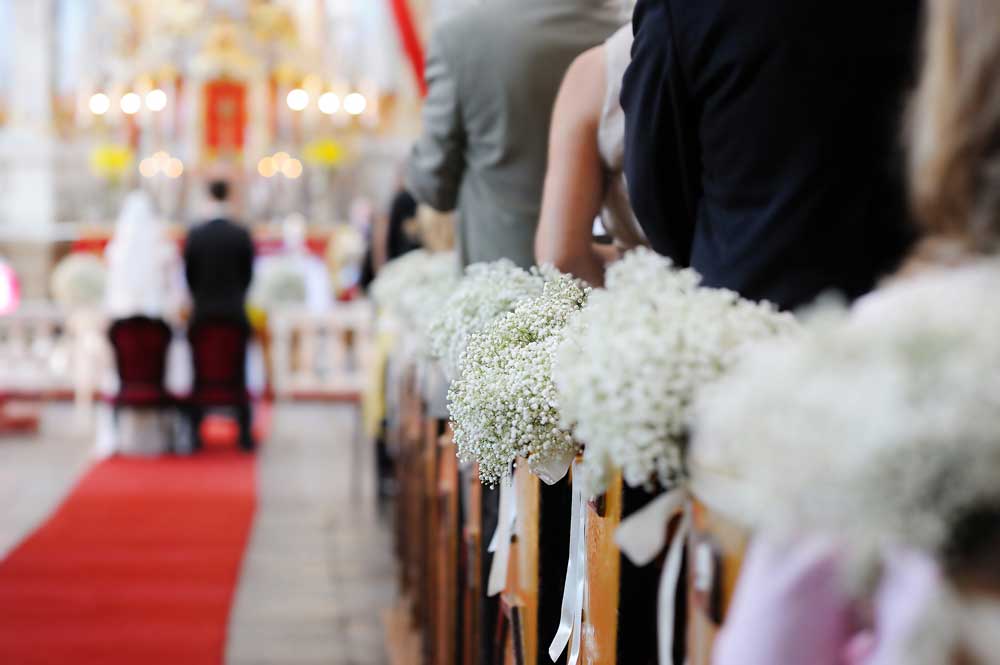
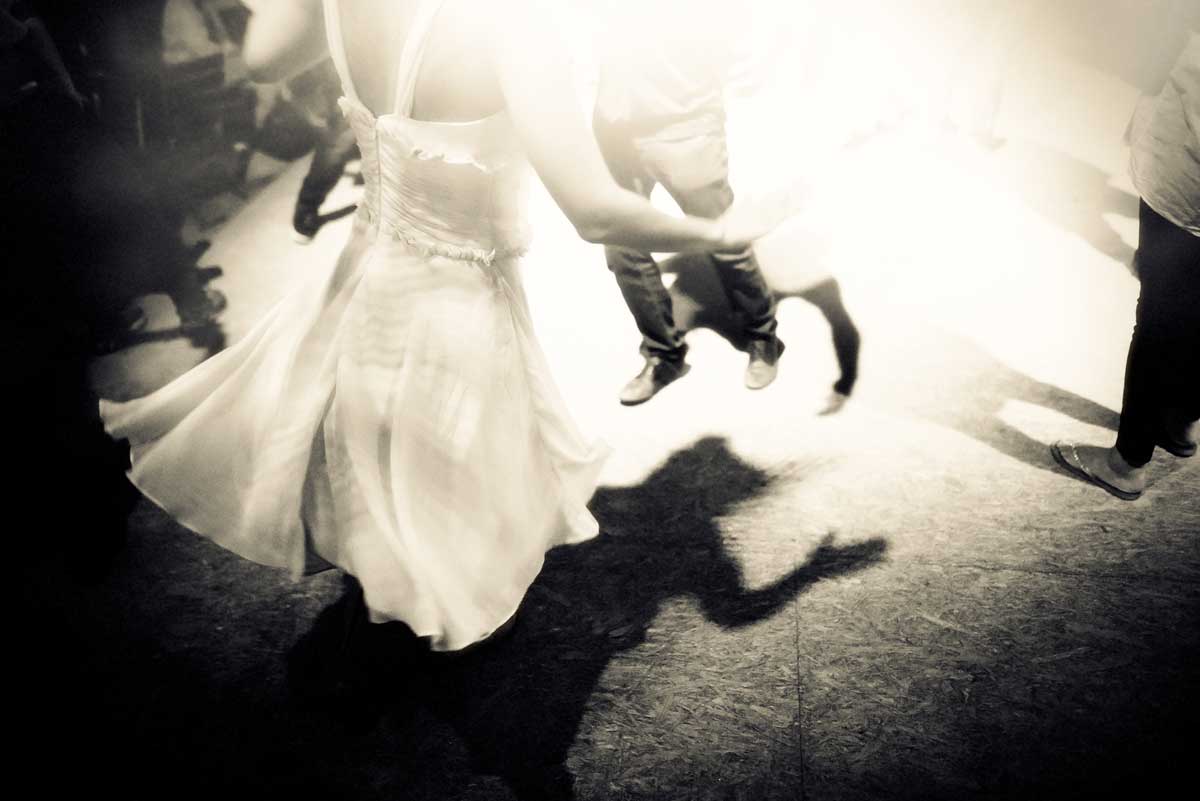
32.1—January/February 2019
Divine Love & the Love of Man & Woman Surpass Mere Consent by Anthony Esolen
more from the online archives

32.6—November/December 2019
The Year of Our Lord 1943: Christian Humanism in an Age of Crisis by Alan Jacobs by Jesse Russell
33.3—May/June 2020
Bach's Cantata BWV 106, Gottes Zeit ist die allerbesteZeit (God's time is the very best time) by Ken Myers

calling all readers
Please Donate
"There are magazines worth reading but few worth saving . . . Touchstone is just such a magazine."
—Alice von Hildebrand
"Here we do not concede one square millimeter of territory to falsehood, folly, contemporary sentimentality, or fashion. We speak the truth, and let God be our judge. . . . Touchstone is the one committedly Christian conservative journal."
—Anthony Esolen, Touchstone senior editor
