




Life & Death in South Bend
Notre Dame’s Culture of Death Conference
by Patrick Henry Reardon
Sponsored by Notre Dame’s Center for Ethics & Culture, a conference entitled “A Culture of Death” was conducted on that campus from October 12th to 14th this past year, bringing together an impressive array of speakers well known in several areas of concern conveniently lumped together as “pro-life”: abortion, fetal tissue research, euthanasia, warfare, and capital punishment, along with such related subjects as care for the disabled, Third World debt, and (brace yourself) feminism. The event included four plenary presentations and 15 concurrent sessions, some of these with several short papers.
One of the better speakers at the conference, John W. Carlson of Creighton University, remarking that its thematic title, “Culture of Death,” was coined by Pope John Paul II, drew attention to the fact that the pope employed quotation marks around the expression. He did this, Carlson suggested, for two reasons. First, to indicate that it is a neologism still in the process of being defined, and second, to suggest its ironic and paradoxical character. What the Holy Father calls “the culture of death,” Carlson remarked, is a kind of anti-culture, a veritable war on culture.
In this respect, and to the credit of Notre Dame’s David Solomon and the other planners of the conference, some of its finest parts were devoted to considerations of culture itself. These included the short papers of Donald Uitvlugt on St. Augustine’s City of God, E. Jane Doering on Simone Weil’s L’Enracinement, and J. Daryl Charles on Orwell’s 1984 and Animal Farm. Also to be included in this number were the very instructive lectures of Ralph McInerny, who presented a magisterial critique of various Nietzschean themes in literature, and Thomas Hibbs, who explored the nihilism of contemporary movies and television.
Of the four plenary presentations, I would rank two as good. First, that of H. Tristram Englehardt, Jr., of Rice University, “After Christendom: The Moralization of Religion and the Culture of Death.” This was the only lecture at the conference, in my opinion, that consistently dealt with the questions of life and death in a properly Christian doctrinal context, the death and resurrection of Jesus Christ. Dr. Englehardt spoke of the impossibility of having a just culture without having a holy culture, and the impossibility of a holy culture unless founded on correct worship. He spoke, in turn, of the impossibility of morality without metaphysics, and of metaphysics without liturgy, arguing that the current culture of death finds one of its historical roots in the Kantian “moralization of religion.” Touchstone is grateful for his and Notre Dame’s permission to publish this presentation, and the aforementioned essay by Dr. McInerny, in a future edition of our journal.
The other plenary presentation that I would rank as good was that of Dr. Alasdair MacIntyre of Notre Dame, “A Culture of Choices and Compartmentalization.” In this lecture he contended that ours is a “choice culture” in the sense that choice has now become a cultural end in itself. Choice is no longer thought of as revelatory of character, but as including the very standard of character. That is to say, choice has become its own self-justified norm. It no longer reveals character but only individual preference. This alteration in perspective, MacIntyre contended, alters the very nature of public discourse, since it recognizes no accepted standards of choice except that of choice itself. This breakdown of public discourse leads, in turn, to an increasing compartmentalizing of our lives. With respect to death, he said, we are nearly unable to consider death in se, but only under certain compartmentalized categories, either as “tragic loss,” or as an economic factor, or as a component of social function, or as data in medical experiments, and so forth.
Of the “concurrent sessions” that I was able to attend, I would classify all of them as good. Besides the lectures on literature noted earlier, special mention is deserved for the papers by Hans Reinders on the plight of the disabled, Helen Alvaré and Gerard Bradley on abortion legislation, Gilbert Meilaender on stem cell research, and Paul E. Sigmund on Third World debt.
The section entitled “Christian Feminism and the Culture of Death” was also good. There were three speakers. Helen Alvaré elaborated three specific roles for Christian women against the culture of death: the restoration of “the sense of service” (a sense notably lacking in the kind of feminism represented by Patricia Ireland, she remarked), the safeguarding of unborn children, and bridging the political divide that tends to separate “women’s concerns” from the rest of public life. Margaret Hogan described the intellectual foundations of totalitarianism (personal autonomy and the lust for power), arguing for their correction by a return to a sense of our shared “creaturehood” and the duties that arise out of our relationships in an ordered liberty. Maura Ryan, lamenting that “women’s concerns” in the Church have been excessively preoccupied with such matters as “reproduction” (this reviewer would prefer the traditional Christian word “procreation”) and the quest of women’s ordination, urged a wider range of moral concerns. She especially called for a greater emphasis on care of the elderly.
Finally, we come to the only two bad papers in the conference, but both of these, alas, were plenary presentations for the larger audiences in the two evenings. This latter arrangement doubtless had something to do with the greater notoriety enjoyed by the speakers themselves.
The opening lecture of the conference on the first night was given by Judge John T. Noonan of the Ninth Circuit Court of Appeals, “Cooperation in Intentionally Inflicting Death.” In the first half of his presentation Judge Noonan argued that all involvement in our contemporary culture implies various levels of participation in a “domestic slaughter,” a “conspiracy against life,” a “chain of cooperation” in the inflicting of violence. Sometimes, he reasoned, this cooperation is formal and intentional; in which cases, it is always sinful. Sometimes, however, it is merely systemic or even coerced. A common example of the latter is that of the taxpayer, who is forced to provide the means for the official and publicly sanctioned forms of inflicting death. In this treatment Noonan virtually dismissed the weight of Holy Scripture in answering moral questions, quoted papal documents only when they supported his own case, and appealed mainly to such moral authorities as Shakespeare and Graham Greene. Relying heavily on minimalist principles established in classical casuistry, the first half of his presentation could have been entitled “How to Get to Heaven with the Seat of Your Pants Burned Out.”
Patrick Henry Reardon is pastor emeritus of All Saints Antiochian Orthodox Church in Chicago, Illinois, and the author of numerous books, including, most recently, Out of Step with God: Orthodox Christian Reflections on the Book of Numbers (Ancient Faith Publishing, 2019).
A Journal of Mere Christianity—Delivered to Your Door
- Essays on theology, culture, and the Church
- Contributors from across the Christian traditions

Six print issues (one year) of Touchstone, plus full online access and PDF downloads for only $39.95.

Get a one-year full-access subscription to the Touchstone online archives for only $19.95.
bulk subscriptions
Order Touchstone subscriptions in bulk and save $10 per sub! Each subscription includes 6 issues of Touchstone plus full online access to touchstonemag.com—including archives, videos, and pdf downloads of recent issues for only $29.95 each! Great for churches or study groups.
Transactions will be processed on a secure server.
more on culture from the online archives

18.2—March 2005
On Conservatism as Vexation, Vanity & Near Impossibility by Graeme Hunter

30.6—Nov/Dec 2017
Christ, Individualism & the Meaning of Cultural Diversity by Anthony Esolen

34.1—January/February 2021
Live Not by Lies: A Manual for Christian Dissidents by Rod Dreher by Hans Boersma
more from the online archives
19.10—December 2006
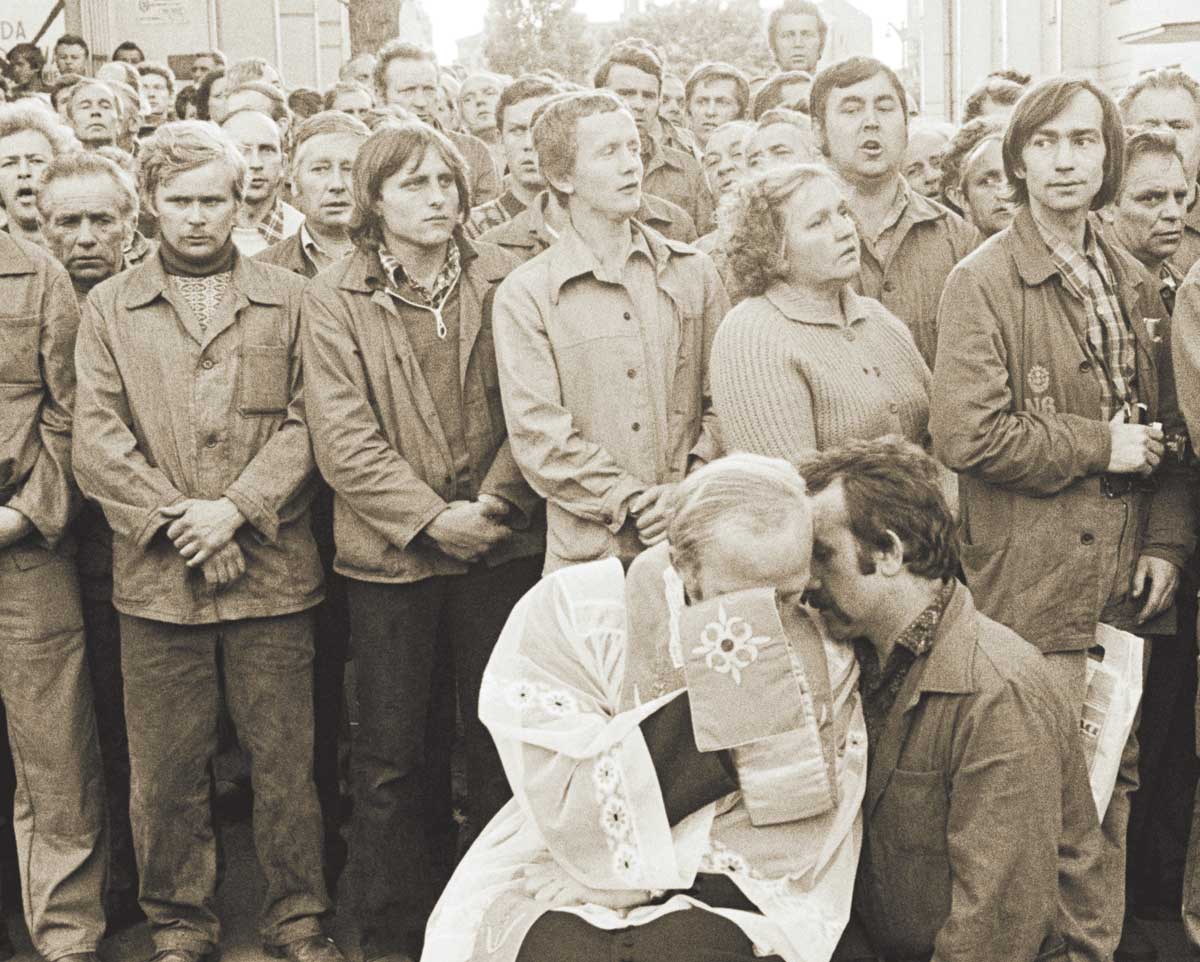
Workers of Another World United
A Personal Commemoration of Poland’s Solidarity 25 Years Later by John Harmon McElroy
24.3—May/June 2011
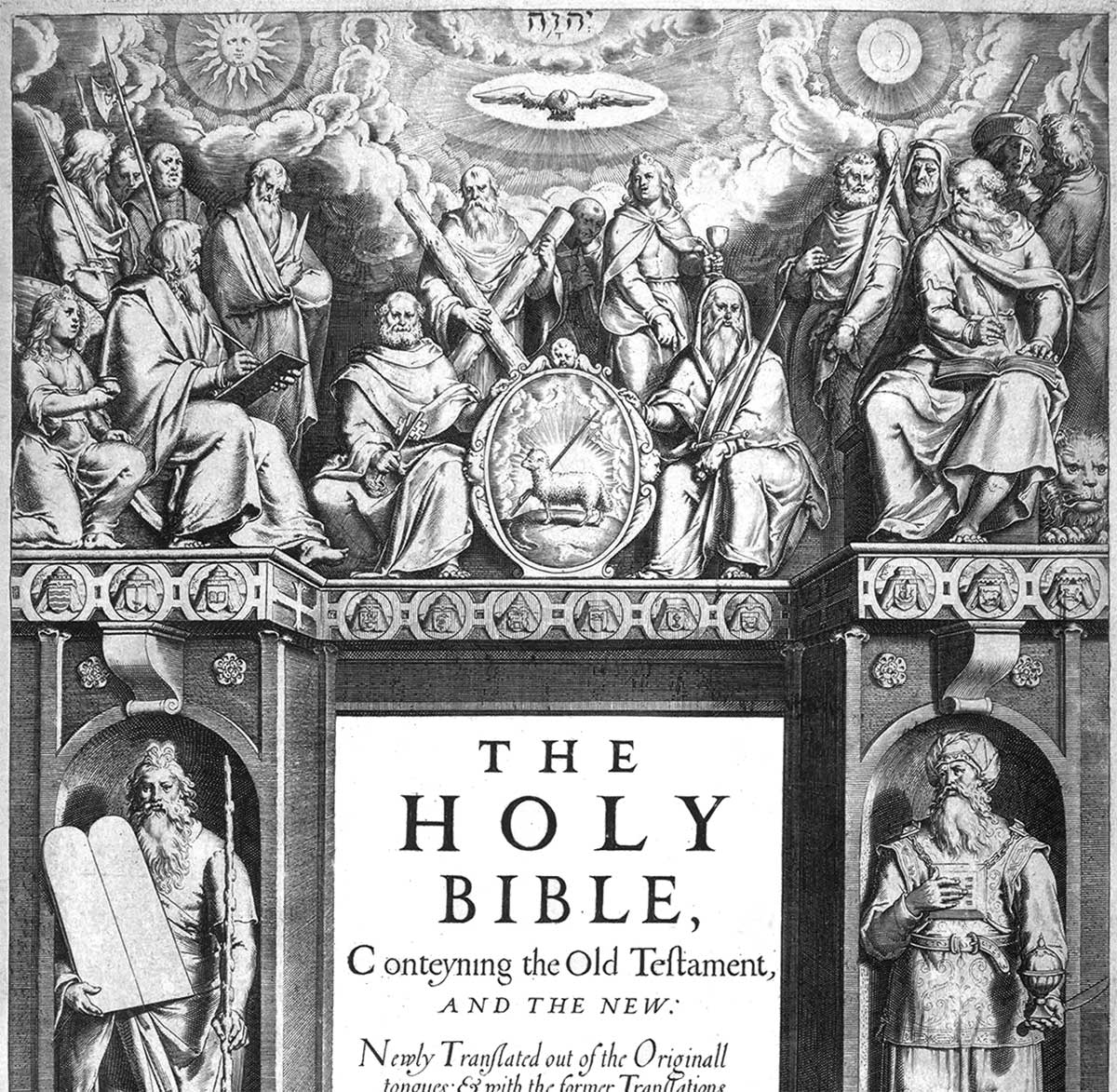
The Making & Endurance of the King James Bible, 1611-2011 by Barton Swaim

31.6—November/December 2018
on the Church's Response to the Anti-marriage Tide by Diane Woerner
calling all readers
Please Donate
"There are magazines worth reading but few worth saving . . . Touchstone is just such a magazine."
—Alice von Hildebrand
"Here we do not concede one square millimeter of territory to falsehood, folly, contemporary sentimentality, or fashion. We speak the truth, and let God be our judge. . . . Touchstone is the one committedly Christian conservative journal."
—Anthony Esolen, Touchstone senior editor
