Delusions of Engagement by Preston Jones

Delusions of Engagement

Preston Jones on Christians & Popular Culture

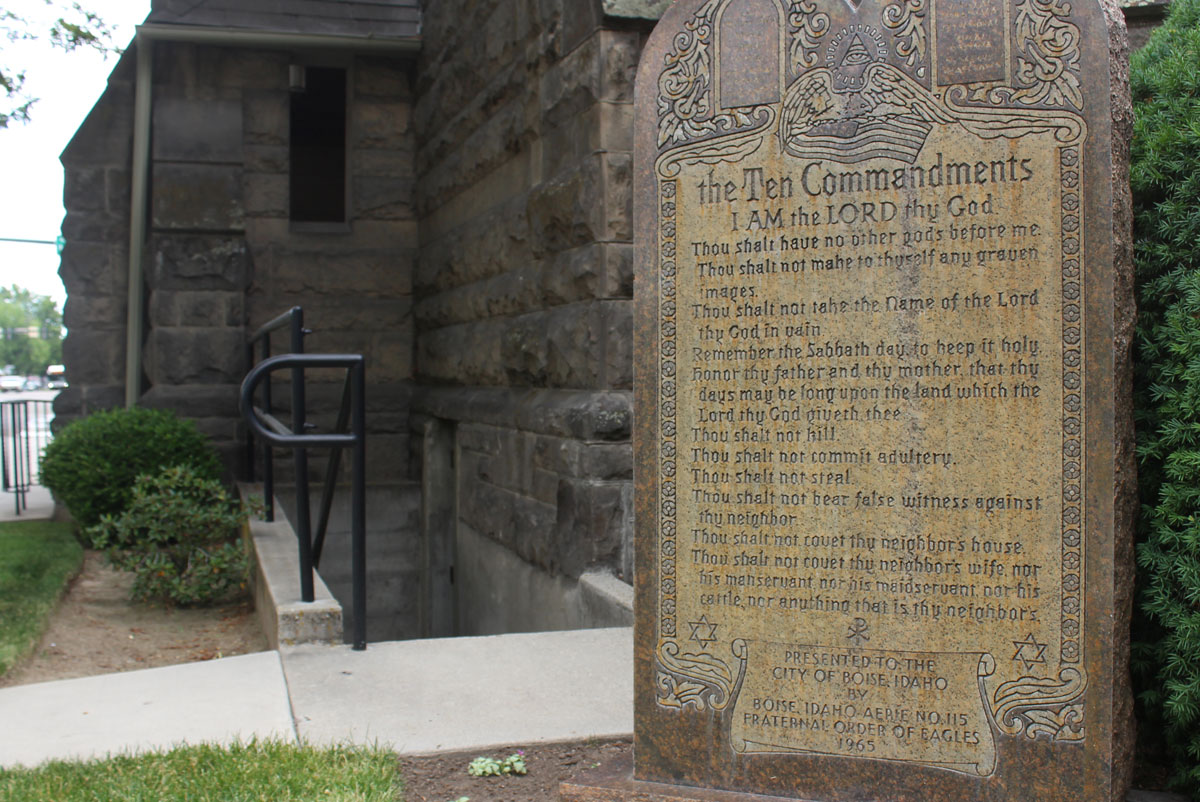
There’s been a good bit of talk recently among Evangelicals on the merits of Christian political activism—or, more accurately, on the merits of conservative Christian political activism. So far as I can tell, no one has a problem with Jesse Jackson or Jim Wallis mentioning God in public. But what about Bible-thumper Fred from Alabama who wants the Ten Commandments up on his kid’s public-school walls? Forget it.

Sniff the air for a second and what you’ll detect is an Evangelical intelligentsia just dying to win points with this country’s liberal establishment, or the “vital center,” or the forces of thoughtful “ambiguity” on matters moral, or whatever you want to call it. Upper-middlebrow Evangelicals call it “engaging the culture.”

Of course, a much more common variation on this theme is to be found not so much among thinking believers but in the lowbrow Evangelical subculture that mimics, always badly, the culture at large. Christian disco, Christian refrigerator magnets, Christian coffee mugs, Christian diets, Christian pop psychology, Christian fishing trips, Christian radio, Christian athletes, Christian cowboys, and a Christian T-shirt that depicts a bruised and crimsoned Jesus bench-pressing a mammoth cross and announcing, “This blood’s for you.”

Behind all of this, I have no doubt, is an honorable desire to attract others to the Christian faith. The non-Christian co-worker notices the symbol on your bracelet, asks about it, and gets the rundown on the Good News. The punk rocker thinks he is going to a plain old raucous concert, but won’t he be surprised when he discovers that the gaggle of multiple-ringed “artists” on stage have dedicated their particular incoherences to the Lord? The young TV addict reads a review of his favorite semi-pornographic program, only to discover that, according to the Evangelical grad student who penned the article, beneath the smut is to be found a deep hunger for Trinitarian theology. And so on.

For most of American Evangelicaldom this is the stuff of cultural “engagement.” It’s been going on for a long time, and it continues, despite its obvious failures.

This situation came to mind as I was finishing a very fine book by Paul C. Gutjahr, An American Bible: A History of the Good Book in the United States, 1777-1880 (Stanford). For one theme that runs through Gutjahr’s text is that Christians were themselves partially responsible for the eclipse of biblical authority in nineteenth-century American public life. Of course, Gutjahr recognizes that Darwinism and biblical criticism played a significant role in diminishing the Bible’s stature in the minds of some Americans. He also notes that something as innocuous as the introduction of standard grammars into American public schools in the early nineteenth century contributed as well to the deterioration of the Bible’s privileged place in American culture. In the eighteenth century Bibles themselves were used as textbooks, but they were soon replaced by formal grammars, and thus American children’s direct exposure to the Bible was reduced.

Perhaps Gutjahr makes too much of this. The nineteenth-century grammars I consulted for my own study of the Bible in nineteenth-century Canada were themselves replete with biblical content (this was true of French Catholic as well as Protestant grammars). I suspect the same is true of American texts. Still, the events that increased the demand for grammars in the early nineteenth century—snits, brawls, and riots between Catholics and Protestants over the use of Bibles in schools—themselves suggest that the Bible’s purported and (usually) well-intentioned proponents may now appear in retrospect to have been less than friends of the Good Book.

But Evangelicals and other believers not prone to violence have no cause to rest easy. It isn’t that Gutjahr intended to write a critique of contemporary American Evangelical subculture, yet his book is in some respects as current as any op-ed piece.

“[B]y the 1850s,” Gutjahr tells us, “writers such as Harriet Beecher Stowe, Susan Warner, Maria Cummins, and Joseph Holt Ingraham had successfully adapted the biblical message into the incredibly popular form of the novel.” Of course, it hadn’t been so long since Evangelicals had universally frowned upon novels. But as the genre grew in popularity, it occurred to some that the Christian message could—and should—be introduced into works of fiction, so as to reach souls. And who doubts the integrity of this motivation? But what was the result? Gutjahr suggests that one important consequence was that the Bible came in many Americans’ minds to be mixed with fiction. One writer who was eager to make Christ a sympathetic figure to readers popularized a Jesus who suffered from a chronic headache.

But—and here we come to an important point—once writers with less noble or with less explicitly theological intentions adopted the genre, who would be able to tell the difference? Lew Wallace, whose interest lay more in making money than purveying biblical truth, gave his famous novel Ben-Hur the subtitle “A Tale of the Christ.” But “Christ” rarely appears in the novel; he was hauled into the book’s title mainly because Wallace knew that in doing so he (Wallace) would attract readers.


Preston Jones teaches history at John Brown University.

A Journal of Mere Christianity—Delivered to Your Door

  • Essays on theology, culture, and the Church
  • Contributors from across the Christian traditions
Subscribe (Print + Online)

Six print issues (one year) of Touchstone, plus full online access and PDF downloads for only $39.95.

Subscribe (Online Only)

Get a one-year full-access subscription to the Touchstone online archives for only $19.95.


bulk subscriptions

Order Touchstone subscriptions in bulk and save $10 per sub! Each subscription includes 6 issues of Touchstone plus full online access to touchstonemag.com—including archives, videos, and pdf downloads of recent issues for only $29.95 each! Great for churches or study groups.

Transactions will be processed on a secure server.


more on culture from the online archives
35.2—Mar/Apr 2022

Say Something

on Fatigued Christians Deciding to Engage the Culture by Keith Lowery

29.3—May/June 2016

The Master's Voice

Our Choice Is Obedience or Jesus as Anti-Christ by Anthony Esolen

34.1—January/February 2021

Fighting for Love

What the World Needs Now It Hardly Knows by Anthony Esolen


more from the online archives

33.3—May/June 2020

Maternity as Theophany

Maternal Body: A Theology of Incarnation from the Christian East by Carrie Frederick Frost
Fertile Ground: A Pilgrimage Through Pregnancy by Laura S. Jansson by Agnes R. Howard

32.1—January/February 2019

Schools of Impiety

The Diabolical Failure of Leaders in the Present Crises by James M. Kushiner

15.6—July/August 2002

Things Hidden Since the Beginning of the World

The Shape of Divine Providence & Human History by James Hitchcock

calling all readers

Please Donate

"There are magazines worth reading but few worth saving . . . Touchstone is just such a magazine."
—Alice von Hildebrand

"Here we do not concede one square millimeter of territory to falsehood, folly, contemporary sentimentality, or fashion. We speak the truth, and let God be our judge. . . . Touchstone is the one committedly Christian conservative journal."
—Anthony Esolen, Touchstone senior editor

Support Touchstone

00