





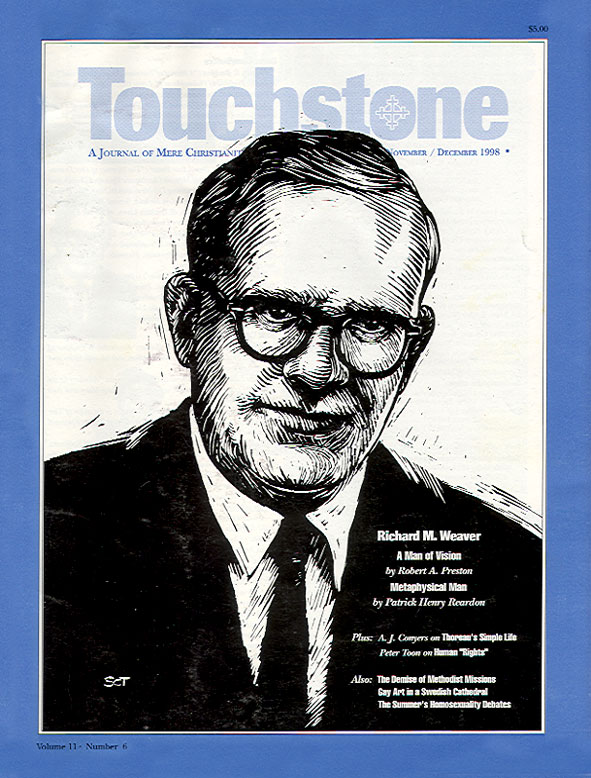
A Man of Vision
Richard Weaver's Ideas Have Consequences Fifty Years Later
by Robert A. Preston
I first read Ideas Have Consequences by Richard M. Weaver sometime in the late sixties. For me, being trained in scholastic philosophy, and always struggling to make the subject of metaphysics understandable and relevant to college students, it was an answer to prayers. For almost 30 years, Ideas has been a companion text to one of the traditional textbooks on Thomistic metaphysics in my course, and it has been a most happy marriage, at least for me, if not for my students. But I hope that I am not being unduly optimistic when I say that, for most of my students, Weaver became a guide to their understanding of what has gone wrong in a society they were now only beginning to examine. It is a pleasure to have the opportunity to discuss once again Ideas Have Consequences, this time from the perspective of 50 years after its publication, and to join with scholars who have a fuller knowledge of Weaver’s writings than I, to review the importance of this undeservedly little-known thinker for an understanding of the present age.
THIS ARTICLE ONLY AVAILABLE TO SUBSCRIBERS.
FOR QUICK ACCESS:
subscription options
Order
Print/Online Subscription

Get six issues (one year) of Touchstone PLUS full online access including pdf downloads for only $39.95. That's only $3.34 per month!
Order
Online Only
Subscription

Get a one-year full-access subscription to the Touchstone online archives for only $19.95. That's only $1.66 per month!
bulk subscriptions
Order Touchstone subscriptions in bulk and save $10 per sub! Each subscription includes 6 issues of Touchstone plus full online access to touchstonemag.com—including archives, videos, and pdf downloads of recent issues for only $29.95 each! Great for churches or study groups.
Transactions will be processed on a secure server.
more from the online archives

17.4—May 2004
The Unhappy & Abusive Marriage of Liberalism & Modernism by James Hitchcock
23.6—November/December 2010
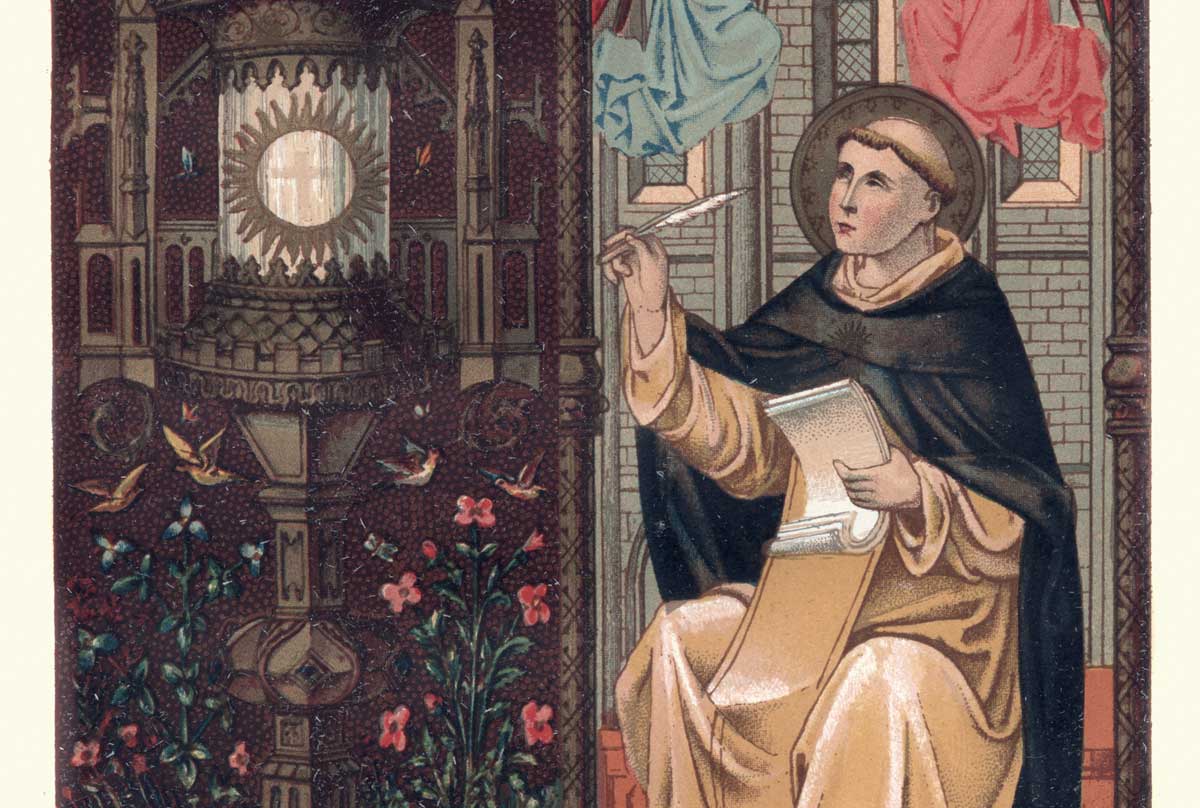
Darwin, Design & Thomas Aquinas
The Mythical Conflict Between Thomism & Intelligent Design by Logan Paul Gage
30.6—Nov/Dec 2017
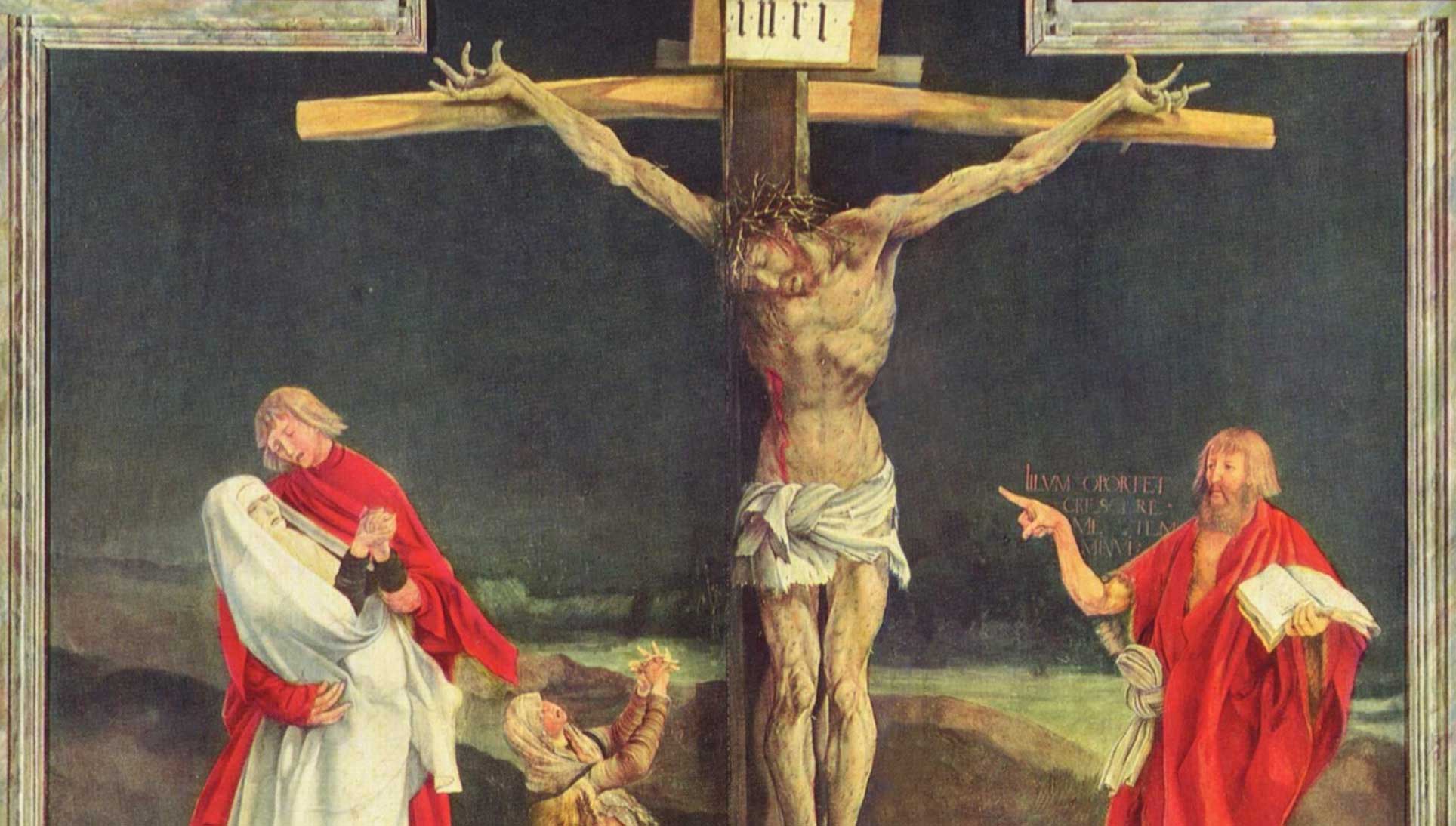
on Benedict XVI on the Fairest of the Sons of Men by Michael Martin De Sapio
calling all readers
Please Donate
"There are magazines worth reading but few worth saving . . . Touchstone is just such a magazine."
—Alice von Hildebrand
"Here we do not concede one square millimeter of territory to falsehood, folly, contemporary sentimentality, or fashion. We speak the truth, and let God be our judge. . . . Touchstone is the one committedly Christian conservative journal."
—Anthony Esolen, Touchstone senior editor
