




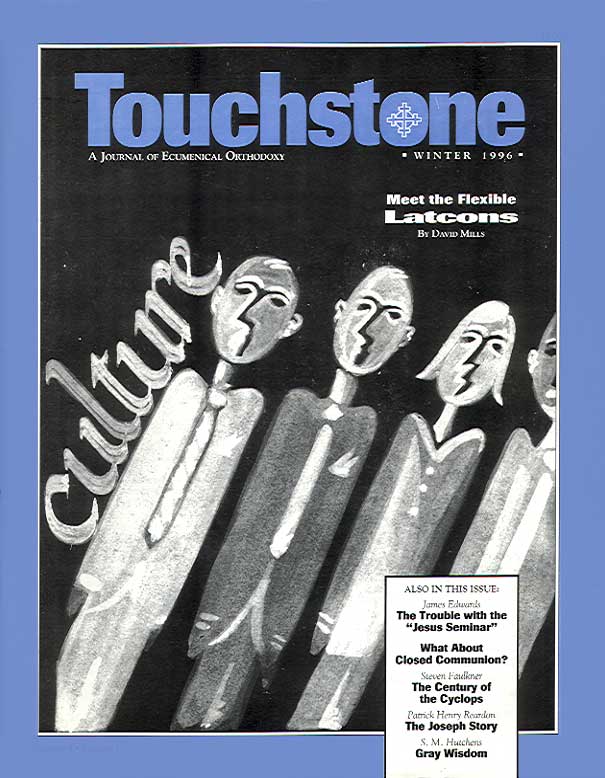
New Quest, Old Errors
The Fallacies of the New Quest for the Historical Jesus
by James R. Edwards
No institution felt the impact of the Enlightenment more than the Church and orthodox Christianity. The sources of the Church’s life, particularly its Scripture and creeds, fell under the lens of secular scrutiny. The Bible was subjected to the same literary and historical theories used to judge other literature. Among the many forms this new criticism took, perhaps none was more celebrated than The Quest of the Historical Jesus, to quote the English title of Albert Schweitzer’s monumental book (1906). His quest was to uncover the “real” Jesus, the exclusively human Jesus, beneath the layers of dogma and ritual that had accumulated over the centuries. Although Schweitzer’s Quest came after more than a century of debate, it did not end debate. In mid-century a more modest Quest resurfaced, and since the late 1980s dozens of books have appeared on Jesus, indicating that the New Quest is in full swing.
All three Quests, to be sure, are controlled by the presuppositions and methods of naturalism. That is to say, only evidence “from below” is admissible, i.e., what can be known about Jesus from history, literary sources, anthropology, and reason. Evidence “from above”—for example, the faith claims of the Apostles’ Creed—falls outside admissible evidence, unless such evidence can be verified apart from the authority of Church, creed, and confession.
But in other respects today’s New Quest parts company from Schweitzer’s eloquently chronicled Quest. The original Quest, a nineteenth-century European (largely German) endeavor, was the product of liberal Protestantism, whereas today’s late twentieth-century New Quest is dominated by North Americans and includes not only Protestants and Catholics, but also Jews, New Agers, and people of no religious commitment, including Marxists and atheists. But perhaps most importantly, the first Quest was sparked by the scientific method whose hallmark was rationalism, whereas the New Quest is the child of the social sciences and particularly the ideologies of liberation and cross-cultural anthropology.
The Jesus Seminar
The most publicized forum of the New Quest is “The Jesus Seminar,” a highly publicized scholarly think tank of some 50 scholars that has met twice yearly since 1985 to vote on the historical accuracy of the sayings attributed to Jesus in the Gospels. The chief result of the seminar is a new translation of the Gospels, The Five Gospels: The Search for the Authentic Words of Jesus (Macmillan, 1993). The fifth Gospel in the title is the Gospel of Thomas, which was discovered in 1945. The Gospel of Thomas generally is considered by New Testament scholars to be a tendentious product of a Gnostic Christian community in existence ca. A.D. 100. But it is regarded by the Jesus Seminar as a more important source for the sayings of Jesus than any of the four canonical Gospels. The “Scholars Version,” as the seminar refers to its translation, shuns pious and puritanical phraseology that, in its opinion, characterizes existing Bible translations, in favor of “the common street language of the original.” The results vary from occasional fresh and insightful renderings to clearly affected and even sophomoric ones.
Seminar members cast ballots on each saying attributed to Jesus in the Gospels (including Thomas). A red ballot indicates that a given statement (or something like it) was spoken by Jesus; a pink ballot, that a statement resembles something Jesus might have said; a gray ballot, that, although the ideas may be close to those of Jesus, the statement did not originate with him; and a black ballot indicates a definite negative, that the statement derived from later tradition.
What is the final result of the seminar’s deliberations? Eighty-two percent of the words attributed to Jesus were not spoken by him. Only one statement in the Gospel of Mark (which generally is regarded by New Testament scholars as the earliest and most reliable Gospel) is judged by the literati of the seminar to have come from Jesus (“Give to Caesar what is Caesar’s, and to God what is God’s,” Mark 12:17). As for the Gospel of John, “the Fellows of the Seminar were unable to find a single saying they could with certainty trace back to the historical Jesus” (The Five Gospels, p. 10).
The conclusions of the Jesus Seminar have been publicized widely—by the seminar itself—as having achieved a final breakthrough in the Jesus Quest. It seems that the Church, particularly evangelical Christianity, has been living in a fog of deception and ignorance that has now been dispelled by the intrepid endeavors of the Jesus Seminar.
The impression of a new breakthrough, however, is itself a deception. In reality, the seminar plies the same trade and reaches similar conclusions to those that have been reached in liberal theology for decades. The introduction to the Scholars Version, a 35-page primer in higher criticism, parrots the standard theories and methods of the New Testament guild, including the two-source and four-source hypotheses of the Synoptic Gospels, the Q-hypothesis, and the standard criteria for determining the veracity of a given statement. Among the latter are the principle of uniqueness (a statement with no parallel in Judaism or Hellenism cannot have derived from the latter and may go back to Jesus); the principle of difficulty (“hard” sayings have greater claim to authenticity since they would less likely have been fabricated by the Church); and the principle of multiple attestation (the more often a saying is attested to in different sources, the greater its likelihood of authenticity).
A Journal of Mere Christianity—Delivered to Your Door
- Essays on theology, culture, and the Church
- Contributors from across the Christian traditions

Six print issues (one year) of Touchstone, plus full online access and PDF downloads for only $39.95.

Get a one-year full-access subscription to the Touchstone online archives for only $19.95.
bulk subscriptions
Order Touchstone subscriptions in bulk and save $10 per sub! Each subscription includes 6 issues of Touchstone plus full online access to touchstonemag.com—including archives, videos, and pdf downloads of recent issues for only $29.95 each! Great for churches or study groups.
Transactions will be processed on a secure server.
more from the online archives
31.4—July/August 2018
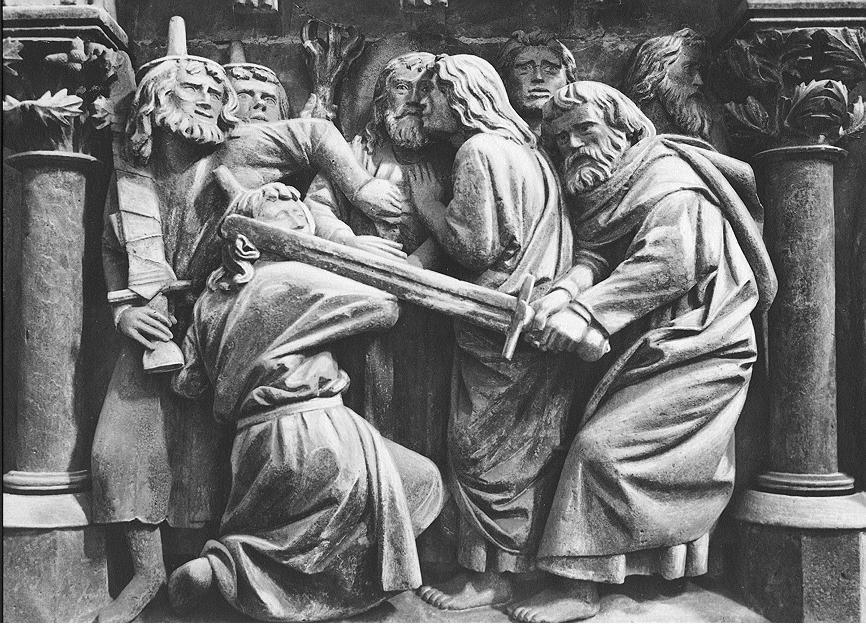
Labels & the Ecumenism of Discipleship by James M. Kushiner

calling all readers
Please Donate
"There are magazines worth reading but few worth saving . . . Touchstone is just such a magazine."
—Alice von Hildebrand
"Here we do not concede one square millimeter of territory to falsehood, folly, contemporary sentimentality, or fashion. We speak the truth, and let God be our judge. . . . Touchstone is the one committedly Christian conservative journal."
—Anthony Esolen, Touchstone senior editor
