Is <body> <title>The Mystery of Continuity by John Thompson

The Mystery of Continuity

The Mystery of Continuity: Time and History, Memory and Eternity in the Thought of Saint Augustine
by Jaroslav Pelikan
Charlottesville, VA: University Press of Virginia, 1986. 177 pages. $14.95

reviewed by John Thompson

“There has, quite literally, been no century of the sixteen centuries since the conversion of Augustine in which he has not been a major intellectual, spiritual, and cultural force.” Coming from the pen of Jaroslav Pelikan, such a statement needs no footnote to support it. In his latest work, the distinguished church historian from Yale University turns his attention to an essential but perhaps less understood aspect of Augustine’s thought. This is what may be called the “principle of continuity.” Throughout his life Augustine had wrestled with the concept of time and its relation to history and eternity. Here Pelikan traces the pivotal notions of time and continuity through the major writings and controversies of Augustine’s life.

“I now regard as error what I formerly regarded as truth,” the great North African asserted in an early disputation with his former coreligionists, the Manicheans. Although he had broken with the followers of the Persian prophet, “he was in fact transcending his immediate past in order to establish a continuity with a deeper past” (p.4), i.e., that of orthodox Catholic Christianity. Yet Augustine’s dramatic conversion to Christianity was not a “clean break,“ as Pelikan describes in the remainder of “Conversion and Continuity,” the book’s first chapter. Even Augustine the bishop continued to bear the marks of various aspects of his background: Augustine the rhetorician, Augustine the Neoplatonist, and more broadly, Augustine the product of classical culture. Pelikan also points out, however, that Augustine’s lack of facility in the Greek language and his unfamiliarity with the great thinkers of the Christian East both symbolized and perpetuated an unfortunate discontinuity between East and West.

Together, the first four chapters were given as the 1984 Richard Lectures at the University of Virginia. In the three succeeding chapters, Pelikan considers the notions of continuity, time, and eternity as they appear in each of the bishop of Hippo’s great works: the Confessions, The City of God, and On the Trinity. In these lectures, Pelikan is at his best as he traces the ideas of continuity, from its personal expression in the self, to its broader context within the Christian view of history, and finally, to the mystery of the divine person as the ultimate source of any sense of continuity.

Chapters five through eight, originally given at Seabury-Western Theological Seminary (in Evanston, not Evansville, Illinois) as the Hale Lectures, are concerned with issues Augustine faced during his episcopate that were related to the themes of time and continuity. And the topics which the great bishop addressed certainly have not failed for lack of interest since that time: free will and determinism, nature and grace (chapter five); the Church as “temporal and eternal” (chapter six); the Donatist claim that a breach in the holiness of the Church had led to an unreformable beach in her continuity (chapter seven); and the relation of sign, symbol, and event in our understanding of the Scriptures and the sacraments (chapter eight). It is a credit both to St. Augustine and to his distinguished modern interpreter that the controversies presented here, in fairly short scope, retain much of their original flavor and yet speak with such relevance to our own age.

In a final chapter, Pelikan describes the continuity—and discontinuity—between Augustine and a millennium and a half of his interpreters. This chapter, “Continuity with Augustine,” serves an essential function here in that it both warns the aspiring student against simplistic interpretations of him—or any other great mind of the Church—and it beckons any concerned churchman to have his or her own vision broadened through firsthand acquaintance with the writings of this great pillar of the Church. Pelikan concludes by stating that “so long as our civilization maintains its identity, continuity with him will probably always be characteristic of it.” (p. 151)

This is a masterful work, as one might expect when a great teacher of our time comments on one of the greatest minds of all times. Do not be fooled by the obscurity of the title or the credentials of the author: this book is certainly accessible to any educated adult who is willing to work through it. The issue of continuity was central in many of the good bishop’s writings and controversies, and those who read it carefully will find themselves much better acquainted with him. Augustine may have taken his place with the saints in heaven, but the controversies that he wrestled with, and the responses which he gave, are far from dead.

John Thompson is a librarian and professor at Waynesburg University, Waynesburg, Pennsylvania

A Journal of Mere Christianity—Delivered to Your Door

  • Essays on theology, culture, and the Church
  • Contributors from across the Christian traditions

Subscribe (Print + Online)

Six print issues (one year) of Touchstone, plus full online access and PDF downloads for only $39.95.

Subscribe (Online Only)

Get a one-year full-access subscription to the Touchstone online archives for only $19.95.


bulk subscriptions

Order Touchstone subscriptions in bulk and save $10 per sub! Each subscription includes 6 issues of Touchstone plus full online access to touchstonemag.com—including archives, videos, and pdf downloads of recent issues for only $29.95 each! Great for churches or study groups.

Transactions will be processed on a secure server.


more on history from the online archives
15.6—July/August 2002

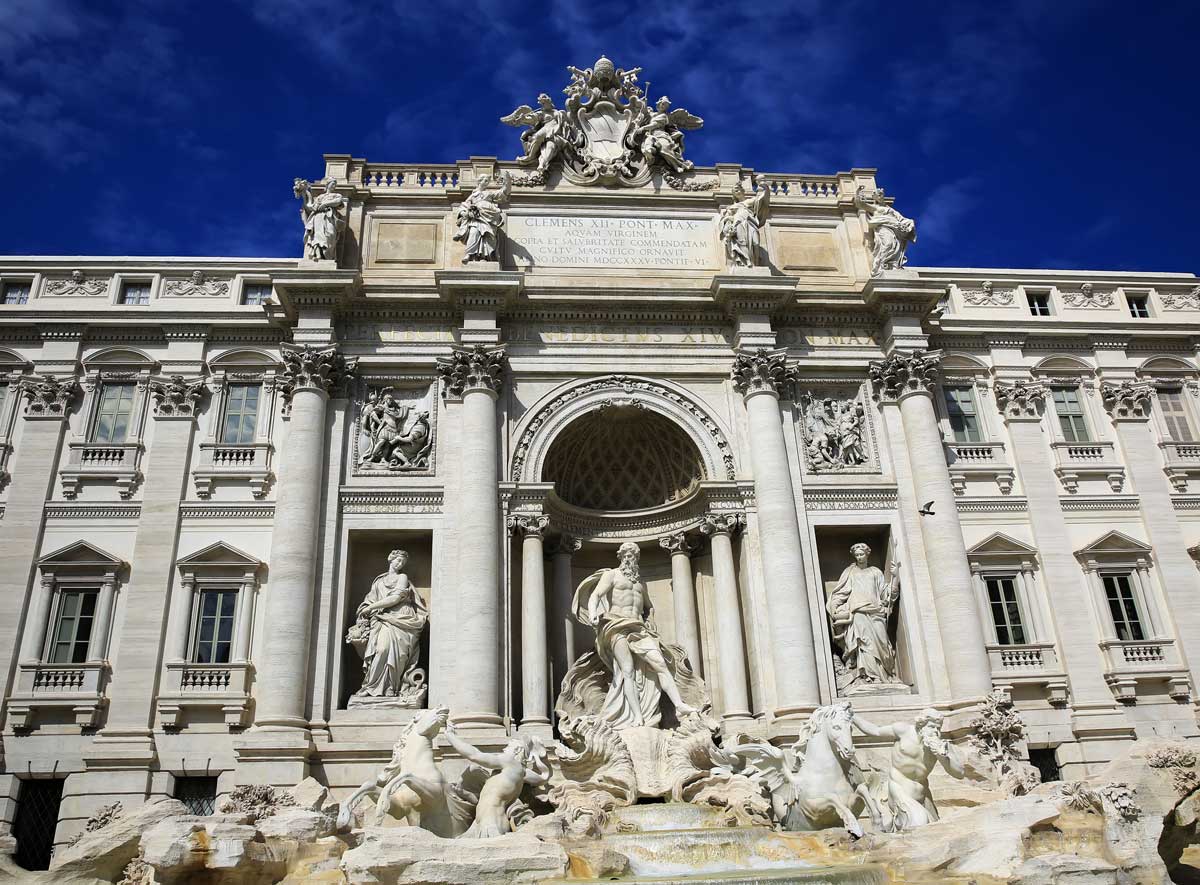
Things Hidden Since the Beginning of the World

The Shape of Divine Providence & Human History by James Hitchcock
14.6—July/August 2001

The Transformed Relics of the Fall

on the Fulfillment of History in Christ by Patrick Henry Reardon

28.3—May/June 2015

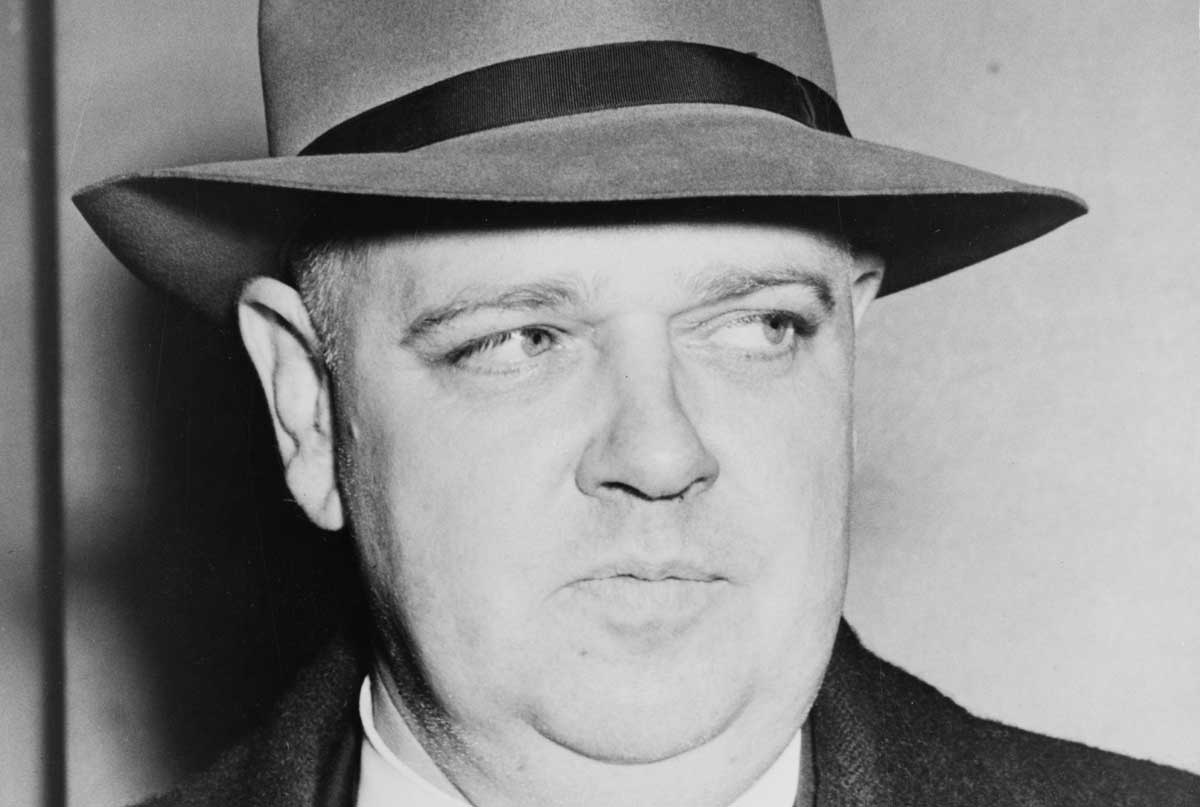
The Spy Who Turned Witness

Whittaker Chambers's Lonely War Against Godless Collectivism by Hunter Baker

more from the online archives

33.3—May/June 2020

The Fog of Love

Sin Covers a Multitude of Loves by Anthony Esolen

11.5—September/October 1998

Speaking the Truths Only the Imagination May Grasp

An Essay on Myth & 'Real Life' by Stratford Caldecott

31.4—July/August 2018

Listening to Eve

on the Brevity & Theology of Her Recorded Words by Judith Anderson

calling all readers

Please Donate

"There are magazines worth reading but few worth saving . . . Touchstone is just such a magazine."
—Alice von Hildebrand

"Here we do not concede one square millimeter of territory to falsehood, folly, contemporary sentimentality, or fashion. We speak the truth, and let God be our judge. . . . Touchstone is the one committedly Christian conservative journal."
—Anthony Esolen, Touchstone senior editor

Support Touchstone

00