




Veiw
Unhappy Fault
Leon J. Podles on the Integration of Anger into the Virtuous Life
Any institution tends to preserve itself by avoiding conflict, whether external or internal. In addition to this universal tendency, many Christians have a false understanding of the nature and role of anger. It is seen as something negative, something that a Christian should not feel.
In the sexual abuse cases in the Catholic Church, those who dealt with the bishops have consistently remarked that the bishops never expressed outrage or righteous anger, even at the most horrendous cases of abuse and sacrilege. Bishops seem to think that anger at sin is un-Christian. Gilbert Kilman, a child psychiatrist, commented, “What amazes me is the lack of outrage the church feels when its good work is being harmed. So, if there is anything the church needs to know, it needs to know how to be outraged.”
Mark Serrano confronted Bishop Frank Rodimer, asking why he had let his priest-friend Peter Osinski sleep with boys at Rodimer’s beach house while Rodimer was in the next bedroom: “Where is your moral indignation?”
Rodimer’s answer was, “Then I don’t get it. What do you want?” What Serrano wanted Rodimer to do was to behave like a man with a heart, a heart that is outraged by evil. But Rodimer couldn’t; his inability to feel outrage was a quality that had helped make him a bishop. He would never get into fights, never rock the boat, never “divide” but only “unify.” Rodimer could not understand why he should feel deep anger at evil, at the violation of the innocent, at the oppression of the weak.
Emotional Deformation
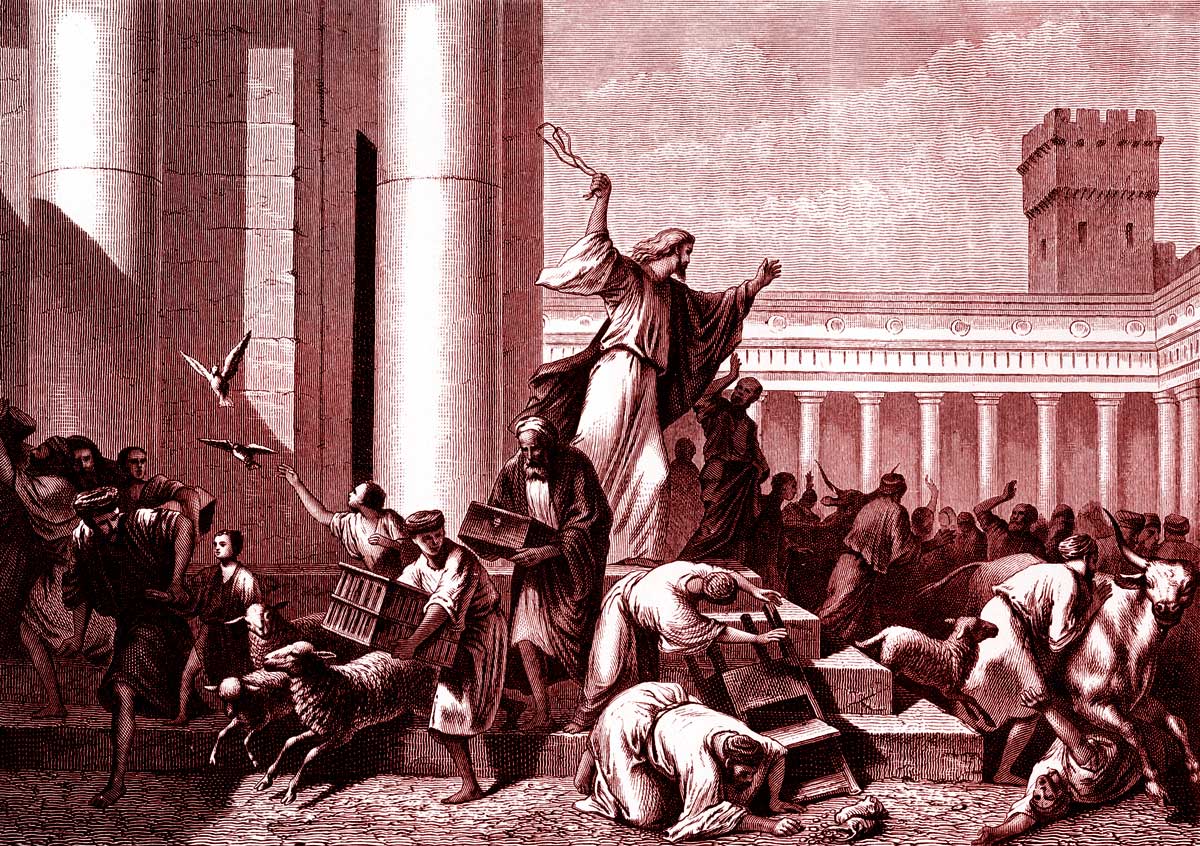
The emotions that are now suppressed are hatred and anger. Christians think that they ought not to feel these emotions, that it is un-Christian to feel them. They secretly suspect that Jesus was being un-Christian in his attitude to the scribes and Pharisees when he was angry at them, that he was un-Christian when he drove the moneychangers out of the temple or declared that millstones (not vacations in treatment centers) were the way to treat child abusers.
Conrad Baars noticed this emotional deformation in the clergy in the mid-twentieth century. He recognized that there had been distortions in “traditional” Catholic spirituality. It had become too focused upon individual acts rather than on growth in virtue; it had emphasized sheer naked strength of will. In forgetting that growth in virtue was the goal of the Christian’s moral life, it forgot that the emotions, all emotions, including anger and hate, are part of human nature and must be integrated into a virtuous life.
Baars had been imprisoned by the Nazis. He knew iniquity firsthand and that there was something wrong with those who did not hate it:
A little reflection will make it clear that there is a big difference between the person who knows solely that something is evil and ought to be opposed, and the one who in addition also feels hate for that evil, is angry that it is corrupting or harming his fellow-men, and feels aroused to combat it courageously and vigorously.
Just Wrath
Leon J. Podles holds a Ph.D. in English from the University of Virginia, has worked as a teacher and a federal investigator, and is president of the Crossland Foundation. He is the author of The Church Impotent (Spence), Sacrilege (Crossland Press), and Losing the Good Portion: Why Men Are Alienated from Christianity (St. Augustine Press). Dr. Podles and his wife have six children and live in Baltimore, Maryland. He is a senior editor of Touchstone.
subscription options
Order
Print/Online Subscription

Get six issues (one year) of Touchstone PLUS full online access including pdf downloads for only $39.95. That's only $3.34 per month!
Order
Online Only
Subscription

Get a one-year full-access subscription to the Touchstone online archives for only $19.95. That's only $1.66 per month!
bulk subscriptions
Order Touchstone subscriptions in bulk and save $10 per sub! Each subscription includes 6 issues of Touchstone plus full online access to touchstonemag.com—including archives, videos, and pdf downloads of recent issues for only $29.95 each! Great for churches or study groups.
Transactions will be processed on a secure server.
more on christianity from the online archives

27.5—Sept/Oct 2014
on Growing Vegetables as a Primer in Moral Philosophy by Rachel Lu
30.6—Nov/Dec 2017
on Benedict XVI on the Fairest of the Sons of Men by Michael Martin De Sapio
more from the online archives
29.2—March/April 2016
The History of Family Strength in America May Reveal Good News by Allan C. Carlson
27.3—May/June 2014
Religious Freedom & Why It Matters
Working in the Spirit of John Leland by Robert P. George
18.10—December 2005
on an Apostle’s Encounter with the Son’s Children by Anthony Esolen
calling all readers
Please Donate
"There are magazines worth reading but few worth saving . . . Touchstone is just such a magazine."
—Alice von Hildebrand
"Here we do not concede one square millimeter of territory to falsehood, folly, contemporary sentimentality, or fashion. We speak the truth, and let God be our judge. . . . Touchstone is the one committedly Christian conservative journal."
—Anthony Esolen, Touchstone senior editor
