




The Bible as Metaphor
David Mills on Nuancing the Scriptures for Modern Man
The liberal or skeptical Christian believes that the stories given us in the Bible are, for the most part, not true. Some of the history may be true, but the stories of the supernatural are certainly invented, because things like that—seas parting, fire coming down from the skies, tax payments found in fishes, bodies rising from the dead—simply do not happen. The Bible, as Christians have traditionally read it, is not to be trusted. It is not to be read “literally,” is how they usually put it.
But these skeptics are also convinced that though the Bible is untrustworthy, it is still useful and perhaps still needed, at least by Christians whose story—in the sense of founding myth—it provides. The answer to this problem is to make the stories they feel they can’t believe metaphors for ideas they already believe. What they already believe they ascribe to “modern man,” into whose materialism and relativism Christians must mold Christian doctrine.
Some confuse the matter by speaking as if they are only translating the biblical stories into terms the modern man can accept, as the first step in converting him. I tend not to believe them because they almost always reveal a page or two later that they already agree with their “modern man.” I don’t know of a liberal work that offers any way to move the modern man, once he has been attracted by the liberal translations (I suspect this happens but rarely), to belief in the stories themselves.
The Skeptical Method
Such people make any uncomfortable historical fact a metaphor for an idea the liberal can put into a proposition, and which is almost always a comfortable and familiar idea. The story is not a report of something that actually happened but a colorful way of sharing the writer’s insight into the nature of human life, and the modern reader can take the meaning straight. The language is lifted from the Bible but the meaning imported into it.
This applies to the ancient doctrines and moral teachings as well. Liberals replace an unacceptable moral rule with broad principles they believe express the essence of the original teaching. The moral teaching is not a rule of life but a primitive attempt, marred by sexism, homophobia, and so forth, to articulate a moral truth in the limited terms of the day. The modern reader can take it in its purified form.
They explain the ancient doctrines in two different ways. They may describe them as the attempt to put an ineffable experience of the divine into words, or they may describe them as the attempt to gain power in the church by restricting the diverse experiences of Christians to those of which they approve. These doctrines may still have some value, if they are taken as metaphors for insights or ideas of which the liberal approves.
The notorious former bishop of Newark put this in its starkest form. In his Rescuing the Bible from Fundamentalism, John Spong declared that the “limited view” that the Son of God was made man, died, rose again, and ascended into heaven “has faded,” meaning that we now know better. We know that Jesus was not the Son of God. Some other way of saying what the old language said must be found.
Jesus, Spong wrote, was a man “alive, totally alive, and in that vibrant vital life God was experienced.” (But not alive any more, of course, except in the minds of people who are totally alive, etc.) We know that “This God [is] the presence of life that animates the universe, that reaches self-consciousness in Homo sapiens and that breaks open to the essence of transcendence in Jesus of Nazareth.” We “worship this God and acknowledge the saving power of this Jesus when we dare to live openly, fully, completely—affirming the life of God that is within us.” You get the idea.
Many liberals will protest that Spong has gone too far, and say that they hold the Scripture and the creeds to be authoritative. They may be sincere in this, but they teach and preach about Jesus in much the same way as he. The test is in whether they will agree that Jesus is the way, the truth, and the life, and was born of a virgin who was told of her call by an angel, and later healed the sick, raised the dead, and forgave sins. Most will say no, or ask to “nuance” the answer.
David Mills has been editor of Touchstone and executive editor of First Things. He edits the opinion page of the Pittsburgh Post-Gazette.
A Journal of Mere Christianity—Delivered to Your Door
- Essays on theology, culture, and the Church
- Contributors from across the Christian traditions

Six print issues (one year) of Touchstone, plus full online access and PDF downloads for only $39.95.

Get a one-year full-access subscription to the Touchstone online archives for only $19.95.
bulk subscriptions
Order Touchstone subscriptions in bulk and save $10 per sub! Each subscription includes 6 issues of Touchstone plus full online access to touchstonemag.com—including archives, videos, and pdf downloads of recent issues for only $29.95 each! Great for churches or study groups.
Transactions will be processed on a secure server.
more from the online archives

29.2—March/April 2016
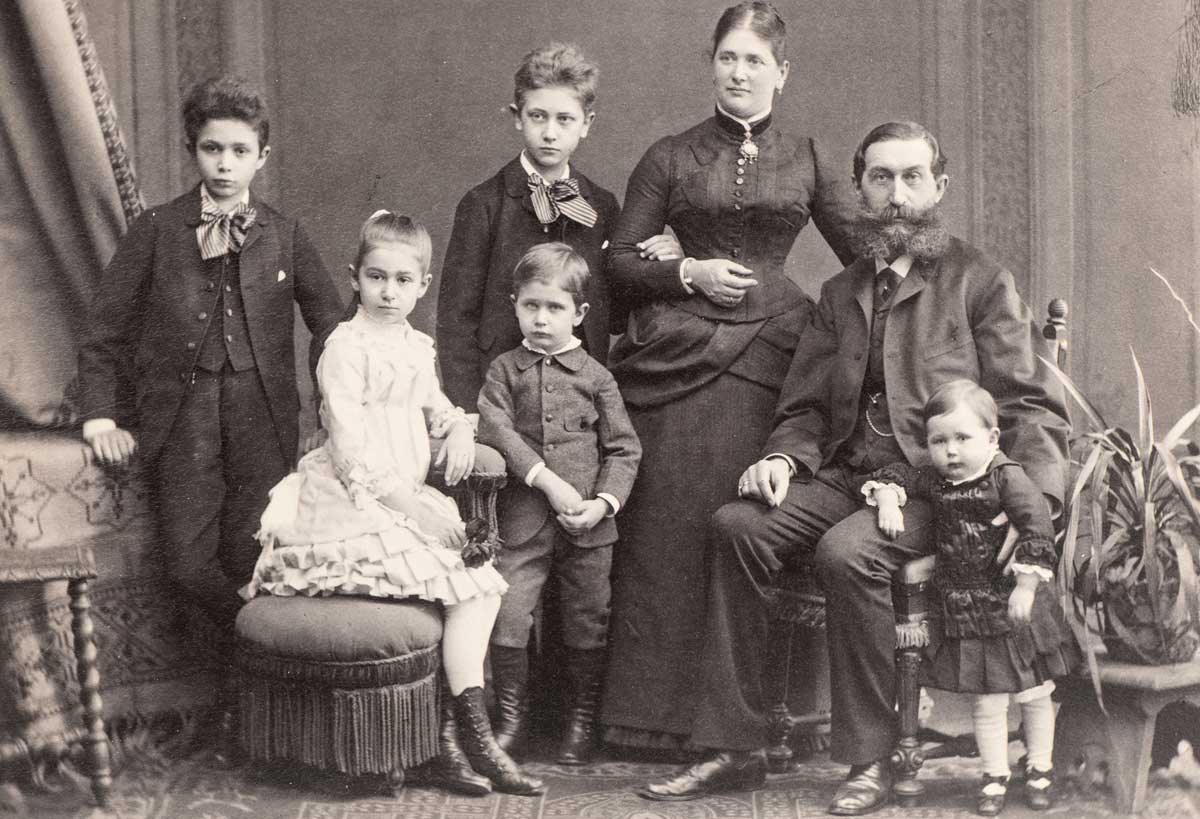
The History of Family Strength in America May Reveal Good News by Allan C. Carlson
calling all readers
Please Donate
"There are magazines worth reading but few worth saving . . . Touchstone is just such a magazine."
—Alice von Hildebrand
"Here we do not concede one square millimeter of territory to falsehood, folly, contemporary sentimentality, or fashion. We speak the truth, and let God be our judge. . . . Touchstone is the one committedly Christian conservative journal."
—Anthony Esolen, Touchstone senior editor
