


Loss of a Good Word (Again)
Zephram Foster on the Beauty of Sexism
Sexism is a beautiful thing. It protects the dignity, glory, and beauty of women, and provides a framework for how the sexes are to interact that helps society function—after all, society is built around the relationship between the sexes. The family unit—father, mother, and children—is the basic structure that forms a society.
Of course, I’m using the term “sexism” intentionally, aware of the connotations it holds in our culture. There are other, less inflammatory terms that may get at the heart of the issue more clearly (“patriarchy,” “complementarianism,” “chivalry,” etc.), but none of these push back against the grain quite hard enough. “Patriarchy” comes close, but “sexism” bites harder. In truth, my using a term like “sexism” is an attempt to make the right people angry, and the rest of us chuckle.
At the same time, it’s important not to let the wrong people control the language we use. Let’s not defer to the softer terms when we already have accurate ones. “Patriarchy,” I believe, is the best and most accurate term to summarize the historical and biblical Christian position on the roles of men and women. “Complementarianism” is a newer term, and while it’s acceptable and accurate, it feels too slippery, too new, like a retreat of sorts—a way to affirm the truths we believe but in a way that won’t make the pagans quite so angry. I don’t believe this strategy is effective. Patriarchy simply means “father rule,” and as Christians who affirm God’s natural order, this is exactly what we should be on board with. So while I grant that “sexism” is a loaded word with some negative connotations, I think it can serve our purposes in a positive sense.
It’s also a matter of definitions. “Sexism” is defined by Merriam-Webster as “prejudice or discrimination based on sex.” This sounds bad on its face, but Merriam-Webster also provides a second definition: “behavior, conditions, or attitudes that foster stereotypes of social roles based on sex.” If this is the definition we’re running with, then I’m on board. My attitude is one that unabashedly fosters stereotypes of social roles based on sex—women are mothers and the primary homemakers; men are protectors and providers. Women are beauty; men are strength. Women are glorious in a way that inspires men to protect them at all costs; men are glorious when they lay down their lives for their wives. Women aren’t to serve in combat roles in the military or be put in harm’s way as police officers, firefighters, or other first responders. A rightly ordered society encourages and discourages certain behaviors for men and women, and this is a good thing.
Further, even if we use Merriam-Webster’s first definition, we’re in the clear. “Prejudice,” while it sounds nasty, is only a “preconceived judgment or opinion,” and while I haven’t met every man and woman on the planet, I can without reservation make some definite and unyielding claims about every single one of them based on “preconceived judgments” derived from the objective truth of God’s created order. This gets at an important issue that is far too often overlooked by Christians in the West today: how different men and women really are.
Distinctions Deeper Than the Biological
In an age when everyone believes he can define himself, we need to lay some ground rules for talking as Christians about sex differences. The first is an emphatic and unapologetic position that no one, actually, can ever define himself. We are given a nature; we don’t construct our own. That nature is unalterable; it goes down to the very “is-ness” of who we are. Here we’re getting into ontology—the study of being. The nature of being for us humans is a bestowed nature of glory and dignity: we are made in the image of God himself. This is true for both men and women, and recognizing this truth is vital to our understanding of human nature.
Yet, although men and women at the fundamental level are equally human, equally God’s image bearers, and equal in value and dignity, there are some deep distinctions. Many of our differences go deeper than even Christians are comfortable with today.
Due in large part to contemporary silliness in matters of gender and sex, our emphases on sex differences tend to focus on biology and scientific jargon, because we’re fighting against transgenderism and other abominations sweeping our culture. This is all well and good, and even necessary, but it’s not the full picture. When we emphasize that men and women are different because of their genitalia or their DNA, we may be technically correct, but we’re arguing in a clinical, detached way that reduces human beings to biology and sucks the humanity right out of the room.
The area in which we are anemic and desperately need to strengthen our collective rhetoric is in making what I call the poetic distinctions between men and women. These distinctions consist of the “typological” and “representative” differences between male and female, and they are just as important as the biological and behavioral ones. We need to declare boldly that “the glory of young men is their strength: and the beauty of old men is the gray head” (Prov. 20:29) and that a woman’s beauty is a glorious thing (Song of Sol. 1:15), a dangerous thing (Prov. 6:25), and an alluring thing, even to divine beings (Gen. 6).
This is not to reduce women to beauty only, or men to strength only. Human beings are far more complex than that. But it should point us to the fact that our distinctions are playing out on a much larger and more cosmic scale than we think: the highest beauty humankind ever achieves will be feminine, and our greatest feats of strength will be masculine.
Zephram Foster is a writer and musician from Tahlequah, Oklahoma. He works in higher education and in youth ministry in a Reformed Baptist Church. He writes songs, blogs, and hosts a film podcast called Not Qualified. He has been published in American Reformer, the Theopolis Institute, and elsewhere. His various outlets can be found at www.zeffoster.com.
A Journal of Mere Christianity—Delivered to Your Door
- Essays on theology, culture, and the Church
- Contributors from across the Christian traditions
Six print issues (one year) of Touchstone, plus full online access and PDF downloads for only $39.95.

Get a one-year full-access subscription to the Touchstone online archives for only $19.95.
bulk subscriptions
Order Touchstone subscriptions in bulk and save $10 per sub! Each subscription includes 6 issues of Touchstone plus full online access to touchstonemag.com—including archives, videos, and pdf downloads of recent issues for only $29.95 each! Great for churches or study groups.
Transactions will be processed on a secure server.
more on culture from the online archives

32.2—March/April 2019
Reality Shows, Even in a Popular TV Series by C. E. Smith

19.4—May 2006
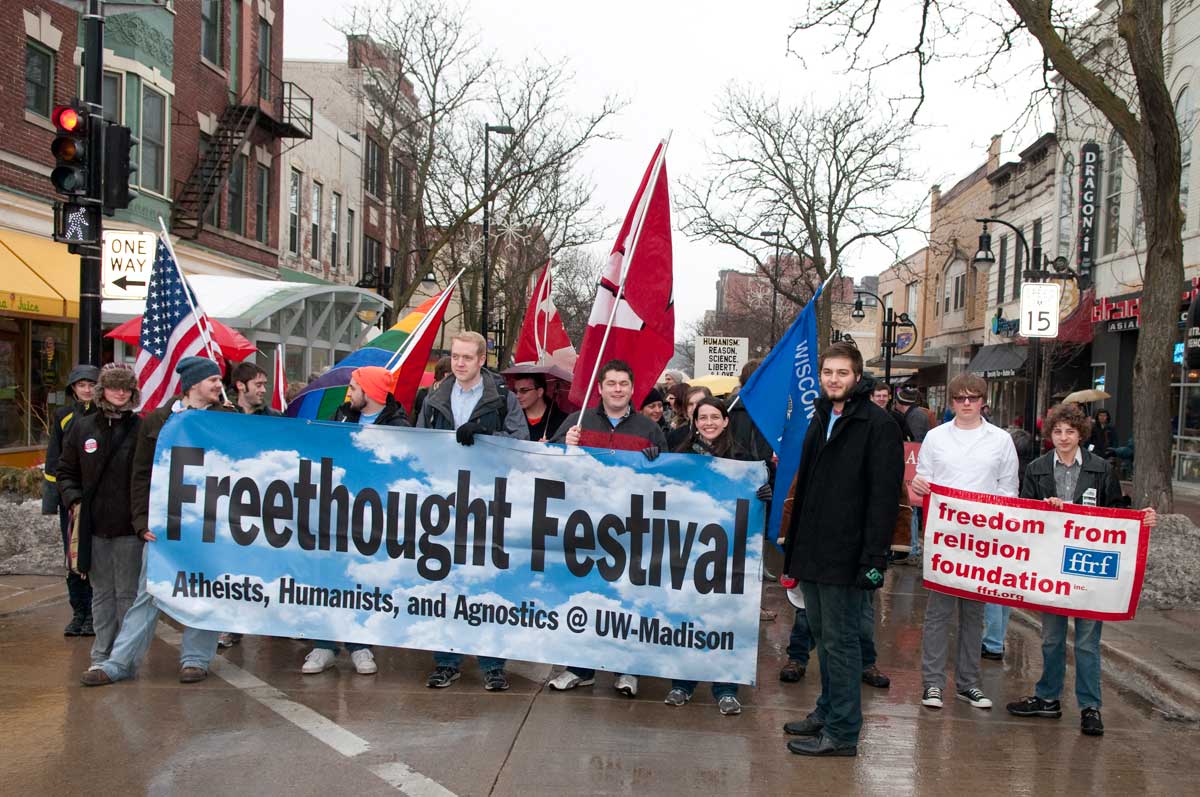
The Culture War Is Between Religious Believers on Both Sides by Howard P. Kainz
more from the online archives

28.2—March/April 2015
Why Scientism's Cherished Progress Narrative Fails by Jonathan Witt
32.1—January/February 2019
The Diabolical Failure of Leaders in the Present Crises by James M. Kushiner

calling all readers
Please Donate
"There are magazines worth reading but few worth saving . . . Touchstone is just such a magazine."
—Alice von Hildebrand
"Here we do not concede one square millimeter of territory to falsehood, folly, contemporary sentimentality, or fashion. We speak the truth, and let God be our judge. . . . Touchstone is the one committedly Christian conservative journal."
—Anthony Esolen, Touchstone senior editor