Mission Impossible

Just twenty years ago the question of whether a person was a man or a woman was an obvious common-sense matter guided by clearly recognized conventional markers. Of course, some people were gay men or lesbian women, and they were easy to recognize, too. A very small number of trans-sexual people (as they were called in the 1980s) typically abided by conventional norms and would pass as men or women by so disguising their sex that most people would not know that their gender presentation did not align with their sex.

But from the early 2010s, all this changed. Queer gender theory got leverage in the academy, and got legal. Laws, therapeutic practices, and “inclusive” educational and institutional reforms kicked in, and, of course, the new 24/7 online world of the iPhone generation took up being queer and trans in ways that totally bypassed family and community norms. By 2020, a public declaration that men are males and women are females had become, in some contexts, approaching a burnable heretical offense.

How did this all happen so fast?

The reality is—as with all cultural tipping points—this has been brewing for a long time. What philosophers call anti-essentialist and anti-naturalist understandings of human experience have been mainstream for a long time, they had just never filtered out of the (arguably crazy) academy and into the real world of cultural conventions. But now that they are out of the ivory tower, and no longer put into practice only by a fringe circle of secretive experimental deviants, the question of whether these ideas are valid or not ceases being academic and becomes a matter requiring urgent practical attention. But we need to understand their intellectual justifications if we are to respond intelligently. This short piece is an attempt to open up a little of the philosophical backstory as to why identity politics—particularly as regards sex and gender—is now so turbulent and so determined. And why it cannot work.

The Problem of Intelligibility

Perhaps there are only a few basic philosophical problems which we simply recycle in different ways. Before Plato’s time, ancient sages like Parmenides and Heraclitus were perplexed by the question of identity. How could something be itself if it—and everything else—is always changing? This is a harder problem than it looks. Christian answers to this question are wonderful, but as the modern academy secularized, we have cut those anchors off and are again struggling with the problems of flux and contingency, and the conundrums of anchorless essence and arbitrary existence.

Today, the question of what “identity” is, has become deeply problematic. For nothing is ever itself (nothing has an identity) if everything is constantly changing and if reality itself is inherently meaningless.

Fortunately, while everything viewed only through the lens of temporal and material processes is indeed fluid, we cannot avoid at least the appearance that there is such a thing as identity. Otherwise, we would not ever be ourselves, all things temporal would not be in any manner identifiable as enduring from one moment to the next, and there would be no meaning, reason, or experience that could be genuinely understood and communicated. At least some type of essential identity in the knower and at least some type of essential identifiability in things known are inescapable features of our experience of the world.

What could be called “the problem of intelligibility” leads us to the perhaps unwanted conclusion that there is more to reality than a pure temporal flux of contingent and meaningless immanence. As Thomas Nagel explains, the problem of intelligibility has two poles: mind and cosmos. How can it be that we have minds that give us an experience of consciousness that is known by an enduring “I” and that is characterized by intelligible meaning; and how can there be a cosmos that is ordered, intelligible, and unified, as if by some overarching Mind? We do not find the world and ourselves to be blank slates on which we can paint whatever meaning we like. Hence, though Nagel is a committed agnostic, the subtitle of his Mind and Cosmos does not shy away from his conviction that purely materialist naturalism “is almost certainly wrong.” Taking the problem of intelligibility seriously, it looks like there really is some irreducible intelligible essence in the cosmos.

The complex relation of essence (intelligible meaning—what something is) to existence (that—in some tangible and concrete sense—something is) has long been one of the perennial fascinations of Western philosophy. Essence traditionally pertains to immaterial intelligible meaning, which—finally—transcends space and time, whereas existence is firmly situated within the flux and contingency of material immanence. How the transcendent and the immanent interrelate was a central preoccupation of Western philosophy—until Immanuel Kant.

Kant’s Revolution

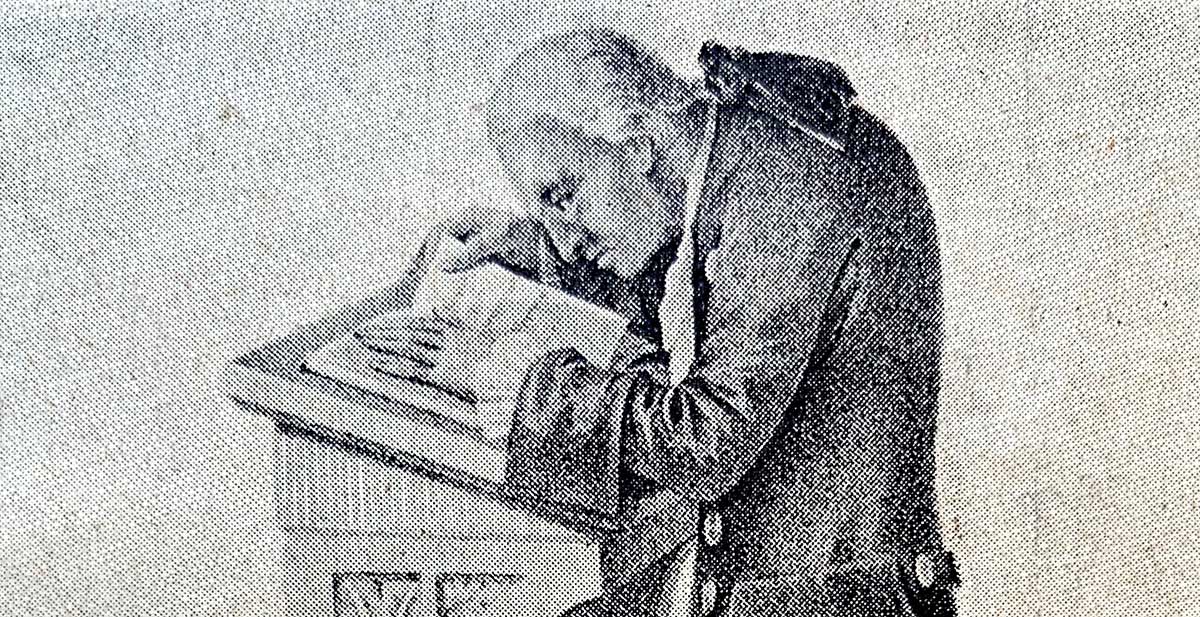
In the eighteenth century, something of an impasse was reached between modern rationalistic “pure reason” and modern empirical “pure sensation.” Into this stalemate strides Immanuel Kant and banishes them both. Kant holds that the necessity of reason cannot escape an abstract circularity if we seek to grasp substantive transcendent truths with it. Reason gives us no knowledge of metaphysical truths and cannot itself be metaphysically justified. Kant also holds that Empiricism’s sense-impressions cannot account for reason, essence, value, or real meaning, in purely empirical terms. Sensation, like reason, gives us no pure knowledge of reality. The solution to this stalemate that Kant comes up with is brilliant: get rid of reality. Kant drops the idea that we can know things as they really are (the noumenal) and points out that we only know things as we rationally and sensually experience them (as phenomena).

Happily, reason and sensation are comfortably unified by the only real (noumenal) thing we can immediately know, namely, our own mind (this is Fichte, rather than Kant). Thus, Kant opens up a pathway wherein the Enlightenment stalemate between Rationalism and Empiricism can be “solved” if we make our own mind the locus and ground of “the real” (for us) and treat reason and sense perception as functions of human consciousness.


Paul Tyson is an Honorary Senior Fellow at the School of Historical and Philosophical Inquiry, University of Queensland, Australia. He has authored seven books in philosophical theology, and recently co- or sole-edited four important collections in the “science and religion” domain.

A Journal of Mere Christianity—Delivered to Your Door

  • Essays on theology, culture, and the Church
  • Contributors from across the Christian traditions

Subscribe (Print + Online)

Six print issues (one year) of Touchstone, plus full online access and PDF downloads for only $39.95.

Subscribe (Online Only)

Get a one-year full-access subscription to the Touchstone online archives for only $19.95.


bulk subscriptions

Order Touchstone subscriptions in bulk and save $10 per sub! Each subscription includes 6 issues of Touchstone plus full online access to touchstonemag.com—including archives, videos, and pdf downloads of recent issues for only $29.95 each! Great for churches or study groups.

Transactions will be processed on a secure server.


more on politics from the online archives
32.2—March/April 2019

What Gives?

on Properly Rendering Things to Caesar & to God by Peter J. Leithart

33.4—July/August 2020

Dwelling in Unity

Our Views on the President Are Not Crucial by S. M. Hutchens

37.5—Sept/Oct 2024

Great & Wonderful Days

The Death of Conservatism & the Negative World by J. Douglas Johnson


more from the online archives

19.8—October 2006

The Best Fears of Our Lives

on the Good Father’s Quiet Desperation by Russell D. Moore

36.1—Jan/Feb 2023

Contraceptive Cons

A History of the Protestant Debate over Contraception by James A. Altena

30.3—May/June 2017

Known Trespassing

on the Misuse of Property Rights to Justify Slavery & Abortion by Robert Hart

calling all readers

Please Donate

"There are magazines worth reading but few worth saving . . . Touchstone is just such a magazine."
—Alice von Hildebrand

"Here we do not concede one square millimeter of territory to falsehood, folly, contemporary sentimentality, or fashion. We speak the truth, and let God be our judge. . . . Touchstone is the one committedly Christian conservative journal."
—Anthony Esolen, Touchstone senior editor

Support Touchstone

00