




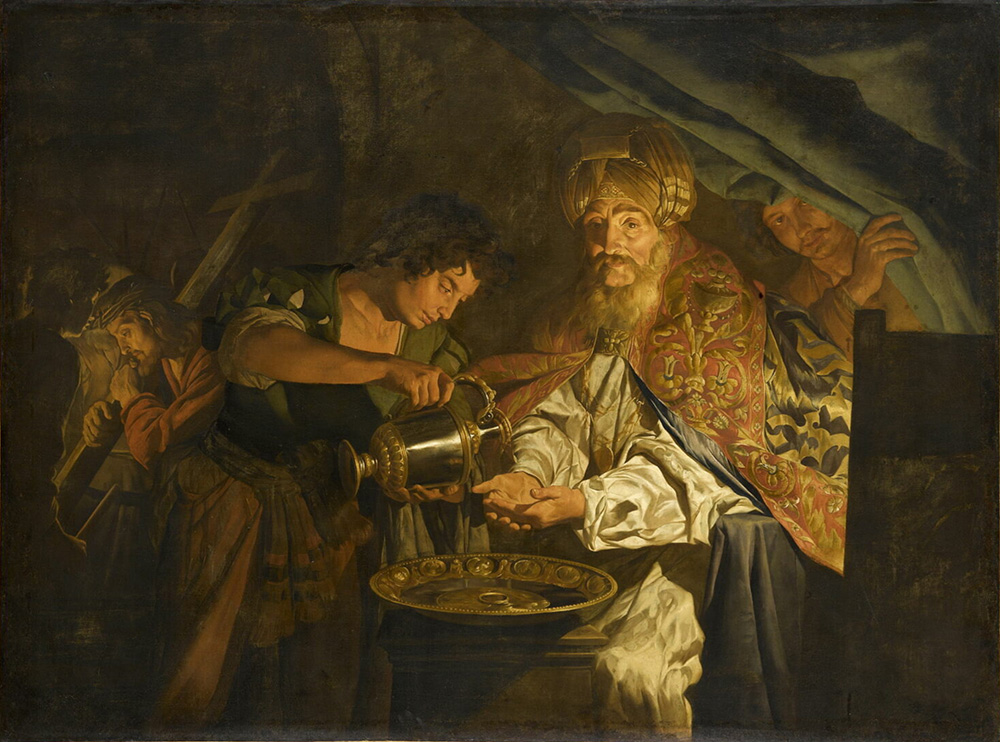
Pilate’s Heirs
Rulers Ancient & Modern Who Kill the Innocent for Peace & Security
The Holy Innocents of Bethlehem are commemorated in the Western and Eastern church calendars on December 28 and December 29 respectively. They are either the first martyrs of the New Testament or the final martyrs of the Old Covenant.
When Herod the King dispatched the soldiers to Bethlehem to kill its baby boys, one child escaped only because his foster-father, Joseph, had a dream. Both Joseph the carpenter and his distant ancestor Joseph the patriarch were dreamers. In Genesis, the patriarch Joseph brought his father and brothers into Egypt to save their lives; in Matthew’s Gospel, the carpenter brought Jesus into Egypt to rescue the life of the future Deliverer.
In Exodus, more than four hundred years after the patriarch Joseph, a future deliverer, Moses, was providentially rescued from a murderous royal plot against the male offspring of the Hebrews. For Pharaoh had decreed that the midwives should kill any male child born to the Hebrews by casting him into the waters of the Nile. Like Jesus, Moses escaped the deadly designs of a wicked king and would become the deliverer of his people.
In Defense of Babies
Both Herod and Pharaoh believed that killing the baby boys would secure their reigns. Pharaoh is likened in biblical interpretation to Herod, as well as to Satan, our ancient foe who seeks to devour the children of Eve.
The minions of Satan are diabolical entities behind the false gods, the demons who inspire idolatry. When Israel entered the Promised Land after its escape from Egypt, it confronted Baal and Moloch, who required human and child sacrifice. The sacrifice of children was viewed as beneficial for future prosperity and social stability. The pagan world was not a safe place for babies. Even the “civilization” of Pax Romana was not safe for them, where infanticide was considered safe, legal, and not rare.
The Judeo-Christian moral tradition stood decidedly against baby-killing. The sacred texts declare that man was made by God in his image, with the very Spirit of God breathing life and existence into Adam in a manner distinct from the animals, who are simply brought forth from the earth. God is the Maker of woman as well. In the creation of man as male and female, both sexes are made in God’s image. And their offspring are “a heritage from the Lord”: The child Seth was “given by the Lord” to Eve to replace her murdered son Abel; the child Isaac was conceived by Abraham and Sarah in old age as a gift from God; Isaac “prayed to the Lord for his wife, because she was barren; and the Lord granted his prayer, and Rebekah his wife conceived”; Samson and Samuel were both conceived by and born to previously barren women.
The Scriptures reveal God to be directly involved in the creation of individual human lives, in some cases even naming the child before birth. Babies are not mere accidents of history or biology.
In addition to this biblical history of births, the sacred legal and penal code of Israel recognized the unborn child (Ex. 21:22) as a human life. It should not be surprising that any culture and society formed by the biblical revelation and events is markedly pro-life in its attitude toward the fruit of the womb. “Be fruitful and multiply,” the divine mandate to man from the beginning, lies at its core.
The Gospel Witness
The witness of the New Testament reinforces this respect for the fruit of the womb. It opens with miraculous conceptions. In Luke, the Angel Gabriel announces to an elderly priest that he and his wife will conceive a son, to be called John, who will become the herald of One who will be conceived in an even more miraculous way, Jesus Christ. Both John and Jesus are named at their conceptions.
The Christian Church has long celebrated the conception of Jesus in the womb of the Blessed Virgin Mary with the Feast of the Annunciation. Gabriel not only announces that Mary will give birth to a son, but that she will conceive him from her own flesh without the agency of a man, through “the power of the Most High.” That is, the Son of God “came down from heaven and was incarnate of the Holy Spirit and the Virgin Mary, and was made man,” as Christians confess in the Nicene Creed.
James M. Kushiner is the Director of Publications for The Fellowship of St. James and the former Executive Editor of Touchstone.
A Journal of Mere Christianity—Delivered to Your Door
- Essays on theology, culture, and the Church
- Contributors from across the Christian traditions

Six print issues (one year) of Touchstone, plus full online access and PDF downloads for only $39.95.

Get a one-year full-access subscription to the Touchstone online archives for only $19.95.
bulk subscriptions
Order Touchstone subscriptions in bulk and save $10 per sub! Each subscription includes 6 issues of Touchstone plus full online access to touchstonemag.com—including archives, videos, and pdf downloads of recent issues for only $29.95 each! Great for churches or study groups.
Transactions will be processed on a secure server.
more on Abortion from the online archives
30.3—May/June 2017
on the Misuse of Property Rights to Justify Slavery & Abortion by Robert Hart
27.2—March/April 2014
on C. S. Lewis & the New State Paganism by W. E. Knickerbocker
24.1—January/February 2011
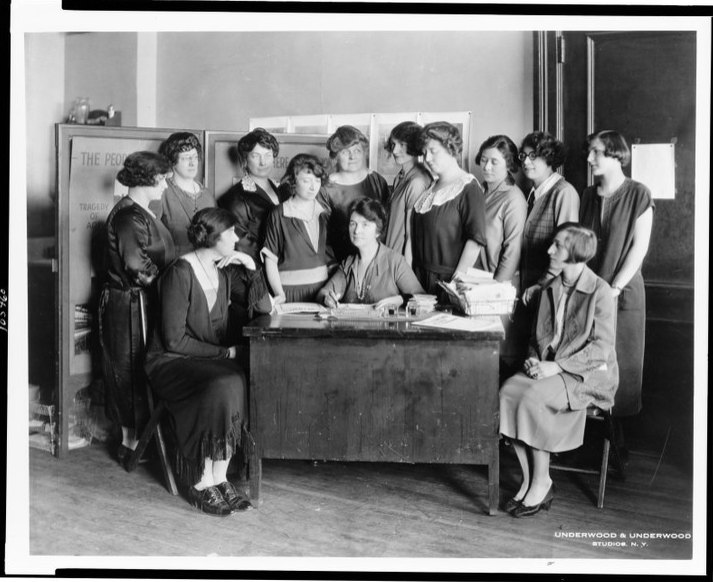
How Planned Parenthood's Founder Played the Christians, and Won by Allan C. Carlson
more from the online archives
24.6—Nov/Dec 2011
Liberty, Conscience & Autonomy
How the Culture War of the Roaring Twenties Set the Stage for Today’s Catholic & Evangelical Alliance by Barry Hankins
31.6—November/December 2018
The Slow Vindication of Leon Podles by S. M. Hutchens

14.1—January/February 2001
A Sociologist Looks at Fatherlessness & Its Causes by David Blankenhorn
calling all readers
Please Donate
"There are magazines worth reading but few worth saving . . . Touchstone is just such a magazine."
—Alice von Hildebrand
"Here we do not concede one square millimeter of territory to falsehood, folly, contemporary sentimentality, or fashion. We speak the truth, and let God be our judge. . . . Touchstone is the one committedly Christian conservative journal."
—Anthony Esolen, Touchstone senior editor
