Burial Plots

Christian Tradition Is a Subversive Witness Against Modern Funeral Practices

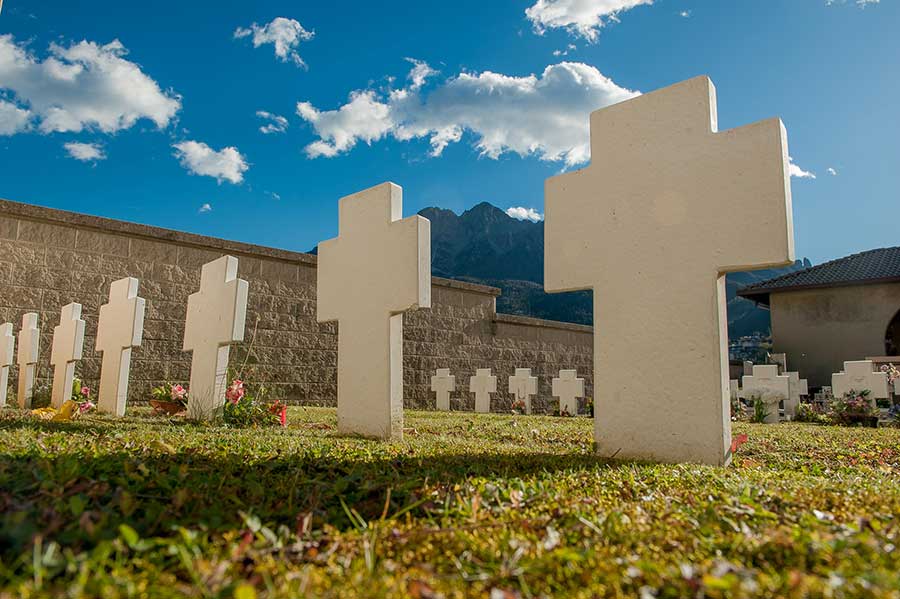
What we do with the dead means something. And until relatively recently, the Church’s burial practices and their accompanying rationale made that clear. Theologian and historian Alvin Schmidt explains in Cremation, Embalmment, or Neither? (2015) that “Christians from their earliest years in Rome opposed and rejected cremation and continued to do so throughout the Western world for nearly two thousand years.” Not only that, they “consistently buried their dead without embalming them.” Francis Schaeffer was quicker to the punch in his classic How Should We Then Live? (1976): “the Romans burned their dead, the Christians buried theirs.” Burial was a distinctive marker of the Christian hope, and one that is deeply needed in our day.

However, in place of this meaningful church practice rooted in biblical revelation, which provides us with rituals and structures for processing death faithfully, we find ourselves grasping for meaning as such practices are increasingly jettisoned. Both inside and outside the Church, cemeteries are dead. Traditional burials are on the decline—Christian practices are what get buried now, while bodies are burned.

America has a new majority opinion on the question of what to do with the dead: cremate them. Karen Heller explains in a 2022 Washington Post article, “The Stunning Rise of Cremation Reveals America’s Changing Idea of Death,” that 56  percent of Americans who died in 2020 were cremated and, by 2040, four out of five Americans will likely choose cremation over casket burial. Cremation is more flexible, more affordable, more tidy. But what is lost in the shift to cremation? What does it say about living life and sharing death—and about our bodies, too? And why has the historic Church opposed it?

“Just Another Way of Making a Buck”

Death has long since become big business in modern societies. Factory-like principles of efficiency and technique have increasingly been applied to one of the most sensitive and intimate of human experiences—the death of another person. Death has become a transaction, something to be handled by professionals and experts with the proper credentials.

This is not a new trend. In 1963, Jessica Mitford penned a muckraking-style exposé of the funeral industry entitled The American Way of Death, which she updated shortly before her death in 1996. In it, she wrote: “the same familiar Madison Avenue language, with its peculiar adjectival range designed to anesthetize sales resistance to all sorts of products, has seeped into the funeral industry.” Baptist theologian Russell Moore struck the same note in Touchstone in 2007: “the financial racket of cushioned caskets, catered ‘celebration services,’ and steel-vaulted graves is a scandal.” Burials have become consumerist affairs, with endless options and price-points.

Running alongside the commercialization of burial has been a rising rate of cremation, something that Mitford originally envisioned as a low-cost, “simple, tidy solution to the disposal of the dead.” But by the time she revised her book, she lamented that “cremation has become just another way of making a buck, principally through the sale of the niche and urn, plus ‘perpetual care,’ for the ashes.” When her book first came off the presses in 1963, the cremation rate was 3  percent. When the revised edition came out in 1998 (two years after her death), it was almost 25  percent. In the two decades since, that percentage has more than doubled. The Cremation Association of North America’s Annual Statistics Report for 2022 recorded a cremation rate of 59 percent in the U.S. and 74.4 percent in Canada, and it projects respective rates of 64.1  percent and 81.8  percent in the two countries by 2025. This is alienation from death, all in a slick and sealed business transaction. And even more, it is alienation from the body, all in a slick and sealed bag of ashes.

One’s Own Therapeutic Creation

The assumptions that lie behind cremation bump up against the historic Christian confession. Purposeful thinking in this realm is key but frequently lacking. Our culture, which obscures the hope of resurrection and mutes the laments of death, has subsumed Christian practices.

Countless churches have embraced this shift, too, abandoning historic practices surrounding death and replacing them with contemporary cultural imitations. Out goes the funeral service; in comes the celebration of life. Out goes the graveside committal; in comes the video montage. Out goes the open casket’s confrontation with death; in comes the urn of cremains. Out goes biblical lament; in comes trite sentimentalism. Out goes the God who created and redeemed the deceased person; in comes the tribute to the qualities of the person. Out goes the final hope of the resurrection of the body; in comes the person living on in our hearts and minds. Instead of framing life by the milestones of God’s work from birth to death and utilizing the rites of the Church to process both its joys and its griefs, we are left with ourselves and our own meager therapeutic creations.


Joshua Pauling taught high-school history for thirteen years and is now a classical educator. He is head elder at All Saints Lutheran Church (LCMS) in North Carolina, has studied at Messiah College, Reformed Theological Seminary, and Winthrop University, and has written for Areo, FORMA, Front Porch Republic, Mere Orthodoxy, Modern Reformation, Public Discourse, Salvo, Quillette, and The Imaginative Conservative.

A Journal of Mere Christianity—Delivered to Your Door

  • Essays on theology, culture, and the Church
  • Contributors from across the Christian traditions

Subscribe (Print + Online)

Six print issues (one year) of Touchstone, plus full online access and PDF downloads for only $39.95.

Subscribe (Online Only)

Get a one-year full-access subscription to the Touchstone online archives for only $19.95.


bulk subscriptions

Order Touchstone subscriptions in bulk and save $10 per sub! Each subscription includes 6 issues of Touchstone plus full online access to touchstonemag.com—including archives, videos, and pdf downloads of recent issues for only $29.95 each! Great for churches or study groups.

Transactions will be processed on a secure server.


more on Culture from the online archives
29.3—May/June 2016

The Master's Voice

Our Choice Is Obedience or Jesus as Anti-Christ by Anthony Esolen

34.1—January/February 2021

Jeremiah Revisited

Live Not by Lies: A Manual for Christian Dissidents by Rod Dreher by Hans Boersma

22.3—April 2009

Wasted by Watching

Neil Postman's Amusing Ourselves to Death: Public Discourse in the Age of Show Business by J. Daryl Charles


more from the online archives

31.6—November/December 2018

Virtue Gone Mad

Victimhood Culture Scapegoats Its Very Source by Michael P. Foley

32.3—May/June 2019

Theodicies & Messy Desks

on the Infinite Problem of Goods & Evil by Hugh Hunter

21.10—December 2008

Savior in a Manger

Early Christian Teaching on the Incarnation & Redemption by Patrick Henry Reardon

calling all readers

Please Donate

"There are magazines worth reading but few worth saving . . . Touchstone is just such a magazine."
—Alice von Hildebrand

"Here we do not concede one square millimeter of territory to falsehood, folly, contemporary sentimentality, or fashion. We speak the truth, and let God be our judge. . . . Touchstone is the one committedly Christian conservative journal."
—Anthony Esolen, Touchstone senior editor

Support Touchstone

00