


Homeward Bound Books
Why I Purchased These Twenty Books for a Newlywed
I recently gave a friend a wedding gift of twenty books as a cultural contribution to his new home and personal library. I wrote a letter explaining why I chose them. What follows is an edited version of the letter.
These books are a selection from my own library and constitute what I consider to be a core library. Allow me to mention a few, and briefly to explain my rationale.
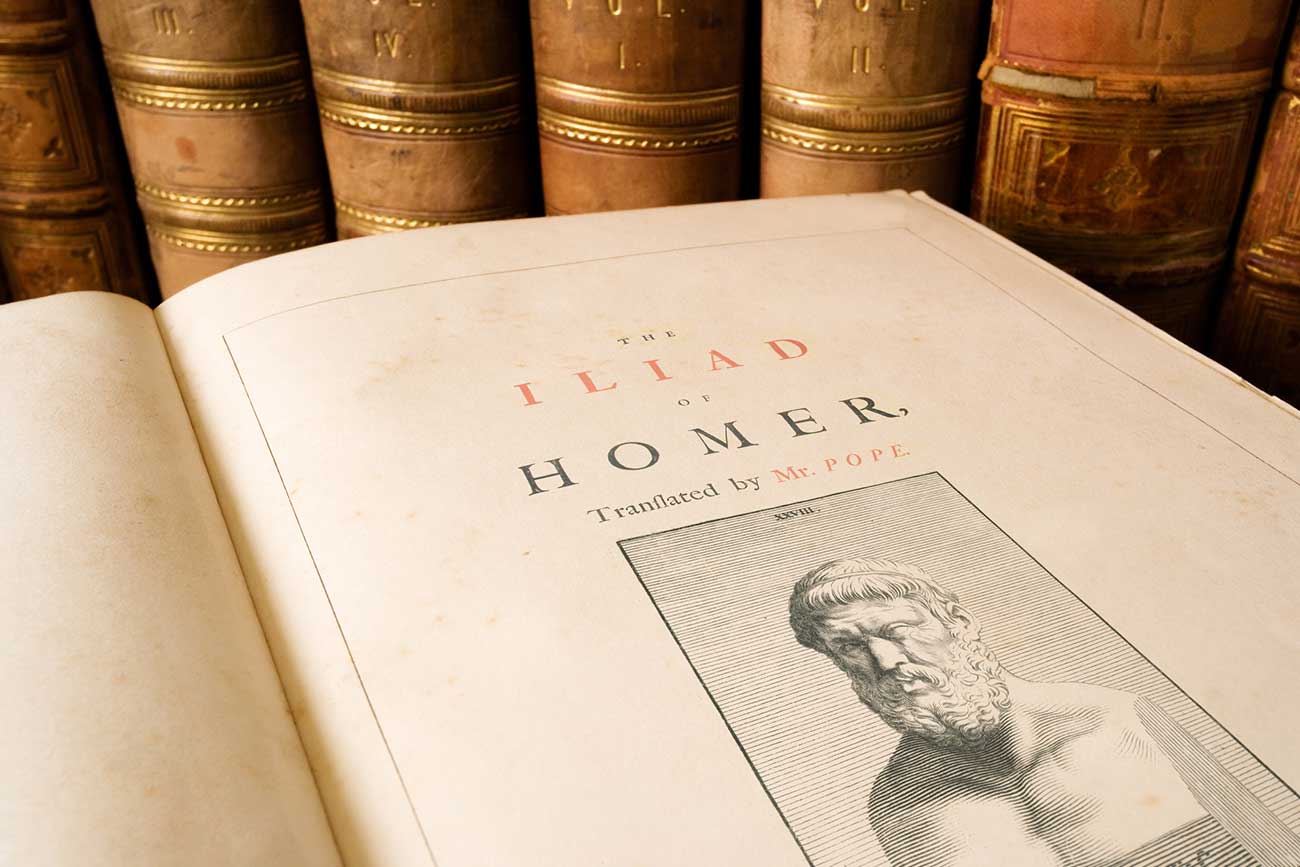
At some risk of cliché, I have chosen several of the titles as foundational: Homer’s Iliad and Odyssey, for example, are the indisputable foundation of Western literature. Their theme of homecoming makes real the possibility of civilization itself, and calls us back from our migrancy to that place from which we came, the home that makes room for us, even here in the modern world.
Likewise, the works of Shakespeare need little explanation as the apotheosis of the English language, other than to mention a few of my favorites: Henry V, Richard II, Hamlet, Macbeth, and King Lear.
Other titles I have chosen as the essential representatives of their time or place: Moby Dick by Herman Melville is the only American novel that (in my estimation) can stand alongside Homer and Shakespeare. As a prose-poem it scales the heights of the English language while embodying Americana at its best and most essential—not the revolutionary spirit into which even patriotism has devolved, but that older puritanical awe of God and the diligence to begin works of biblical dimension whose completion will only be witnessed by descendants far-removed. Moby Dick is the drama of a soul reduced to ego, banished from its place of belonging, and condemned, like Cain, to the restlessness of its own murderous lusts.
Antiquity & Modernity
Late antiquity is represented by two selections: Confessions by St. Augustine and The Consolation of Philosophy by Boethius. Reading Augustine’s Confessions, one might, like C. S. Lewis before him, begin to intimate the synthesis between the Homeric theme of homecoming and the restlessness of Augustine, and to realize that we are indeed migrants in search of a home, but that our home is not to be found in this city of man.
Meanwhile, Boethius offers us consolation in our restlessness. In The Consolation of Philosophy, he makes an argument for our place as free beings within the providence of God. Our happiness cannot be found in the capriciousness of good fortune, he says; rather, even in our lowest moments and worst sufferings, we can yet discover that condition of peace which is the rootedness of a soul in harmony with the purposes of God. Boethius writes,
“O race of men, you shall be happy when the love that rules the stars also rules your hearts.” The later modernist poet T. S. Eliot would call this reality “the still point of the turning world.”
So modernism also has a place in this library, in the works of Eliot and Evelyn Waugh. These two are what one might call “modernists as they should have been.” Eliot is, for me, the greatest poet of the twentieth century, often credited with beginning the modernist movement in poetry with “The Love Song of J. Alfred Prufrock,” in the same way Beethoven allegedly began the Romantic movement in music with his Symphony No. 3, the “Eroica.” Like Homer, Melville, Augustine, and Boethius, Eliot, too, bids us return to “where we started, and know the place for the first time.” In his masterwork, The Four Quartets, he calls us to recollect the past, where we can reclaim the realities of truth and beauty, which are lost and found by each generation but which it is our responsibility to discover and rebuild in the present. In the face of the fragmentation of the modern world, we can, through this pattern of discovery and rediscovery, find harmony with God’s purposes. This is what makes Eliot the great modernist.
Justin Hall is a writer and scholar specializing in the intersection of music, literature, and philosophy. He serves as editor for HeartCry Magazine, a quarterly publication of HeartCry Missionary Society. He graduated from the Cleveland Institute of Music in 2019, and now lives in Roanoke, Virginia.
A Journal of Mere Christianity—Delivered to Your Door
- Essays on theology, culture, and the Church
- Contributors from across the Christian traditions
Six print issues (one year) of Touchstone, plus full online access and PDF downloads for only $39.95.
Get a one-year full-access subscription to the Touchstone online archives for only $19.95.
bulk subscriptions
Order Touchstone subscriptions in bulk and save $10 per sub! Each subscription includes 6 issues of Touchstone plus full online access to touchstonemag.com—including archives, videos, and pdf downloads of recent issues for only $29.95 each! Great for churches or study groups.
Transactions will be processed on a secure server.
more on Culture from the online archives


18.2—March 2005
On Conservatism as Vexation, Vanity & Near Impossibility by Graeme Hunter

32.2—March/April 2019
Reality Shows, Even in a Popular TV Series by C. E. Smith
more from the online archives

33.3—May/June 2020
on the Wisdom of the Good Doctor Edmund Pellegrino by Allen H. Roberts II
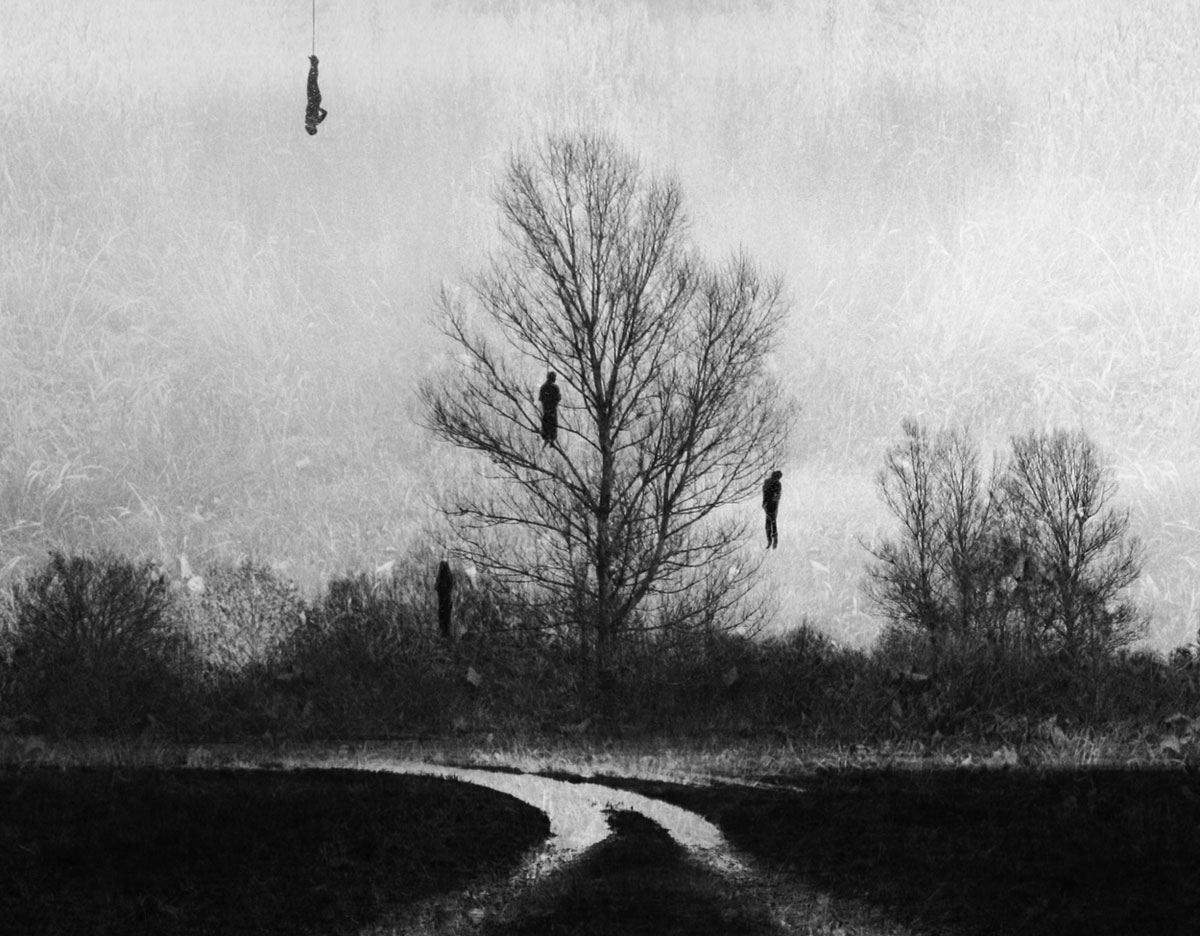
29.5—Sept/Oct 2016
on Past & Present Atheism & the Invention of Happiness by Jordan Bissell

calling all readers
Please Donate
"There are magazines worth reading but few worth saving . . . Touchstone is just such a magazine."
—Alice von Hildebrand
"Here we do not concede one square millimeter of territory to falsehood, folly, contemporary sentimentality, or fashion. We speak the truth, and let God be our judge. . . . Touchstone is the one committedly Christian conservative journal."
—Anthony Esolen, Touchstone senior editor