


Liberalism in Hindsight
Machen’s Christianity and Liberalism Then & Now
Reading J. Gresham Machen’s justly famous Christianity and Liberalism one hundred years after it was originally written is eye-opening. Not only does it open up a window into the sometimes forgotten Fundamentalist-Modernist debates of the early twentieth century, but it also reads like a jeremiad, a prophetic glimpse into our own cultural quagmires.
Machen’s deep concern about, and repudiation of, the liberal Christianity of 1923 is eerily prescient, seeing that so many of his concerns are all the more relevant in 2023. Much like re-reading George Orwell’s 1984 or Ray Bradbury’s Fahrenheit 451, reading Christianity and Liberalism alerts us to troubling historical trends that too many have taken too lightly. The heterodox and sometimes heretical liberalism of Machen’s day has become even more strident and prevalent in our own. Theology is not exempt from the truism that hindsight is 20/20.
An Entirely Different Religion
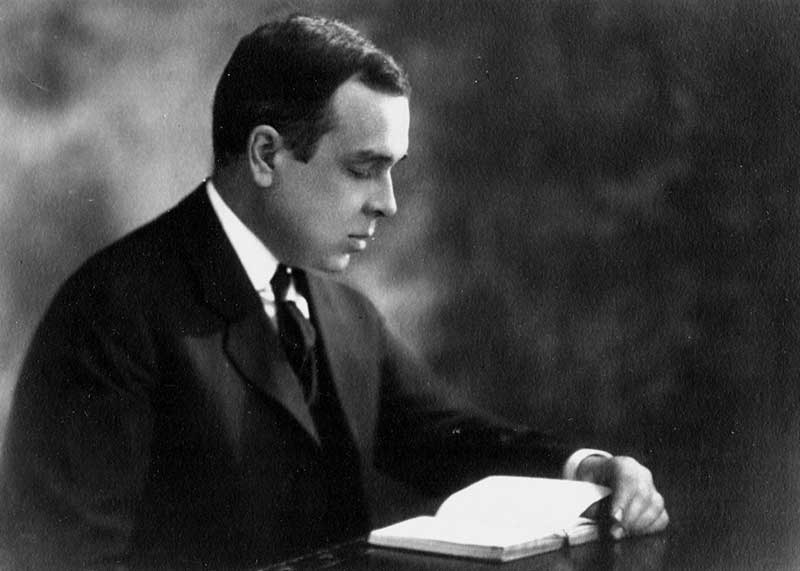
John Gresham Machen was Professor of New Testament at Princeton Theological Seminary in the early 1920s before he led a revolt in response to the liberal theology gaining ascendance at Presbyterianism’s leading theological outpost. He went on to found Westminster Theological Seminary as an orthodox and Evangelical alternative in 1929.
Seen in hindsight, the thesis he advances in Christianity and Liberalism is striking and perhaps even shocking. Amid the then-growing trend to accommodate historical Protestant Christianity to the modern, scientific culture —and the subsequent temptation to forfeit significant elements of classic Christian doctrine —Machen boldly opines that liberal theology “is not Christianity at all, but a religion which is so entirely different from Christianity as to belong in a distinct category,” indeed, “in a totally different class of religions.” He even goes so far as to say that the “chief modern rival of Christianity is ‘liberalism.’”
For those of us who have witnessed and lamented the ongoing deterioration of classical Christianity regnant among the postmodern liberals of the last hundred years, Machen’s judgment is both satisfying and surprising. It is satisfying because it confirms something we simply knew must be true: liberal Christianity tends to play perilously on the knife’s edge of orthodoxy. It has been all too willing to sacrifice core Christian beliefs on the altar of social and political commitments, and too ready to replace a vertical gospel with a horizontal one, in which social atonement tends to eclipse divine-human atonement.
Machen’s thesis is surprising, however, because it seems to have come too early. How could he, in 1923, have claimed that liberal Christianity was not even worthy of the name “Christian”? Were not liberals in the early twentieth century, despite their theological shortcomings, still at an acceptably orthodox place on the theological spectrum? Well, not according to Machen.
Machen’s assessment prompts a fascinating and troubling question: If he believed that the liberals of his time were already beyond the pale of Christian orthodoxy, what should we make of the liberals of our newly enlightened and awakened age? In other words, if Machen was onto something in 1923, what does that mean for our own assessment of liberal Christianity one hundred years later? How has his judgment stood the test of time? Questions like these can only be answered by first looking into Machen’s concerns about the perils of the liberalism of his day. We will then be able to see more clearly the magnified perils of our own.
Doctrine Made Subject to Feelings
The primary problem Machen diagnosed among his liberal counterparts was an allergic reaction to doctrine. They were quite happy to affirm the moral teachings of Jesus —so long as they accorded with their general social and ethical norms —as representative of Christianity. But they were reluctant to affirm the doctrinal roots that underpin those teachings. Christianity as a “way of life” was considered an acceptable mode of existence, but Christianity as a prescribed set of doctrinal certitudes was considered heavy-handed and overwrought. For the liberal, the Christ who teaches us to love God and love our neighbor sufficed for an account of the moral life, even for the salvation of the human race. Machen, however, demurred from this:
Marcus Johnson (Ph.D., St. Michael’s College, University of Toronto) is associate rector at St. Mark’s Church, Geneva, Illinois, and professor of theology at Moody Bible Institute. His books include One with Christ; The Incarnation of God; and, with John C. Clark, A Call to Christian Formation.
A Journal of Mere Christianity—Delivered to Your Door
- Essays on theology, culture, and the Church
- Contributors from across the Christian traditions
Subscribe (Print + Online) 
Six print issues (one year) of Touchstone, plus full online access and PDF downloads for only $39.95.
Subscribe (Online Only) 
Get a one-year full-access subscription to the Touchstone online archives for only $19.95.
bulk subscriptions
Order Touchstone subscriptions in bulk and save $10 per sub! Each subscription includes 6 issues of Touchstone plus full online access to touchstonemag.com—including archives, videos, and pdf downloads of recent issues for only $29.95 each! Great for churches or study groups.
Transactions will be processed on a secure server.
more on liberalism from the online archives
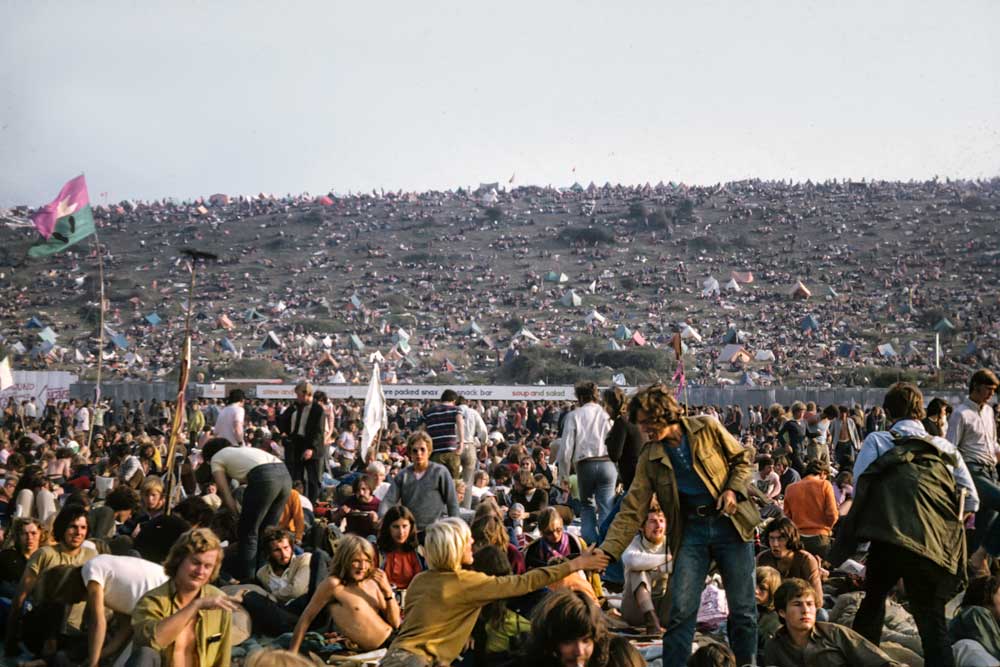
17.4—May 2004
The Unhappy & Abusive Marriage of Liberalism & Modernism by James Hitchcock
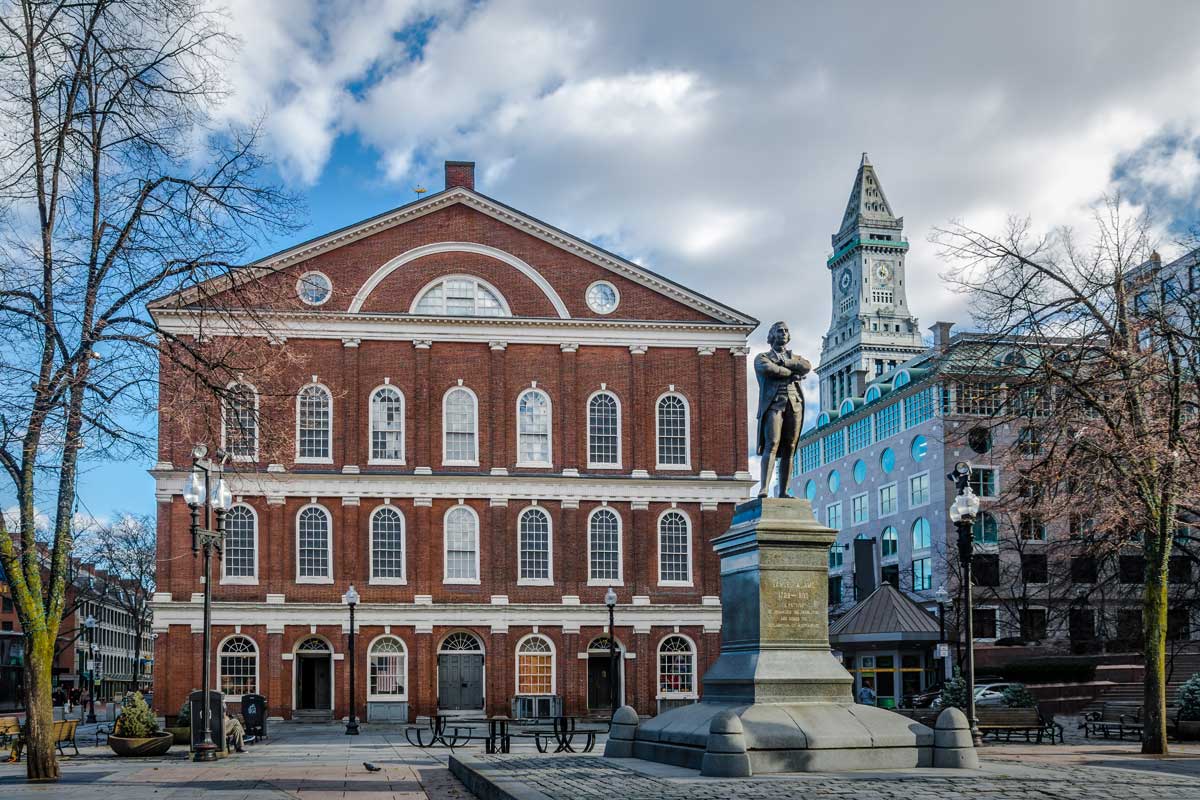
31.5—September/October 2018
The Rise of the Gnostic Liberal State After Christianity by Andrew Latham

more from the online archives

24.1—January/February 2011
Ruminations on the Monstrous Envy of the Soul-Devouring State by Anthony Esolen

31.5—September/October 2018
on the Congregation as a Wilderness by Paul Gregory Alms

25.4—July/August 2012
The Corrosive & Far-Reaching Fallout of the Sexual Revolution by Anthony Esolen
calling all readers
Please Donate
"There are magazines worth reading but few worth saving . . . Touchstone is just such a magazine."
—Alice von Hildebrand"Here we do not concede one square millimeter of territory to falsehood, folly, contemporary sentimentality, or fashion. We speak the truth, and let God be our judge. . . . Touchstone is the one committedly Christian conservative journal."
Support Touchstone
—Anthony Esolen, Touchstone senior editor