





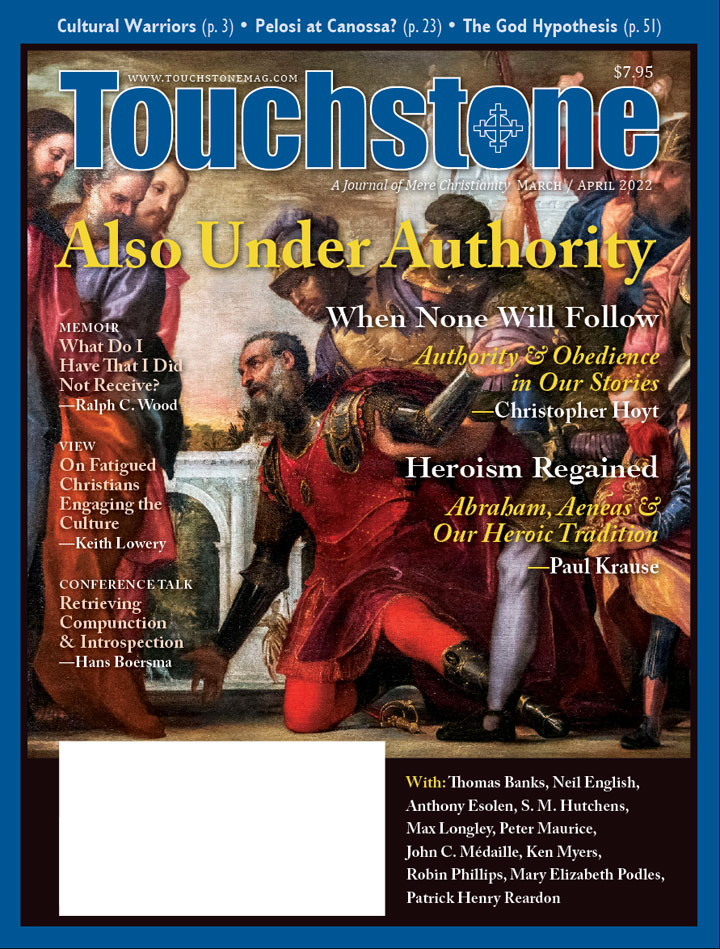
Most Highly Favored Lady
Music associated with the Annunciation is not as familiar as is the music linked with the narrative of the Nativity, so the musical compositions of the two seasons are frequently conflated. During the Advent and Christmas seasons, texts that recount Gabriel's startling announcement to the young Virgin Mary are often sung in conjunction with texts about the manger, the shepherds, and the angels. Hymnals that include Sabine Baring-Gould's translation of the traditional Basque carol, "The angel Gabriel from heaven came," may designate it as a hymn to be sung on March 25th. But that carol is probably more commonly heard around December 25th, via recordings of Christmas music rather than congregational singing.
Many such recordings also feature performances of the thirteenth-century carol "Angelus ad Virginem," sometimes sung in English translation as "Gabriel from Heaven-King." The first three stanzas of this five-stanza carol (which is mentioned in "The Miller's Tale" in Chaucer's Canterbury Tales)are a fairly straightforward paraphrase of St. Luke's account in his Gospel. Then the fourth stanza sweeps swiftly past the story of the birth, even bypassing the earthly life of Jesus, to bring us straight to Calvary:
The angel disappeared, and at once the girl's womb swelled up by the power of the birth of Salvation. He, having been contained in the womb for nine months, came out from it and entered the conflict, taking on his shoulder the Cross, by which he gave the blow to the mortal enemy.
THIS ARTICLE ONLY AVAILABLE TO SUBSCRIBERS.
FOR QUICK ACCESS:
Ken Myers is the host and producer of the Mars Hill Audio Journal. Formerly an arts editor with National Public Radio, he also serves as music director at All Saints Anglican Church in Ivy, Virginia. He is a contributing editor for Touchstone.
A Journal of Mere Christianity—Delivered to Your Door
- Essays on theology, culture, and the Church
- Contributors from across the Christian traditions

Six print issues (one year) of Touchstone, plus full online access and PDF downloads for only $39.95.

Get a one-year full-access subscription to the Touchstone online archives for only $19.95.
bulk subscriptions
Order Touchstone subscriptions in bulk and save $10 per sub! Each subscription includes 6 issues of Touchstone plus full online access to touchstonemag.com—including archives, videos, and pdf downloads of recent issues for only $29.95 each! Great for churches or study groups.
Transactions will be processed on a secure server.
more from the online archives

33.3—May/June 2020
on the Wisdom of the Good Doctor Edmund Pellegrino by Allen H. Roberts II

18.8—October 2005
European Islam & the Doubtful Future of Christian Europe by William Murchison
32.2—March/April 2019
Misguided Mercy & Dante's Infernal Purgation by Joshua Hren
calling all readers
Please Donate
"There are magazines worth reading but few worth saving . . . Touchstone is just such a magazine."
—Alice von Hildebrand
"Here we do not concede one square millimeter of territory to falsehood, folly, contemporary sentimentality, or fashion. We speak the truth, and let God be our judge. . . . Touchstone is the one committedly Christian conservative journal."
—Anthony Esolen, Touchstone senior editor
