




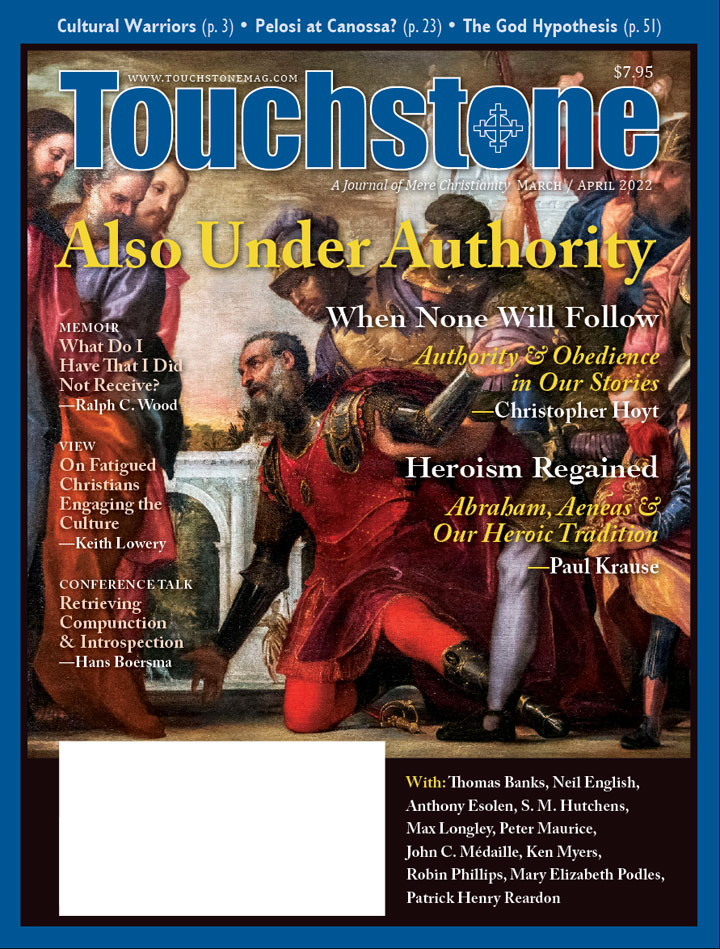
When None Will Follow
Authority & Obedience in Our Stories
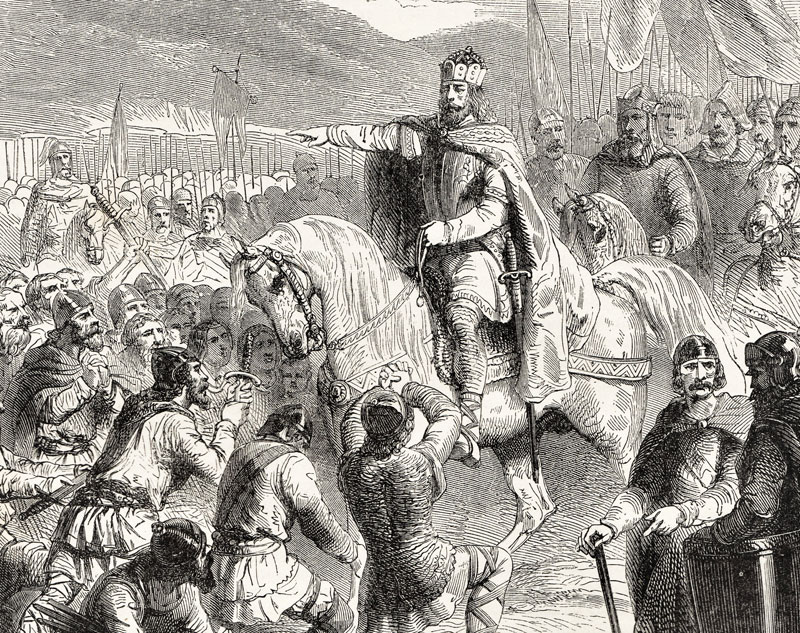
Our American society cultivates in us a strong distaste for obeying authority. Anyone who desires evidence of this need look no further than the heroes furnished by our popular media. To compare the heroes of our modern movies or TV shows with those of traditional Western literature (Hector, Aeneas, Charlemagne, Aragorn, etc.) is to compare two radically different sets of archetypes. Each has its own distinct approach to authority and to the practice of submission, and each implicitly values a different kind of behavior in a human
being.
In traditional epics, the hero frequently has a band of men at his command. Beowulf lands on the Danish shore with fourteen armed warriors at his back; at the close of his story, he is the king of Geatland, and meets his noble end still leading a troop of his vassals against a dragon. So also in other traditional works: Aeneas musters the survivors of Troy; King Arthur rules the knights of his Round Table; Aragorn marshals the armies of
Gondor.
THIS ARTICLE ONLY AVAILABLE TO SUBSCRIBERS.
FOR QUICK ACCESS:
Christopher Hoyt is the organist/choirmaster at Good Shepherd Church in Tyler, Texas, and teaches Sacred Music at Cranmer Theological House (Reformed Episcopal) in Dallas. He was general editor of the hymnal, The Book of Common Praise/Magnify the Lord (2017) and is a composer of hymns and other church music (hoytcomposer.com).
A Journal of Mere Christianity—Delivered to Your Door
- Essays on theology, culture, and the Church
- Contributors from across the Christian traditions

Six print issues (one year) of Touchstone, plus full online access and PDF downloads for only $39.95.

Get a one-year full-access subscription to the Touchstone online archives for only $19.95.
bulk subscriptions
Order Touchstone subscriptions in bulk and save $10 per sub! Each subscription includes 6 issues of Touchstone plus full online access to touchstonemag.com—including archives, videos, and pdf downloads of recent issues for only $29.95 each! Great for churches or study groups.
Transactions will be processed on a secure server.
more on literature from the online archives

24.1—January/February 2011
Ruminations on the Monstrous Envy of the Soul-Devouring State by Anthony Esolen

30.5—Sept/Oct 2017
on Costly Grace in Breece D'J Pancake's Flyover Country by Casey Chalk
more from the online archives
5.3—Summer 1992
Everything You Need to Know About Morality & the Bible by David Mills

33.2—March/April 2020
Lewis, Chesterton, et al. Against the Frauds, Experts & Revisionists by Vigen Guroian

14.1—January/February 2001
A Sociologist Looks at Fatherlessness & Its Causes by David Blankenhorn
calling all readers
Please Donate
"There are magazines worth reading but few worth saving . . . Touchstone is just such a magazine."
—Alice von Hildebrand
"Here we do not concede one square millimeter of territory to falsehood, folly, contemporary sentimentality, or fashion. We speak the truth, and let God be our judge. . . . Touchstone is the one committedly Christian conservative journal."
—Anthony Esolen, Touchstone senior editor
