Ill Disposal by Clara Sarrocco

Ill Disposal

Clara Sarrocco on the Disrespect of Human Composting

One day many years ago, in a moment of adolescent hubris, I said to my mother, "Why is such a fuss made over burying the dead? After I am dead, I don't care what happens to my body." After a pause, she responded, "I had to sweat blood to bring you into the world, and that is what you think of it." My mother knew the corporal works of mercy.

At the time, I had never heard of Sophocles' play Antigone, in which the eponymous heroine defies King Creon's orders not to bury her brother Polyneices, who had died in battle and whom the king deemed a traitor unworthy of burial. Antigone proclaimed that her right to bury Polyneices came from "the immutable unwritten laws of Heaven. They were not born today nor yesterday; they die not; and none knoweth whence they sprang."

My mother had never heard of Sophocles either, but she knew something was wrong with her daughter's attitude. She silenced me with that one sentence. I realized that was her way of saying what St. Paul said to the Corinthians: "Know you not, that you are the temple of God, and that the Spirit of God dwelleth in you?" (1 Cor. 3:16 ).

Less Than Chattel

That incident has come to mind over the years, but never more vividly than when I learned what the New York State legislature had in mind for its deceased residents. Early in 2021, an ostensibly environmental bill (A382/S5535) was introduced as part of a program aimed at eliminating carbon emissions by 2050, in accord with the Climate Leadership and Community Protection Act of 2019. As such, the bill sounded good on the surface. Who would be against protecting the earth and maintaining its beauty?

The specifics of the bill, however, tell a different story. They spell out an alternative method of disposing of the bodies of the dead, one that "will provide New Yorkers with the option of choosing an environmentally sustainable and cost-effective alternative to burial and cremation." That alternative, it turns out, is the composting of human remains.

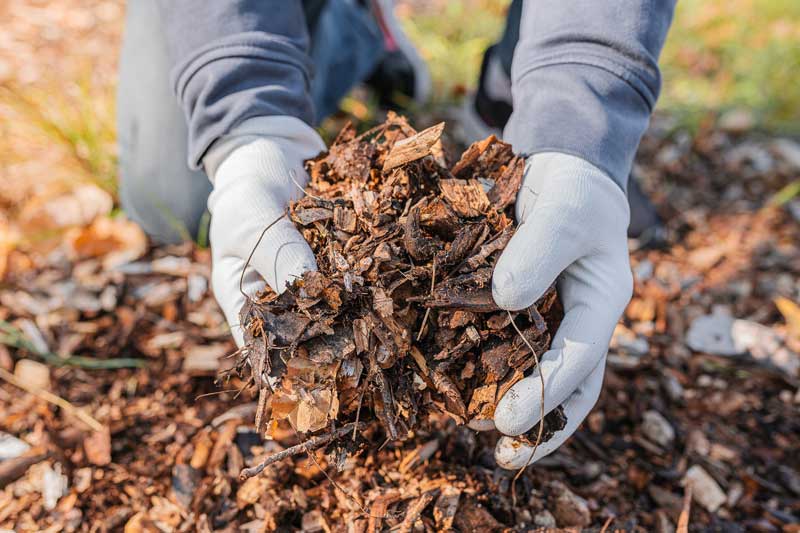
Human compost, you see, could be used for environmentally sustainable projects. This means that perhaps your beautiful baby whom God called to himself, or your spouse, or your parents, or a friend would be composted in much the same manner as are onion skins, eggshells, and uneaten string beans. I will spare you the details of the process. It is too gruesome to contemplate. Yet it is being promoted in the bill as far superior to any other method of treating the bodies of the dead, such as burial or even cremation, practices now deemed unfriendly to the environment.

The bill was introduced into the New York State Senate by Leroy Comrie of Queens and into the State Assembly by Amy Paulin of Westchester. Assemblywoman Paulin identifies her religion as Jewish. Under the Nazis, the Jewish people were not only killed and starved to death in concentration camps but were also experimented upon in the most ghastly ways. Yet Paulin has expressed the idea that once people understand how environmentally friendly it is to compost human remains, they will enthusiastically embrace the practice.

Senator Comrie is black and a descendant of slaves, who were once considered to be sub-human, of less worth than chattel, and treated that way. Before the Civil War, even performing experiments on black slaves was not considered a travesty of justice. Yet Comrie has no problem with the idea of human composting.

If a living person can be treated inhumanely, why show any regard at all to a dead one? When life is cheap, death is even cheaper. Indeed, not only is human composting being pushed as an environmentally friendly practice but also as a cost-effective one.


Clara Sarrocco is the longtime secretary of The New York C. S. Lewis Society. She has taught classes on C. S. Lewis at the Institute for Religious Studies at St. Joseph's Seminary and is the president of the Long Island Chapter of University Faculty for Life. Her articles and reviews have appeared in numerous publications, including Touchstone, New Oxford Review, Gilbert, The Chesterton Review, St. Austin's Review, and The International Philosophical Quarterly.

A Journal of Mere Christianity—Delivered to Your Door

  • Essays on theology, culture, and the Church
  • Contributors from across the Christian traditions

Subscribe (Print + Online)

Six print issues (one year) of Touchstone, plus full online access and PDF downloads for only $39.95.

Subscribe (Online Only)

Get a one-year full-access subscription to the Touchstone online archives for only $19.95.


bulk subscriptions

Order Touchstone subscriptions in bulk and save $10 per sub! Each subscription includes 6 issues of Touchstone plus full online access to touchstonemag.com—including archives, videos, and pdf downloads of recent issues for only $29.95 each! Great for churches or study groups.

Transactions will be processed on a secure server.


more on culture from the online archives

33.1—January/February 2020

Do You Know Your Child’s Doctor?

The Politicization of Pediatrics in America by Alexander F. C. Webster

32.4—July/August 2019

Malaise in Malaysia

Will Islamicization Become Its New Future by Peter Riddell

18.2—March 2005

Long Shadows of Eden

On Conservatism as Vexation, Vanity & Near Impossibility by Graeme Hunter


more from the online archives

27.3—May/June 2014

Sex & the American Experience

Facts versus Stereotypes About Love & Marriage in the Land of the Free by Allan C. Carlson

24.5—Sept/Oct 2011

Pupils Delighted

on Wondering or Wandering Through College Education by Anthony Esolen

28.2—March/April 2015

As Goes Sweden

Neo-Pagan Family Policies Doom Any Recovery by Allan C. Carlson

calling all readers

Please Donate

"There are magazines worth reading but few worth saving . . . Touchstone is just such a magazine."
—Alice von Hildebrand

"Here we do not concede one square millimeter of territory to falsehood, folly, contemporary sentimentality, or fashion. We speak the truth, and let God be our judge. . . . Touchstone is the one committedly Christian conservative journal."
—Anthony Esolen, Touchstone senior editor

Support Touchstone

00