




Concealed Premises
Unborn Human Life and Fundamental Rights: Leading Constitutional Cases Under Scrutiny
edited by Pilar Zambrano and William L. Saunders
Justice Harry Blackmun noted in his majority opinion in the case of Roe v. Wade (1973) that the state of Texas had in its legal brief laid out "at length and in detail the well-known facts of fetal development." Drawing from leading medical textbooks and journal articles, the Texas brief showed how "modern science—embryology, fetology, genetics, perinatology, all of biology—establishes the humanity of the unborn child." The available evidence had, in fact, long demonstrated that:
From conception the child is a complex, dynamic, rapidly growing organism. By a natural and continuous process the single fertilized ovum will, over approximately nine months, develop into the trillions of cells of the newborn. The natural end of the sperm and ovum is death unless fertilization occurs. At fertilization a new and unique being is created which, although receiving one-half of its chromosomes from each parent, is really unlike either.
These "well-known facts," as Blackmun called them, had been known to embryologists for centuries and were widely acknowledged by the mid-nineteenth century, when many U.S. states, including Texas, first replaced the common law with the statutory prohibitions of abortion that remained in force until 1973.
The Supreme Court in Roe, however, dismissed the relevance of those well-established facts when it held that human beings prior to birth are not "constitutional persons" bearing legal rights cognizable by courts. Tabling the deeper question of the nature, reality, and moral status of unborn human beings, the Court then went on to assert that the Constitution's Fourteenth Amendment secured to pregnant women the right to choose to end the lives of their unborn children.
That judicial decision, Justice White said in dissent, was "an exercise of raw judicial power." It was a raw—that is, strong and undisguised—assertion of judicial will untethered from any compelling legal reasons. As the prominent Yale Law Professor John Hart Ely put it at the time, Roe "is not constitutional law and gives almost no sense of an obligation to try to be."
A Universal Debate
In its judicial usurpation of the legislative authority to recognize and protect the fundamental rights of unborn persons, the United States was an early frontrunner but has not otherwise been exceptional. Similar developments have played out in the late twentieth and early twenty-first centuries in the constitutional courts of Latin America and Europe, in the common law jurisdictions of the United Kingdom and its former colonies, and in the international tribunals of the Inter-American Court of Human Rights and the European Court of Human Rights. In Unborn Human Life and Fundamental Rights, editors Pilar Zambrano and William L. Saunders have assembled a distinguished team of international contributors to investigate why: why have we seen such similar trends in different jurisdictions with divergent histories, constitutions, and legal resources?
One way to address that question is to begin by noting that these cases are all "part of a common moral/political debate that touches the conceptual roots of any constitutional system" (7). That moral-political debate is universal, because human nature is universal, even though the precise contours of that debate differ in each society and in each particular system of positive law.
Often left undiscussed in legal circles, the editors note, is the fact that "although constitutional and international human rights decisions are inevitably conditioned by their legal background, they are also founded in moral/political reasoning that is rarely made explicit, but is always present" (8). Legal reasoning inevitably relies on moral premises. The question is: which moral premises? In asking that question, it is helpful to take a comparative approach, shedding light on "the comprehensive conceptions of the world—that, for better or for worse, sustain our constitutional practices" (9). Zambrano and Saunders have brought together in this volume twelve essays focusing on the legal background and on the moral/political reasoning of major cases in international law and in the domestic law of the United States, Canada, Italy, Spain, Poland, Ireland, Costa Rica, Argentina, Chile, Mexico, and Peru.
A Foundational Falsehood
In the first sentence of the first chapter, Professor Saunders previews a theme that is woven throughout each of the individual essays:
Any system of "rights" built upon the denial of the very cornerstone of the entire concept of human rights—that is, the right to life of each human being simply because that being is in existence—is built upon a basic falsehood about the human person and about the nature of society. (15)
A Journal of Mere Christianity—Delivered to Your Door
- Essays on theology, culture, and the Church
- Contributors from across the Christian traditions

Six print issues (one year) of Touchstone, plus full online access and PDF downloads for only $39.95.

Get a one-year full-access subscription to the Touchstone online archives for only $19.95.
bulk subscriptions
Order Touchstone subscriptions in bulk and save $10 per sub! Each subscription includes 6 issues of Touchstone plus full online access to touchstonemag.com—including archives, videos, and pdf downloads of recent issues for only $29.95 each! Great for churches or study groups.
Transactions will be processed on a secure server.
more from the online archives
24.3—May/June 2011
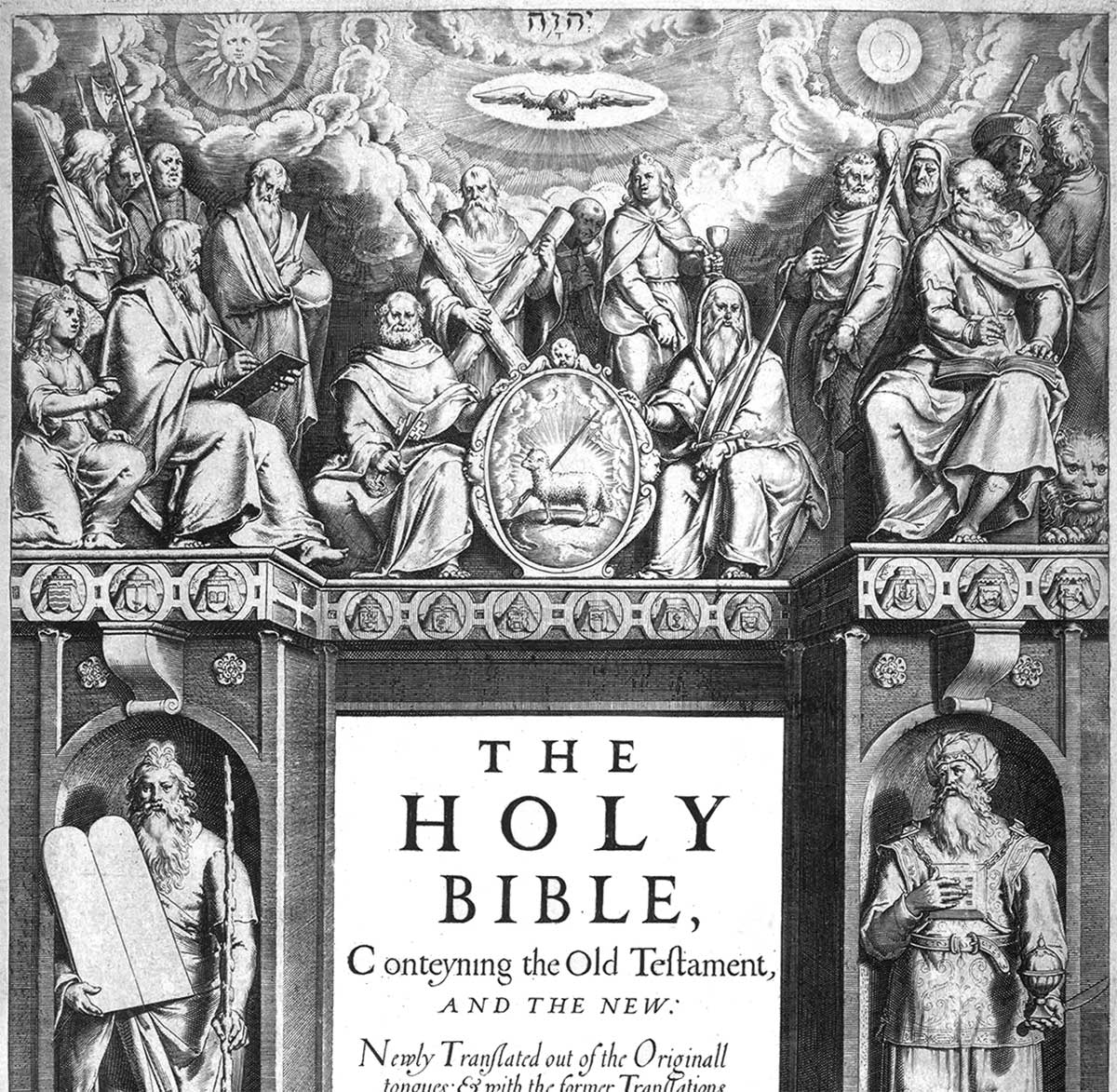
The Making & Endurance of the King James Bible, 1611-2011 by Barton Swaim
24.2—March/April 2011
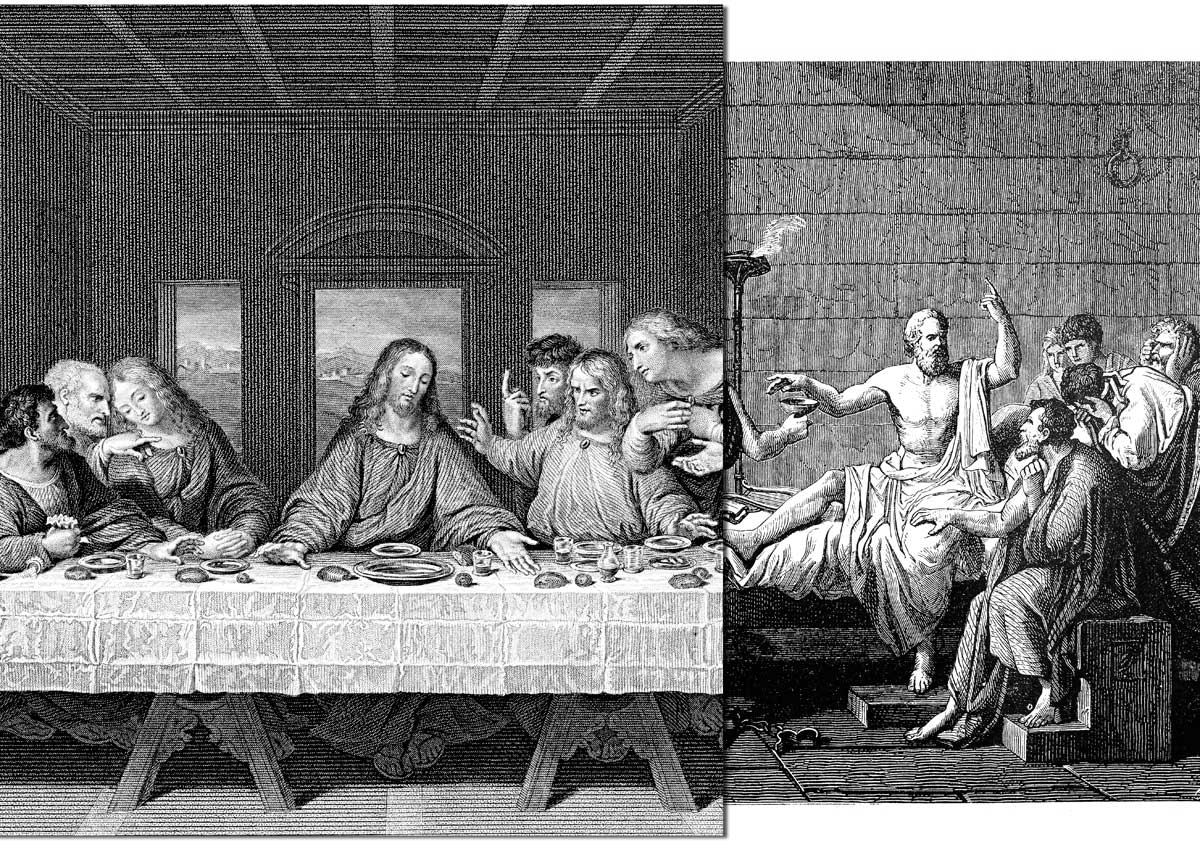
Certain Death & the Last Lectures of Socrates & Jesus by Randall B. Smith

25.6—Nov/Dec 2012
The Loss of Aristotelian Logic & the Social, Moral & Sexual Consequences by Peter Kreeft
calling all readers
Please Donate
"There are magazines worth reading but few worth saving . . . Touchstone is just such a magazine."
—Alice von Hildebrand
"Here we do not concede one square millimeter of territory to falsehood, folly, contemporary sentimentality, or fashion. We speak the truth, and let God be our judge. . . . Touchstone is the one committedly Christian conservative journal."
—Anthony Esolen, Touchstone senior editor
