




Book Review
Mutually Edifying
Dorothy and Jack: The Transforming Friendship of Dorothy L. Sayers and C. S. Lewis by Gina Dalfonzo
reviewed by Louis Markos
"What I'm saying is . . . that men and women can't be friends because the sex part always gets in the way." So claims the male protagonist near the beginning of When Harry Met Sally (1989), a film that helped revive the romantic comedy as a staple movie genre. By the end of the movie, Harry and Sally fall in love and marry, a denouement that rather supports than explodes Harry's contention that men and women can't be friends.
Fast forward three decades to a world that claims to have broken down all the walls between the sexes, an achievement that should have prepared the way for a boom in non-erotic male/female friendships—only it hasn't. While recklessly deconstructing the essential masculinity and femininity that God inscribed into us ("male and female created he them"), our postmodern culture, not only outside but inside the Church as well, has increased the estrangement between men and women.
As an English professor, I routinely teach upper-level classes that boast a female-to-male ratio of 80/20. Until as recently as five years ago, I would spend long hours in my office conversing with my female students about life and literature, spiritual growth and creative pursuits. In the shadow of the "me too" movement and the growth in Marxist identity politics, I no longer feel safe or comfortable doing so. Though I have not fully embraced the "Michael Pence rule" of never being alone with a woman who is not a part of my family, I am tempted to do so.
Model for Friendship
In the face of the growing rupture between the sexes, Gina Dalfonzo's engagingly written and well-researched Dorothy and Jack: The Transforming Friendship of Dorothy L. Sayers and C. S. Lewis comes as a much needed antidote. Dalfonzo, a columnist, editor, and essayist who holds English degrees from Messiah College and George Mason University, opens a window on the vibrant and mutually edifying friendship of Sayers and Lewis. Through a close reading of their letters to one another and a careful filling in of the context out of which they lived and wrote, Dalfonzo does more than offer insight into two of the twentieth century's greatest Christian apologists and fiction writers; she provides a model for what a healthy male-female friendship can look like.
"[I]f men and women are different," writes Dalfonzo, "as the church teaches us, it stands to reason that we need each other to help get us out of our own heads, broaden our perspectives, and increase our understanding and our empathy" (19). The author means this statement to have general applicability, but it applies particularly well to Lewis. Dalfonzo makes a strong case that Lewis's understanding of women was broadened by his infrequent meetings and more frequent correspondence with the witty, highly literate, strong-willed, and often combative Sayers. Indeed, it was broadened so much that it may very well have prepared Lewis for his marriage to a woman very much like Sayers.
Dalfonzo further suggests that Sayers played a vital role in Lewis's life and writing career at the very time when his relationship with the Inklings was growing strained. -Dalfonzo argues persuasively that "what ultimately undermined" the Inklings was not so much the death of Charles -Williams in 1945 as "the increasing sharpness of the criticism within the circle" (127). She pinpoints Tolkien's dislike of Lewis's Narnia books and popular apologetics and Lewis's discomfort with Owen Barfield's allegiance to anthroposophy as key causes of the sharpness.
Against this backdrop, she offers an original reading of the importance of Sayers to Lewis that is well worth quoting in full:
[A]s the cracks in the Inklings widened and deepened, Jack increasingly found himself in need of other friends to turn to for discussion and critique, including Sayers. Dorothy, as we have seen, could be as sharply critical as any of his other friends, but with a fundamental difference: at bottom, she respected and appreciated the main body of his work. He could discuss with her both his apologetics work and his fiction, and be assured of a largely sympathetic (if not always concurring) listener. This is not to say that his friendship with Dorothy replaced any of his other friendships; he would remain friends with Tolkien, Barfield, and most of the others until the end of his life. But she helped to fill a need that emerged as the solidarity and support of the group had eroded. And she could be a staunch defender in public [in particular of his Narnia books] as well as an appreciative listener in private. (128)
Louis Markos , Professor in English and Scholar in Residence at Houston Baptist University, holds the Robert H. Ray Chair in Humanities. His 19 books include Lewis Agonistes; Restoring Beauty: The Good, the True, and the Beautiful in the Writings of C. S. Lewis; On the Shoulders of Hobbits: The Road to Virtue with Tolkien and Lewis; and From A to Z to Narnia with C. S. Lewis.
A Journal of Mere Christianity—Delivered to Your Door
- Essays on theology, culture, and the Church
- Contributors from across the Christian traditions

Six print issues (one year) of Touchstone, plus full online access and PDF downloads for only $39.95.

Get a one-year full-access subscription to the Touchstone online archives for only $19.95.
bulk subscriptions
Order Touchstone subscriptions in bulk and save $10 per sub! Each subscription includes 6 issues of Touchstone plus full online access to touchstonemag.com—including archives, videos, and pdf downloads of recent issues for only $29.95 each! Great for churches or study groups.
Transactions will be processed on a secure server.
more from the online archives


33.3—May/June 2020
Maternal Body: A Theology of Incarnation from the Christian East by Carrie Frederick Frost
Fertile Ground: A Pilgrimage Through Pregnancy by Laura S. Jansson by Agnes R. Howard
24.1—January/February 2011
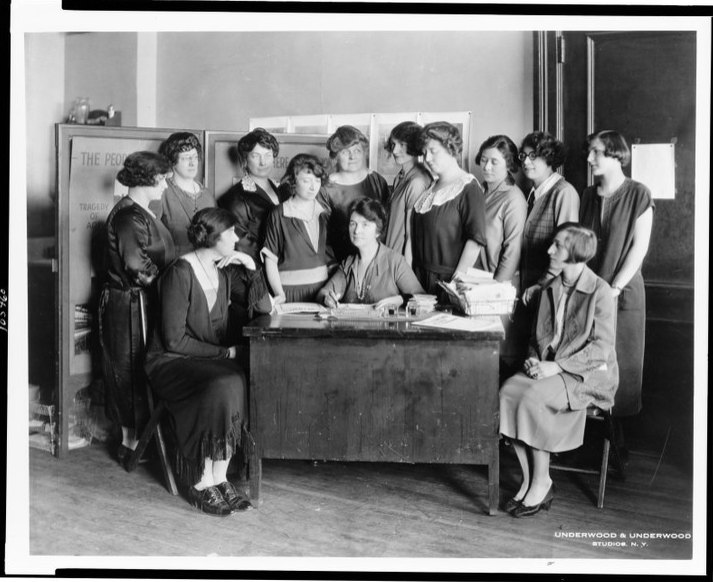
How Planned Parenthood's Founder Played the Christians, and Won by Allan C. Carlson
calling all readers
Please Donate
"There are magazines worth reading but few worth saving . . . Touchstone is just such a magazine."
—Alice von Hildebrand
"Here we do not concede one square millimeter of territory to falsehood, folly, contemporary sentimentality, or fashion. We speak the truth, and let God be our judge. . . . Touchstone is the one committedly Christian conservative journal."
—Anthony Esolen, Touchstone senior editor
