Unsociable Distancing by Paul Mattaliano

View

Unsociable Distancing

on the Normal Necessity of Human Contact

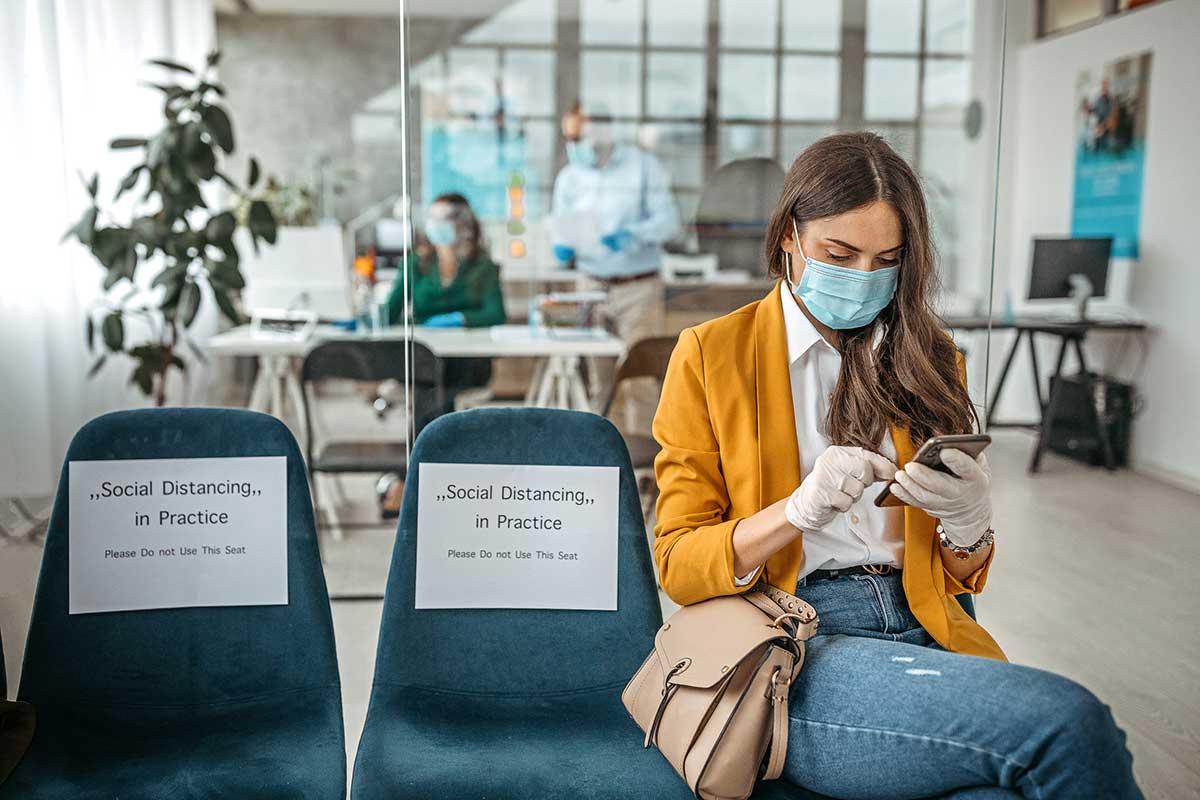
On the radio one morning, I heard a commercial for a product—I don't recall what—which ended with a comment that, in the age of Covid-19, has become commonplace. Wanting to assure customers that they could obtain the product without fear of contracting or passing on the dreaded disease, the announcer said it could be provided with "no human contact required." I began to turn that statement over in my mind. "Is this where our society is heading?", I wondered.

After the commercial, I heard an interview with the winning driver of the first NASCAR race run since stay-at-home orders and social distancing had been imposed. The driver said that there had been some stress involved in going through the safety protocols before the race, but once it started, it felt good to have some normalcy back in life. But that only lasted until the race was over. When the victorious driver exited his vehicle, ready to release all his emotions and pent-up energy in front of what would normally have been a roaring, appreciative crowd, he was met with . . . silence. There were no fans in the stands. That silence, he said, had a sobering and dampening effect on his experience of victory. Hmm . . . "no human contact required"?

Isolation Increasing

Studies have shown that human touch has many beneficial effects: it makes people less aggressive, promotes trust, strengthens the immune system, and leads to an overall sense of well-being and even to greater economic success. Conversely, there are detrimental effects when people are deprived of physical contact with each other. In November 2018, journalist Jonathan Jones wrote in Greater Good Magazine:

From the time we are in the womb through our elderly years, touch plays a primary role in our development and physical and mental well-being. New studies on touch continue to show the importance of physical contact in early development, communication, personal relationships, and fighting disease. Although the therapeutic benefits have become increasingly clear . . . thanks to no-touch policies in schools and the isolating effects of cell phones and computers, Americans are touching each other less.

That was before Covid. Now that we are in the age of Zoom meetings, virtual classrooms, working from home, and other interactions with "no human contact required," the situation is far worse. While we humans have a wonderful ability to adapt, we run the risk of going from adapting to adopting. If we permanently adopt a social distancing stance, we will lose part of what makes us human and move farther away from what God has intended for us as part of the created order. Indeed, we've been on that road for some time, and it has led us to some dark places.

"It is not good for the man to be alone," said God as he looked over all he had created—and declared to be good. That is still the case today. It is not good for men and women to be socially distant. Human contact is very much required for both individuals and societies to remain healthy. I am by nature an introvert. I can do without a lot of human contact, but one of the reasons I'm comfortable with solitude is that I know I can have that contact whenever I want or need it. It comes into my life naturally, merely by having fellow church members, family, and friends to live among. I never want to get comfortable being and staying isolated, but I worry that many people may retain that mode of living even after Covid-19 is no longer a primary concern, whenever that will be.

Though neutral in itself, technological advancement often has the unfortunate consequence of reducing the amount of close human contact people have with each other—something they absolutely require. The automobile, for instance, gave us heightened mobility, with the result that many people no longer stay rooted in one place with their family. That may be one reason why we build fewer deep relationships; we're not in one place long enough to do so. The cell phone, which makes it possible for us to communicate with one another almost anytime and anywhere, should compensate for this, but ironically, communication is often the last thing we actually use the device for: we watch videos, listen to music, peruse our social media venues of choice, and so on, but we don't communicate. And when we do use the phone to communicate, we typically do it via text message, which is usually so clipped and full of emojis that nothing very deep or meaningful comes across. I could say similar things about computers and email.

Just Like Being There?

Whatever its cause, this increased isolation bears a human cost, for as T. David Gordon wrote in Modern Reformation ("Media Ecology for the Family," May/June 2014):


Paul Mattaliano is a retired IT professional and former elder at Garden Lake Bible Church in New Jersey. He currently resides in Ladson, South Carolina, and attends First Baptist Church in Charleston with Linda, his wife of 45 years. They have four children, all married, and nine grandchildren.

A Journal of Mere Christianity—Delivered to Your Door

  • Essays on theology, culture, and the Church
  • Contributors from across the Christian traditions

Subscribe (Print + Online)

Six print issues (one year) of Touchstone, plus full online access and PDF downloads for only $39.95.

Subscribe (Online Only)

Get a one-year full-access subscription to the Touchstone online archives for only $19.95.


bulk subscriptions

Order Touchstone subscriptions in bulk and save $10 per sub! Each subscription includes 6 issues of Touchstone plus full online access to touchstonemag.com—including archives, videos, and pdf downloads of recent issues for only $29.95 each! Great for churches or study groups.

Transactions will be processed on a secure server.


more on culture from the online archives
30.6—Nov/Dec 2017

The Greatness Commission

Christ, Individualism & the Meaning of Cultural Diversity by Anthony Esolen

20.7—September 2007

Retaking Mars Hill

Paul Didn’t Build Bridges to Popular Culture by Russell D. Moore

33.1—January/February 2020

Do You Know Your Child’s Doctor?

The Politicization of Pediatrics in America by Alexander F. C. Webster

more from the online archives

19.10—December 2006

Workers of Another World United

A Personal Commemoration of Poland’s Solidarity 25 Years Later by John Harmon McElroy

22.8—November/December 2009

The Origin of Aesthetics

Looking for Beauty & Justice 150 Years After Darwin’s Classic by Charles Taliaferro

18.6—Nov/Dec 2005

Lesson Plan

on Fifteen Principles of Christian Parenting by Paige Patterson

calling all readers

Please Donate

"There are magazines worth reading but few worth saving . . . Touchstone is just such a magazine."
—Alice von Hildebrand

"Here we do not concede one square millimeter of territory to falsehood, folly, contemporary sentimentality, or fashion. We speak the truth, and let God be our judge. . . . Touchstone is the one committedly Christian conservative journal."
—Anthony Esolen, Touchstone senior editor

Support Touchstone

00