





View
Apostolic Symbol
Many Evangelical Christians—even those who aren't from a high church or liturgical congregation—will sometimes recite the so-called Apostles' Creed on a Sunday morning. Mainline Protestants and Catholics do so even more frequently. When we Christians utter these words together, we assume we are declaring timeless truths from the earliest generation of our faith. We know, of course, that the creed isn't recorded in the Bible. Yet it must be old. But how old is it, exactly? Does it actually come from the age of the apostles?
Ancient legend certainly makes this claim. According to the church historian Rufinus of Aquileia, writing around a.d. 400, the Christian forefathers had handed down the tradition that the twelve apostles, when they were about to go their separate ways after receiving the Holy Spirit in the Upper Room, decided to formulate a summary of the apostolic preaching. Rufinus tells us:
Being all therefore met together, and being filled with the Holy Ghost, they composed, as we have said, this brief formulary of their future preaching, each contributing his [own] sentence to one common summary: and they ordained that the rule thus framed should be given to those who believe. To this formulary, for many and most sufficient reasons, they gave the name of Symbol.
The word "symbol" was an early Christian way of describing a creed. In antiquity, a symbol (sumbolon in Greek) was a proof, guarantee, or watchword, such as the tokens or passwords used by soldiers to identify one another. Rufinus says the Apostles' Creed served as a test by which true Christians, who believed these essential things, could be distinguished from heretics, who did not. But this wasn't a creed's primary use. As a brief and handy summary of essential doctrine, the ancient Church mainly used creeds for the instruction of converts before baptism. The creed was studied, memorized, and recited back to the bishop in the baptismal water.
Did the Apostles Write the Creed?
Rufinus's quaint story is not actually true. The creed cannot be traced to a special meeting in the Upper Room, with each disciple contributing a clause. However, that does not mean the essence of the Apostles' Creed cannot be considered "apostolic." Where did this text come from? And how do we still have it today?
The Apostles' Creed is a Latin text, so it is used only in the Western churches (Roman Catholic and Protestant), but not by the Eastern Orthodox. The early Reformers, such as Martin Luther and John Calvin, gave their assent to this creed, just as their Catholic foes did. Its content was not under debate in the Reformation. Most Protestants today (the Anabaptist tradition excepted) embrace the creed as doctrinally valid and liturgically useful.
The foundational Latin text of the creed comes from an era hundreds of years after the time of the apostles. The earliest written form we have traces back to a medieval monk in the 700s named St. Pirmin, who founded a monastery on Reichenau Island in the middle of Lake Constance in southern Germany. St. Pirmin was a missionary to the still-pagan peoples of northern Europe. The creed appears in his missionary manual as a summary of the true faith to which the Germanic peoples should be converted.
However, scholars recognize that St. Pirmin's version was an adaptation of an earlier creed, which historians call the Old Roman Symbol. This was the baptismal creed used by the church at Rome in the fourth century, that is, four hundred years before St. Pirmin. The book in which Rufinus recounts the pious legend about the Upper Room goes on to provide a Latin version of the Old Roman Symbol. And we have an even earlier Greek version of it from Bishop Marcellus of Ancyra. It was in the fourth century that Christians began to refer to this text as "the creed of the apostles" (see St. Ambrose of Milan, Letters 42.5)
But can we trace this text back even earlier? Indeed we can. The Old Roman Symbol is considered by scholars to have congealed out of the many free-form creedal statements known collectively as "the rule of faith" (regula fidei). Alternatively, these creedal statements are sometimes called the rule of truth, the ecclesiastical rule, and similar names. Although the wording of the regula fidei was not precisely fixed, its general contours were the same across the various versions.
In this more fluid era of creedal confessions, it can sometimes be difficult to determine what should count as a true creed that has been recorded by an ancient writer, and what is only a point-by-point discussion of doctrine. I have researched this topic extensively in my scholarly career, and have discovered thirteen recorded instances of the regula fidei prior to the Council of Nicaea (a.d. 325). These creeds proliferated in the second and third centuries. One primary example was provided by the great African church father Tertullian. Its doctrinal flow is very similar to that in today's Apostles' Creed.
Bryan Litfin was Professor of Theology at Moody Bible Institute for sixteen years, and now works as an acquisition editor at Moody Publishers. He has a Ph.D. in ancient Christianity from the University of Virginia. His most recent book is After Acts: Exploring the Lives and Legends of the Apostles (Moody Publishers, 2015). Bryan and his wife Carolyn live in Wheaton, Illinois.
A Journal of Mere Christianity—Delivered to Your Door
- Essays on theology, culture, and the Church
- Contributors from across the Christian traditions

Six print issues (one year) of Touchstone, plus full online access and PDF downloads for only $39.95.

Get a one-year full-access subscription to the Touchstone online archives for only $19.95.
bulk subscriptions
Order Touchstone subscriptions in bulk and save $10 per sub! Each subscription includes 6 issues of Touchstone plus full online access to touchstonemag.com—including archives, videos, and pdf downloads of recent issues for only $29.95 each! Great for churches or study groups.
Transactions will be processed on a secure server.
more on church history from the online archives
33.1—January/February 2020
on a Saint's Charism That Cures Toxic Perfectionism by Colleen Carroll Campbell
more from the online archives

18.3—April 2005
on Being a Free Narnian & the Joy of Subordination by Donald T. Williams
28.3—May/June 2015
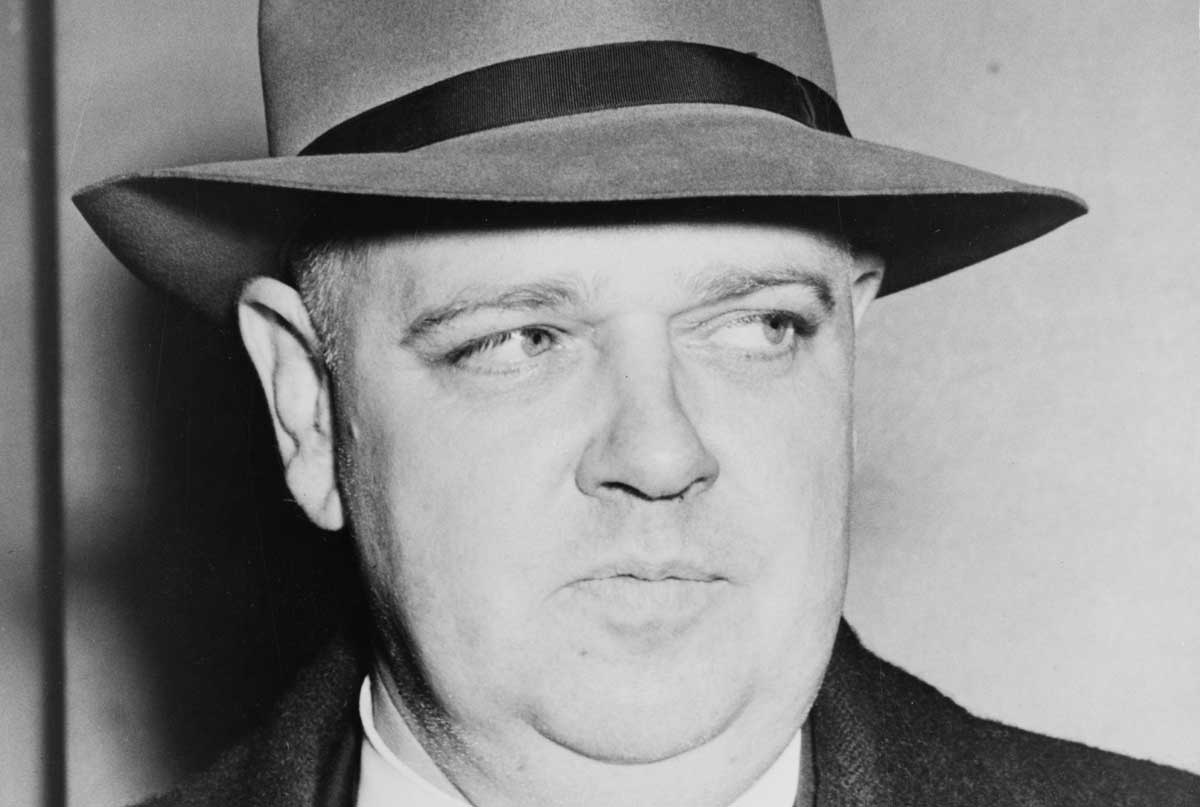
Whittaker Chambers's Lonely War Against Godless Collectivism by Hunter Baker

32.2—March/April 2019
Reality Shows, Even in a Popular TV Series by C. E. Smith
calling all readers
Please Donate
"There are magazines worth reading but few worth saving . . . Touchstone is just such a magazine."
—Alice von Hildebrand
"Here we do not concede one square millimeter of territory to falsehood, folly, contemporary sentimentality, or fashion. We speak the truth, and let God be our judge. . . . Touchstone is the one committedly Christian conservative journal."
—Anthony Esolen, Touchstone senior editor
