






Feature
Purpose-Driven Purging
Minimalism Is Not the New Christian Approach to Managing Possessions
by Harma-Mae Smit
Whatever happened to materialism? What happened to the unapologetic celebration of glitz, the songs about the accumulation of stuff, the vaunting of consumerist culture? The prancing "material girl" and the slicked-back "greed-is-good" tycoon have receded. Materialism has retreated with a whimper, still existent, but unable to deny that stuff, stuff, stuff cannot fulfill. People point at the inescapable flaws: More stuff can make you more anxious, not less. It doesn't bring you everlasting happiness. It can stand in the way of your fully developing your potential, and it can hold you down in a place you don't want to be. To celebrate materialism takes an increasing amount of effort.
Talking heads have preached against materialism for years now, and we've all nodded along. Researchers have conclusively demonstrated that materialism decreases your overall sense of wellbeing. But nothing has stemmed the tide of products filling our houses, trash flowing out of our homes, or things overflowing from our self-storage units. All our agreement with the emptiness of materialism has accomplished nothing. The idea that what you own doesn't bring fulfillment has become so common and clichéd that the message has faded into the background.
THIS ARTICLE ONLY AVAILABLE TO SUBSCRIBERS.
FOR QUICK ACCESS:
Harma-Mae Smit lives in Edmonton, Canada, where she works as a library assistant and studies theology at the Canadian Reformed Theological Seminary. She is a professing member of Immanuel Canadian Reformed Church. Her work has previously appeared in The Globe and Mail, The Edmonton Journal, and Reformed Perspective magazine.
A Journal of Mere Christianity—Delivered to Your Door
- Essays on theology, culture, and the Church
- Contributors from across the Christian traditions

Six print issues (one year) of Touchstone, plus full online access and PDF downloads for only $39.95.

Get a one-year full-access subscription to the Touchstone online archives for only $19.95.
bulk subscriptions
Order Touchstone subscriptions in bulk and save $10 per sub! Each subscription includes 6 issues of Touchstone plus full online access to touchstonemag.com—including archives, videos, and pdf downloads of recent issues for only $29.95 each! Great for churches or study groups.
Transactions will be processed on a secure server.
more on Christianity from the online archives

33.3—May/June 2020
Human & Divine Societies Require Careful Thought & Discourse by Anthony Esolen
30.6—Nov/Dec 2017
on Benedict XVI on the Fairest of the Sons of Men by Michael Martin De Sapio

30.3—May/June 2017
Insider Attempts to Disorient the Orthodox by Alexander F. C. Webster
more from the online archives
19.10—December 2006
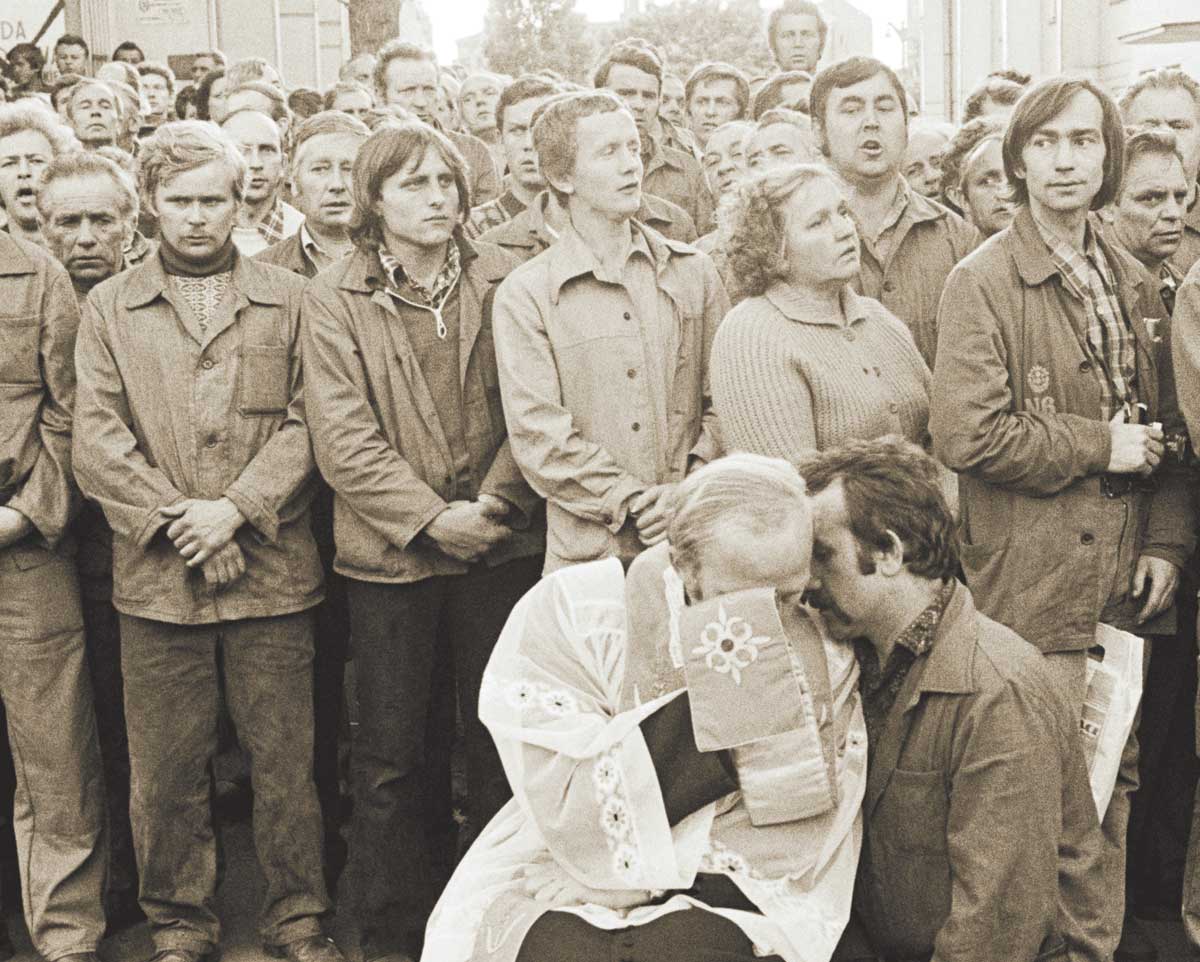
Workers of Another World United
A Personal Commemoration of Poland’s Solidarity 25 Years Later by John Harmon McElroy

23.5—September/October 2010
The Loss of a Christian Understanding of Virginity Is Pure Tragedy by Eleanor Bourg Donlon

37.5—Sept/Oct 2024
The Death of Conservatism & the Negative World by J. Douglas Johnson
calling all readers
Please Donate
"There are magazines worth reading but few worth saving . . . Touchstone is just such a magazine."
—Alice von Hildebrand
"Here we do not concede one square millimeter of territory to falsehood, folly, contemporary sentimentality, or fashion. We speak the truth, and let God be our judge. . . . Touchstone is the one committedly Christian conservative journal."
—Anthony Esolen, Touchstone senior editor
